
Paper Ink Blog
FBA Private-Label Stickers: A Packaging Guide for Amazon.sa Sellers


FBA private-label stickers must cover manufacturer branding without hiding the barcode.
Private-label packaging and FBA-ready stickers let Saudi Amazon.sa sellers cover the manufacturer’s branding while meeting Amazon’s labeling rules. The right sticker size, material, and placement protect your shipment from a failed FBA check without the cost of a full custom box run.
What is private-label packaging for Amazon FBA sellers?
Private-label packaging is any sticker, wrap, or box that lets a seller present a product under their own brand even when it was manufactured and originally packaged by a third party. It is a core part of the private label business model, where a company sells a product it did not manufacture under its own name.
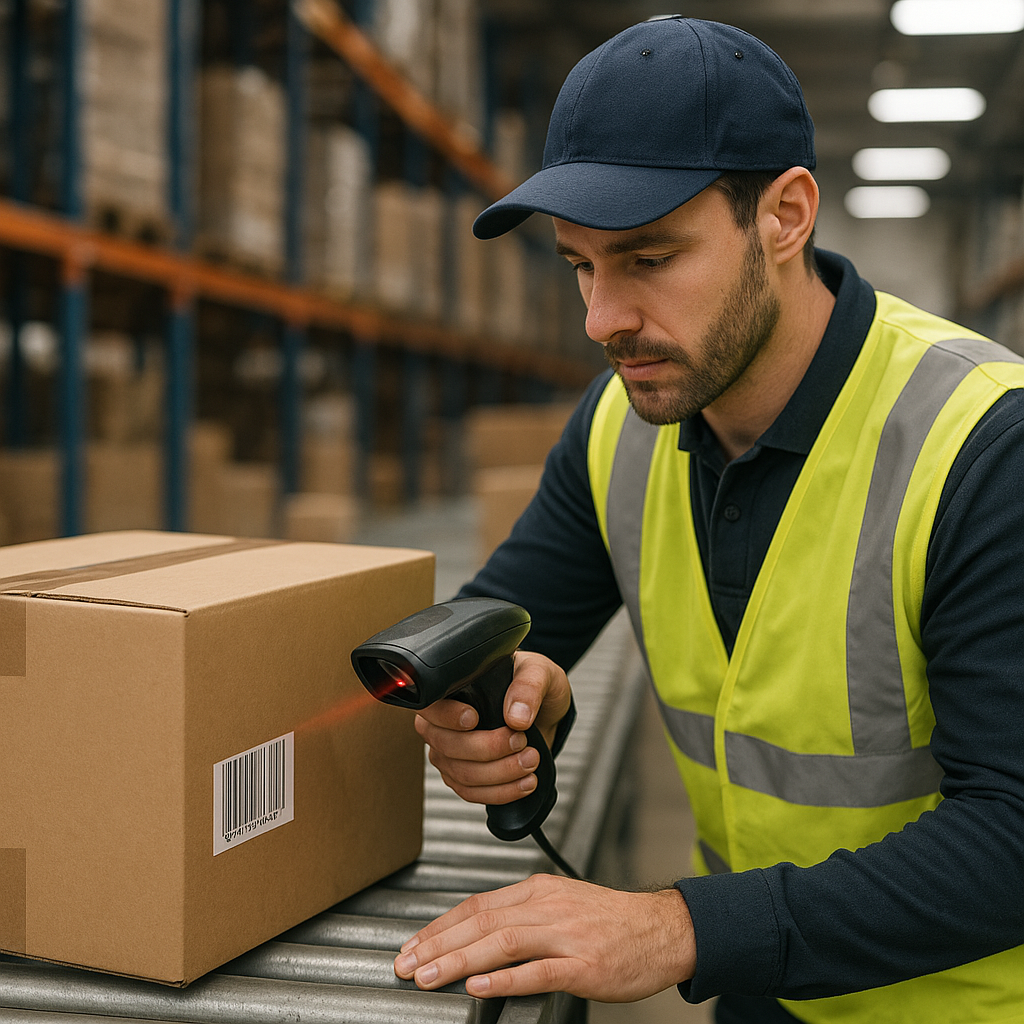
For sellers using Fulfillment by Amazon (FBA), the sticker also has to carry the FNSKU barcode Amazon scans at check-in, which is why a plain branding sticker and an FBA-compliant label are not always the same piece of paper.
Why do Saudi Amazon.sa sellers need a separate branding sticker?
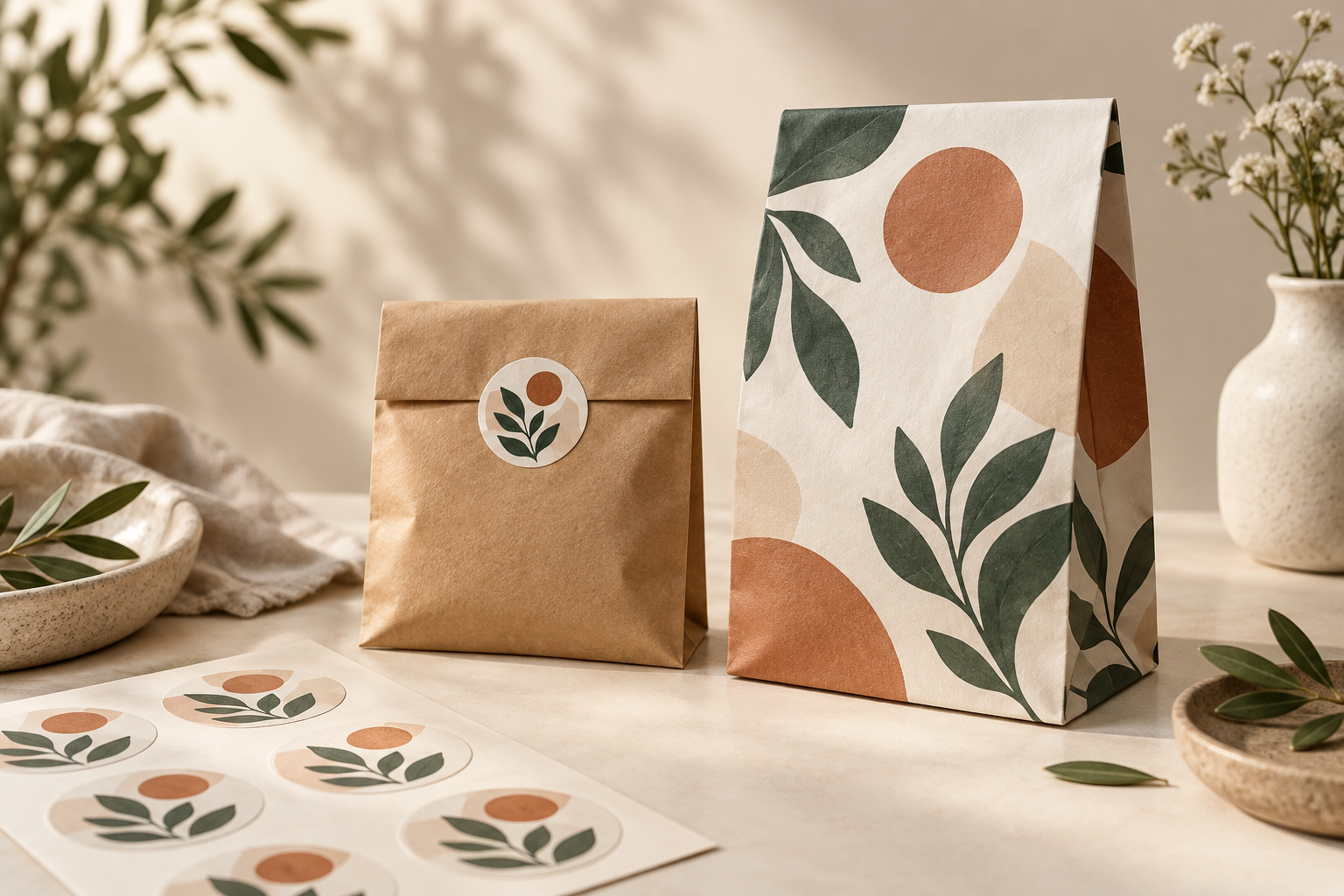
Most private-label sellers import a product that already has the factory’s own packaging, barcode, and sometimes a competitor-visible brand name printed on the box. Covering that with a custom sticker is the fastest way to launch under your own brand without redesigning the entire box for a first order.
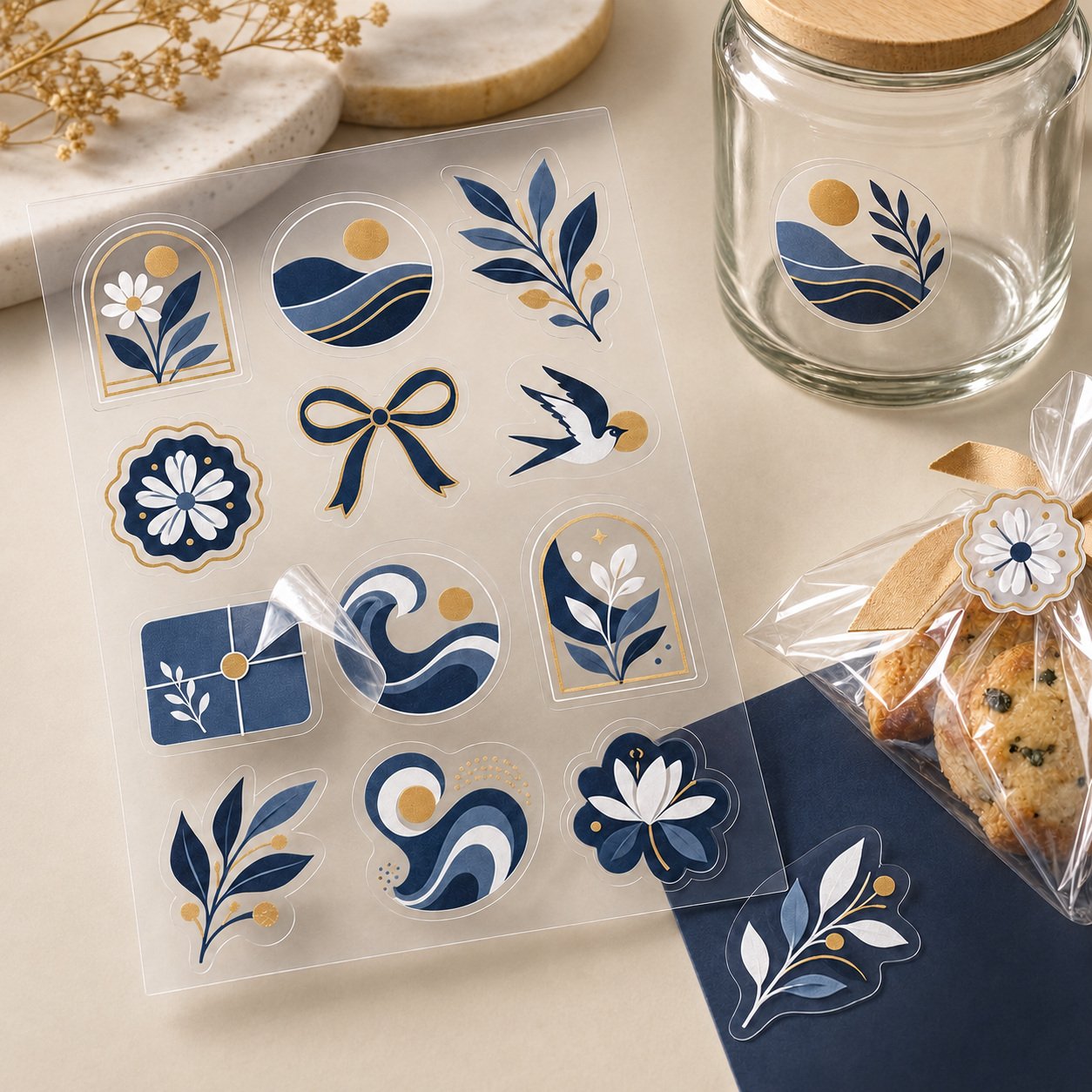
A well-placed sticker also protects margins: ordering a full set of custom printed boxes and packaging only makes sense once order volume justifies the minimum run, while a sticker can be printed in smaller batches and applied to existing stock immediately.
This FBA-specific labeling need sits alongside the broader legal side of private labeling in Saudi Arabia — what a sticker must say and where SASO’s accuracy rules apply — covered separately in our guide to private-label stickers for Saudi resellers. The FNSKU barcode requirement below is specific to Amazon’s own fulfillment system and applies on top of those general rules.
Where does the sticker go on an FBA shipment?
The branding sticker goes on the outer-facing side of the retail packaging, away from the factory barcode, while the separate FNSKU label goes on a flat, scannable surface that is never covered by another label or by shrink wrap.
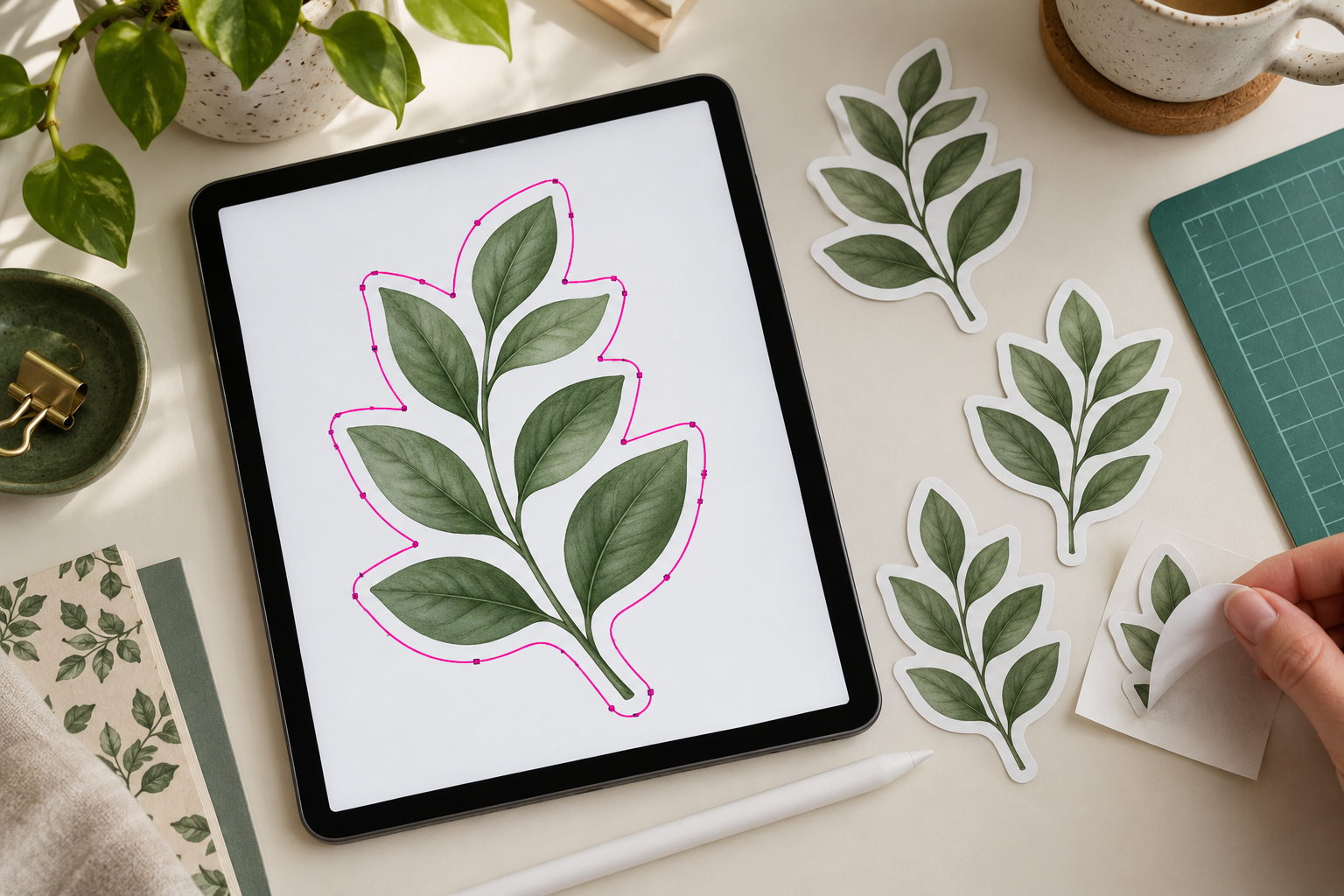
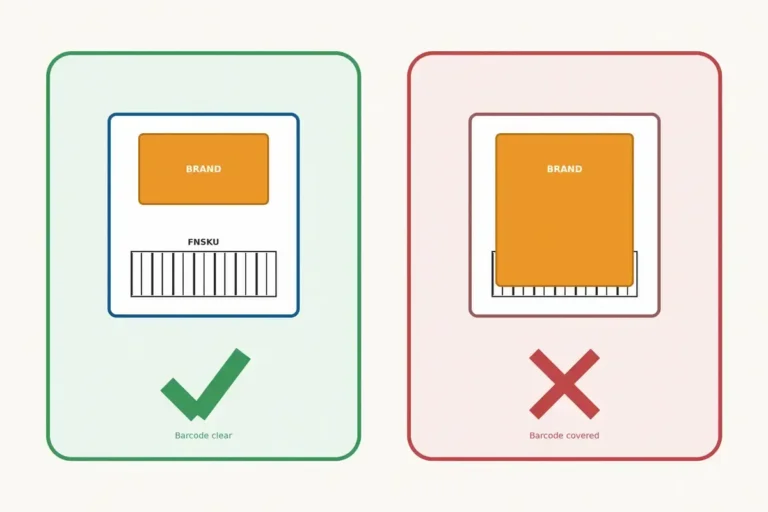
Sellers should never stack a branding sticker directly on top of the manufacturer’s original barcode unless that barcode is meant to be fully hidden from the buyer; Amazon’s scanners still need one clear, unobstructed barcode per unit at check-in. A separate die-cut sticker cut to the exact shape of the packaging face keeps the branding clean without covering product information the buyer needs to see.
Shrink wrap adds another variable: a sticker applied under existing shrink film can bubble or shift during transit, while one applied over the film can peel at the edges if the adhesive was not chosen for a plastic surface. Confirming where the shrink wrap sits before placing the sticker avoids a batch that looks fine on the shelf but fails inspection after a few days in transit.
Which sticker size and material fits each packaging type?
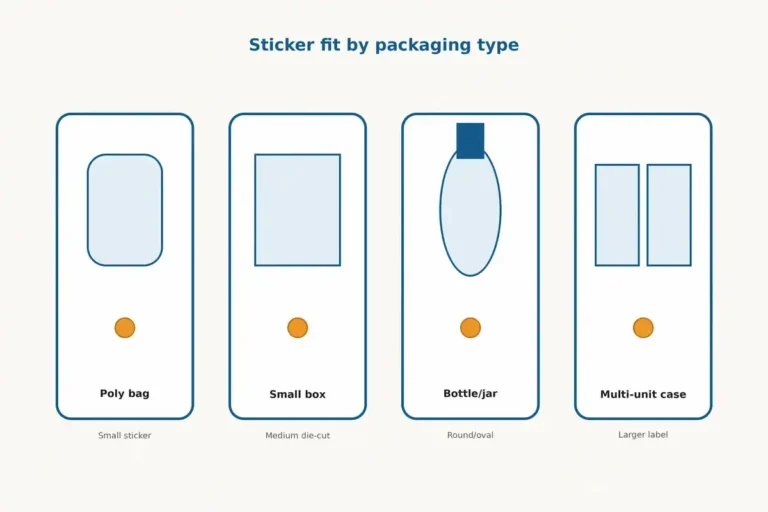
The table below compares common FBA packaging types and the sticker approach that typically fits them:
| Packaging type | Typical sticker use | Placement note |
|---|---|---|
| Poly bag / mailer | Small branding sticker | Flat area away from the seal |
| Small retail box | Medium die-cut sticker | Front face, clear of the factory barcode |
| Bottle or jar | Round or oval sticker | Curved-surface-safe adhesive |
| Multi-unit case | Larger label or custom box | Consider a full custom box once volume grows |
What mistakes do new private-label sellers make with FBA stickers?
Covering the FNSKU barcode instead of only the manufacturer branding: this causes scan failures and can delay the entire shipment at the fulfillment center.
Choosing a sticker material that is not FBA-check compliant: a sticker that peels, wrinkles, or smudges under warehouse handling can get a unit flagged before it ever reaches a customer.
Ordering a full custom box run before validating demand: a sticker-first approach keeps costs low until the product has proven sales velocity, as covered in this guide’s own packaging lead-time planning for Saudi Arabia.
Printing the brand name only in English for a Saudi-facing listing: many Amazon.sa buyers respond better to bilingual packaging, so checking the final sticker proof in both languages before a full print run avoids a reprint.
Skipping a physical sample before the full print run: a digital proof can look correct on screen but still misjudge color, size, or how the adhesive behaves on the real packaging surface, which is why a single physical test unit is worth the extra day before committing to the full batch.
FBA sticker and packaging checklist before you order
- Confirm which barcode must stay visible (FNSKU) and which branding element is being added or covered.
- Match the sticker material to the packaging surface (flat box, curved bottle, poly bag).
- Test one printed sticker on the actual product surface before committing to the full order quantity.
- Check the final proof in both Arabic and English if the listing targets Saudi buyers.
- Confirm the sticker will not obscure safety, ingredient, or regulatory text required on the package.
- Plan lead time against your next FBA shipment date rather than ordering at the last moment.
Top 10 Practical Recommendations for FBA Private-Label Stickers
Use these steps to get FBA private-label stickers that pass checks and look professional. Review them before you print.
- Never cover the FNSKU barcode. The branding sticker should cover only the manufacturer’s branding, so the barcode stays fully scannable.
- Match the material to the surface. Flat cardboard and flexible poly film need different adhesives, and the bulk shipping stickers guide explains the choice.
- Measure the area you must hide. Add a small margin around the old branding so no edge peeks out.
- Choose an opaque or white-backed sticker. Clear stickers can let manufacturer text show through, as covered in our clear sticker and white ink guide.
- Apply on clean, dry surfaces. Dust and condensation weaken the bond before the shipment even leaves.
- Test one sample unit first. Stick, rub and handle it like a warehouse would, then check the barcode still scans.
- Keep file sizes and corners consistent. Rounded corners resist peeling, and the sticker size guide lists common formats.
- Plan the batch with your shipping date. Most orders are ready in 3-5 working days, then shipping takes 24-72 hours.
- Cross-check marketplace barcode rules. Read the barcode checklist for Noon FBN as a model, and confirm Amazon’s own rules in Seller Central.
- Ask for a free digital proof. Confirm size and layout, then request a quote or message us on WhatsApp.
What’s New as of October 2026
GS1 UK reports that Amazon is ending commingled FBA inventory, effective 31 March 2026. Sellers outside Brand Registry must apply an Amazon-issued FNSKU barcode to each unit, even when it already has a GS1 barcode, according to the GS1 UK article.
That article does not say which Amazon marketplaces it covers. Therefore, check the rules for Amazon.sa in your Seller Central account. The public Amazon.sa seller page is the starting point for registration.
We did not find a confirmed Saudi-specific sticker rule beyond this. However, rules change, so re-check before every new product batch.
Frequently Asked Questions About FBA Private-Label Stickers
Can I put a private-label sticker directly over the manufacturer’s packaging on Amazon?
Yes, as long as the required FNSKU barcode remains fully visible and scannable. The sticker should cover only the manufacturer’s own branding.
Do I need Amazon Brand Registry to print my own barcode on the packaging?
Brand Registry affects branding claims and protections on the listing. A compliant FNSKU label may still be required on each unit, so check current Amazon seller policy.
Will FBA stickers stick properly to poly bags and small boxes?
Yes, if the material suits the surface. Flat cardboard and flexible poly film need different stickers, so match the material to the packaging type.
What is the difference between a private-label sticker and a full custom box for FBA?
A sticker brands existing packaging in small batches at low cost. A full custom box suits higher volumes.
Can the sticker hide a barcode that was already printed on the box?
Only if the FNSKU label you apply is clear and scannable. Always scan a sample before sending the whole batch.
Can you help me prepare the sticker file?
Yes, we help with design and file preparation. We also send a free digital proof before printing, and our private-label stickers guide explains the basics.
How long does printing and delivery take?
Most orders are ready in 3-5 working days, then shipping takes 24-72 hours. Delivery covers Saudi Arabia and the GCC.
Is shipping free?
Shipping is free for orders of 250 SAR and above. Our small seller packaging checklist covers the rest of your setup.
Bringing it together
A well-placed private-label sticker is often the fastest, lowest-cost way for a Saudi Amazon.sa seller to launch a branded product without redesigning packaging from scratch, as long as the FNSKU barcode stays clear and the material fits the packaging surface. Paper-Ink is a Saudi-registered business (Commercial Registration No. 4030364471), accredited on the Maroof platform, and ships free across Saudi Arabia on orders of 250 SAR or more — details on the About Paper-Ink page.
Ready to brand your next FBA shipment? Request a custom quote for private-label stickers or packaging.