
Paper Ink Blog
Logo Sticker Materials: Paper vs Vinyl vs Clear

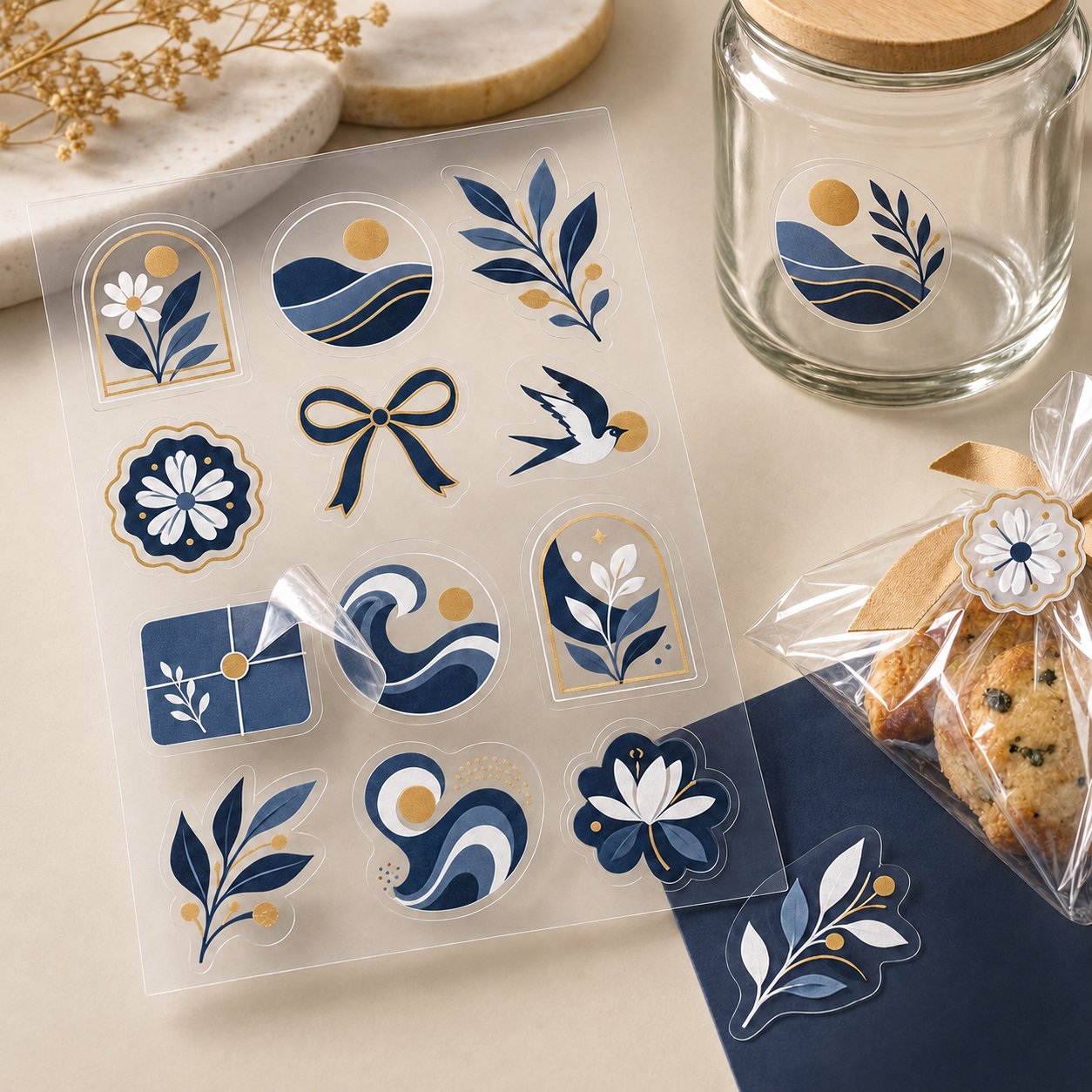
The right material for a logo sticker depends on where it will live. Coated paper works for dry bags and boxes that get opened within days. Vinyl logo stickers are the safe choice for anything that meets water, heat or frequent handling. Clear stickers suit glass and colored packaging when you want the logo to look printed directly on the surface.
Quick take
- Paper: lowest cost and a natural look, but no water resistance.
- Vinyl: handles moisture, fridges and Saudi summers; the default for logos that need to last.
- Clear: a “no-label” look on glass and colored surfaces; light logos need a white ink layer.
- Rule of thumb: pick the material for the surface first, then for the budget.
Why logo stickers need more care than other stickers
A promo sticker gets used once and forgotten. Your logo sticker is your signature. It shows up on every box, cup and laptop, and customers see it again and again. If the material fails, people blame the brand, not the sticker.
Three things raise the stakes:
- Color consistency. Brand colors are part of your identity. Uncoated paper soaks up ink and dulls colors, while clear film lets the surface underneath change how colors look.
- Fine detail. Logo stickers are often small, and thin strokes or delicate Arabic lettering need a smooth surface and a precise cut.
- Lifespan. A seal on a bag that is thrown away tomorrow has different needs than a logo on a reusable bottle or a shop door.
Paper vs vinyl vs clear: comparison table for logo stickers
| Factor | Paper logo stickers | Vinyl logo stickers | Clear logo stickers |
|---|---|---|---|
| Look | Natural, usually matte | Bold color, glossy or matte | Logo only, no visible background |
| Water and fridge | Poor | Excellent | Very good |
| Heat and humidity | Fair | Very good | Good |
| Rubbing and handling | Edges wear | Holds up, especially laminated | Holds up when laminated |
| Write on with a pen | Easy | Only on matte | Not suitable |
| Relative cost | Low | Medium | Medium to higher |
| Best logo uses | Paper bags, dry boxes, cards | Bottles, chilled packs, laptops, tools | Glass, colored packaging, storefronts |
When paper logo stickers are enough
Paper is a smart choice, not just a cheap one. If the sticker goes on a paper bag or a dry carton that reaches the customer and gets opened within a few days, you would be paying for durability you never use.
Paper works well for:
- Sealing paper bags and boxes of dry sweets or baked goods.
- Adding your logo to thank-you cards or instruction inserts.
- Labels where you also need to handwrite a name or a date.
- Early-stage brands that need high volumes at a low unit cost.
One caution: paper fails fast on anything that sweats or gets wiped. And on brown kraft, light colors print darker than they look on screen, so check your logo color against the real background in the proof.
Vinyl logo stickers: built for everyday use
Vinyl is a flexible plastic film that does not absorb water, so it keeps its shape and color where paper gives up. If your logo will be handled a lot, go into a fridge or sit in the sun, vinyl logo stickers are the right starting point.
Typical uses:
- Juice, water and product bottles that are stored cold.
- Café cups and delivery containers held with wet hands.
- Giveaway logo stickers for laptops, phones and tool cases.
- Reusable boxes and products that stay in storage for months.
In a humid city like Jeddah, weak materials show their flaws quickly: curling, lifting edges, or adhesive that lets go. Vinyl with a gloss or matte laminate cuts those problems down a lot. A good live example on the site is the Google review QR sticker, made from water-resistant vinyl with a laminate that protects colors from sunlight, which is exactly the type of material a logo on a shop door or counter needs. If you are deciding between finishes, see glossy vs matte vs spot UV sticker finishes.
Clear logo stickers: the no-label look
Clear stickers make your logo look printed straight onto the glass or bottle. That is why perfume, candle and beverage brands, and shops with glass storefronts, love them.
There is one rule to remember: standard printing has no white ink. Any white or very light part of your logo will disappear and show the surface color instead. The fix is a white ink layer under the colors. We explain how it works in clear stickers with white ink.
- Dark logo on clear glass or a white bottle: standard clear is fine.
- White or light logo on dark glass or colored packaging: clear plus white ink.
- Multicolor logo on a colored surface: ask for a proof, because the surface will shift your colors.
How to choose your logo sticker material in 4 questions
- What surface? Dry paper or carton, glass and plastic, or an outdoor surface?
- Will it meet water, cold or heat? If yes, rule out paper.
- How long must it last? Days, weeks or months? The longer the life, the more vinyl pays off.
- What color is the surface, and what colors are in the logo? This alone tells you whether clear will work and whether you need white ink.
Still unsure? White vinyl is the lowest-risk option for most logo uses.
Common mistakes with durable logo stickers
- White logo on clear film without white ink: the logo turns faint or unreadable.
- Paper stickers on chilled packaging: condensation lifts them within hours.
- Hairline details at small sizes: very thin strokes get lost in the cut. Simplify the logo for small formats.
- Glossy where people write: pens skid on gloss. Choose paper or matte vinyl instead.
- Judging color on a screen: screens emit light and print reflects it. The proof is your reference.
Before you order: proof first, then quantity
Once you have picked a material, prepare your logo as a vector file if possible and decide on size and shape. Paper-Ink sends a free digital proof before printing so you can check color, size and cut lines, and if you do not have a print-ready file, our design and file prep service can help. We deliver across Saudi Arabia and the GCC, with free shipping on orders of SAR 250 or more.
Still deciding where your logo should go? Start with 7 logo sticker ideas that add real value to your brand, then come back here to match a material to each idea. For a wider view of stickers in your branding, read sticker branding for small businesses.
FAQ
What is the best material for logo stickers on products?
It depends on the product. For packaging that touches water or goes in the fridge, vinyl is best because it does not absorb moisture and keeps its color. Coated paper is enough for dry boxes and bags with a short life. For glass and colored packaging, clear film gives a printed-on look.
Are vinyl logo stickers waterproof?
Yes. Vinyl does not absorb water, so it handles light washing and condensation on chilled packs. A gloss or matte laminate adds protection against scratches and sunlight. Adhesion still depends on applying the sticker to a clean, dry surface, so wipe the surface before you stick it on.
Why does white disappear on clear logo stickers?
Standard printing uses no white ink, so white areas in your artwork are left unprinted and the surface color shows through. The solution is a clear sticker with a white ink layer under the colors, which matters most when the logo is light and the surface is dark or colored.
Are paper logo stickers good for an online store?
Yes, for sealing paper bags, dry shipping boxes and thank-you cards, because orders are opened within days and stay dry. Paper is low cost and easy to write on. If the logo needs to stay on the product itself for a long time, switch to vinyl for better durability.
How do I make sure my logo prints in the right brand color?
Send a vector logo with your approved color codes and ask for a digital proof before production. Remember that the material changes how color reads: uncoated paper dulls it, gloss makes it pop and clear film picks up the surface color. Choose the material first, then approve the color on it.
Ready to pick your logo sticker material? Browse custom logo sticker printing in every material and request your free digital proof before printing.
