
Paper Ink Blog
Pet Shop & Vet Clinic Labels: Bilingual Stickers Guide for Saudi Arabia

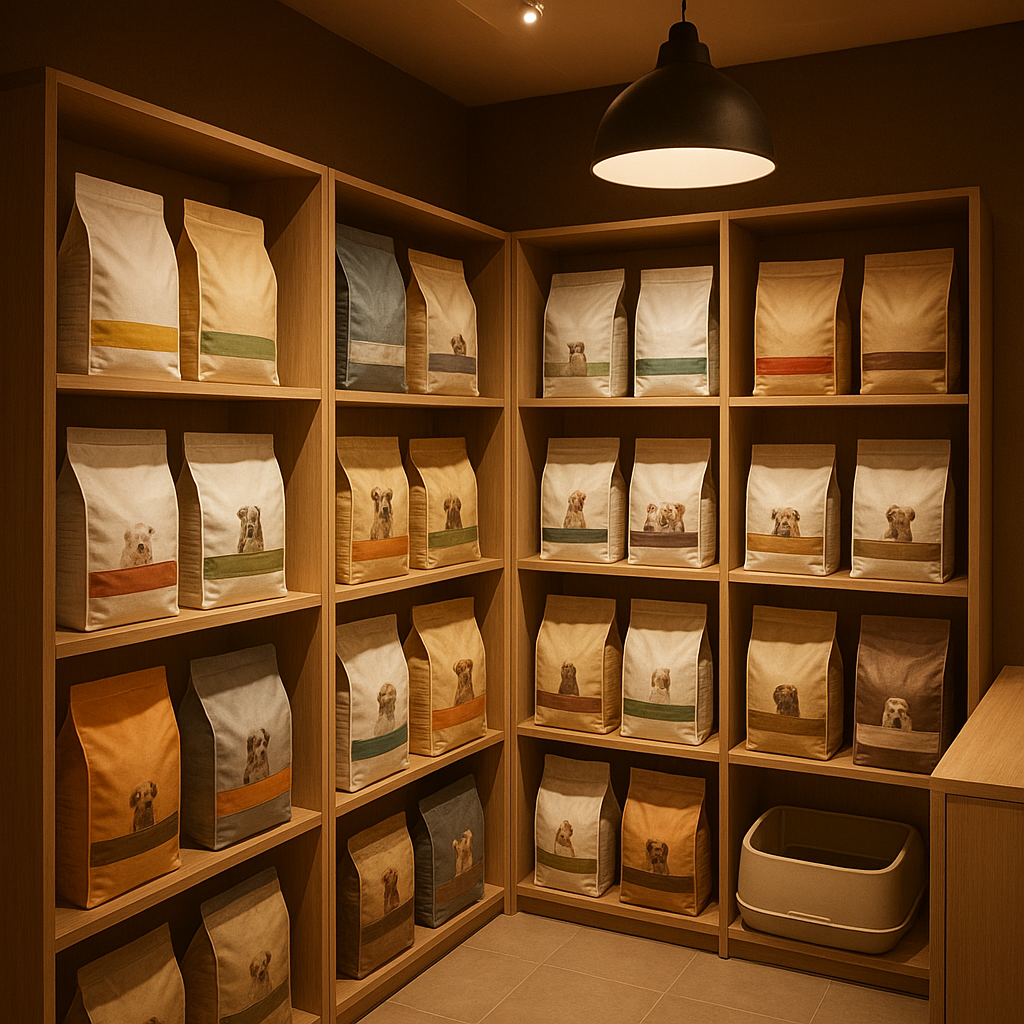
Short answer: vet clinic labels and pet shop labels in Saudi Arabia work best as waterproof, bilingual Arabic-English stickers — on retail packaging, medication bags, and care-instruction cards — because most products and paperwork here need to be read clearly in both languages by staff and pet owners alike.
Why does pet and vet packaging need different rules than regular retail labels?
A pet shop or veterinary clinic hands out far more printed material per customer than a typical retail store: a labeled bag of food, a printed dosage card, a cage tag, a care-instruction sheet. Each of these gets touched, folded, and sometimes gets wet from water bowls or outdoor transport, so the material itself matters as much as the design.
A veterinary clinic label is any printed sticker or tag used to identify an animal, a medication, or a care instruction, and in Saudi Arabia it almost always needs to work in both Arabic and English at once.
Bilingual labels: what actually goes on each language?
Most Saudi pet owners read a mix of Arabic and English, but medication names, dosage units, and clinic contact numbers are usually safer kept in a single consistent format rather than duplicated awkwardly in both scripts. The practical approach most small Saudi brands use: product or clinic name and short instructions in both languages side by side, with the layout treated as two aligned blocks instead of one squeezed into the other.
Paper-Ink’s own bilingual Arabic-English label layout guide walks through exactly this kind of two-column layout, and the same logic applies whether the label is for a bag of pet food or a product on a boutique shelf.
| Label type | Best material | Typical use |
|---|---|---|
| Pet food / treat bag label | Waterproof vinyl | Bag seals, resealable pouches |
| Medication / dosage card | Matte paper or laminated | Clinic handouts, prescriptions |
| Cage or kennel tag | Die-cut vinyl | Boarding, grooming, in-clinic use |
| Retail shelf price label | Standard adhesive paper | Short shelf life, frequent price changes |

Which material do vet clinic labels need to survive a pet shop or clinic?
Clinics and pet shops deal with water bowls, cleaning sprays, and frequent handling, so a label that looks fine on day one can smear or peel within a week if the wrong material is used. Paper-Ink’s washable, waterproof sticker paper comparison breaks down which finish — glossy, matte, or washable vinyl — actually holds up under that kind of daily contact, instead of just on a desk.
Waterproof vinyl is the safer default for anything near food, water, or frequent cleaning, while standard adhesive paper is fine only for short-lived, indoor-only labels like a weekly price tag.
Can a small pet shop use the same QR-code approach vets use for records?
Yes — the same QR code idea that works for a restaurant menu or a Google review card works just as well on a cage tag or a product label: one printed code that opens a care sheet, a vaccination record, or a WhatsApp line to the shop, without anyone typing anything by hand. A die-cut sticker shaped to the clinic’s logo keeps this functional without looking like a plain barcode sticker.
For pet shops that resell imported food or toys under their own branding, Paper-Ink’s private-label sticker guide for Saudi resellers covers the same labeling logic applied to resale products instead of clinic records.

What should you avoid when ordering vet clinic labels in bulk?
- Ordering one giant batch before testing a single sample. A label that looks right on screen can print differently once it is actually applied to a curved bottle or a textured food bag.
- Skipping a QR code test on more than one phone. A broken link discovered after printing means reprinting the entire batch.
- Using the same paper stock for both food-adjacent and dry retail labels. Food and water exposure needs waterproof vinyl; a dry shelf tag does not.
- Cramming Arabic and English into one crowded line. Two clearly separated blocks read faster than text trying to fit both scripts into the same space.
While veterinary medicine as a field has its own official recordkeeping standards set by licensed clinics themselves, the printed labels a shop or clinic hands to pet owners are a separate, simpler decision that mostly comes down to material and bilingual layout — and general Saudi labeling clarity practices, like the ones covered in Paper-Ink’s SFDA label-basics guide for small brands, are a useful reference even outside strictly food-regulated products.
Pre-order checklist for pet shop and vet clinic labels
- ☐ Material matches exposure: waterproof vinyl for anything near food, water, or cleaning.
- ☐ Arabic and English text are laid out as two clear blocks, not merged into one line.
- ☐ Every QR code has been scanned on at least two different phones before final printing.
- ☐ Label shape and size match the actual bag, bottle, or tag — not just a flat mockup.
- ☐ Quantity matches real turnover, since clinic records and menus change often.
- ☐ A small test batch is approved before committing to the full print run.
Top 10 Practical Recommendations for Vet Clinic Labels
These steps help vet clinic labels and pet shop labels stay readable and durable. Check them before you order.
- Print both languages clearly. Most owners and staff read Arabic and English, so keep a clean two-language layout as in the bilingual label layout guide.
- Choose waterproof vinyl for food bags. It handles moisture and handling better than plain paper, as explained in our waterproof sticker paper guide.
- Keep medication bag labels short. Put the animal name, dose and instructions first, then everything else.
- Use a large, plain font. Small decorative fonts fail under clinic lighting and on curved bags.
- Test adhesion on the real surface. Stick a sample on a bag or bottle and check it after a day, using the tips in why labels peel in heat and humidity.
- Add a QR code only where it helps. A static QR code can open one fixed page, such as care instructions.
- Check the official rules for pet food. Review the SFDA website before printing ingredient or claim text.
- Prepare ingredient and barcode data early. Our product information label guide shows how.
- Approve a free digital proof. Review spelling in both languages before printing.
- Order a small first batch. Then reorder after you see how the labels hold up, and compare options in the sticker printing category.
What’s New as of October 2026
We found no confirmed new Saudi rule that changes vet clinic labels in 2026. We prefer to say that plainly instead of guessing.
The most recent source we could verify is a USDA report dated May 7, 2025. It points to the SFDA standard “General Requirements for Pet Foods” (SFDA.FD 45) for packaged pet food labeling, plus SFDA guides on feed registration and packaging. Read the USDA pet food market overview for the details.
The report does not cover Arabic-language label rules. Therefore, confirm the current wording with the SFDA before ordering, then send us your text through a quote request.
Frequently Asked Questions About Vet Clinic Labels
Do pet product labels in Saudi Arabia need to be bilingual?
Not by law for every product. However, most owners and staff read both languages, so a two-language layout is the practical standard.
What is the most durable material for a pet food bag label?
Waterproof vinyl is the most reliable choice. It resists moisture, handling and occasional spills better than plain paper.
Can one QR code work for several cage tags?
A static QR code points to one fixed link. Therefore, it suits a shared page, while individual records need separate codes.
Which vet clinic labels should I order first?
Start with medication bag labels and care-instruction cards. They are used daily and show quickly whether the material works.
Can I see a proof before printing?
Yes. We send a free digital proof so you can check both languages before printing.
Do you help prepare the label file?
Yes, we help with file preparation. Message us on WhatsApp to start.
How long does an order take?
Most orders take 3 to 5 working days, then shipping takes 24 to 72 hours.
Do you deliver outside Jeddah?
Yes, we deliver across Saudi Arabia and to the GCC. Shipping is free for orders of 250 SAR and above.
Bringing it together
Pet shops and veterinary clinics print more labels per customer than most retail businesses, so getting the material and bilingual layout right the first time saves real reprinting costs later. Paper-Ink can help you put this together with the right stickers and labels for your shop or clinic — request a quote or reach out directly on WhatsApp.