
Paper Ink Blog
Printed Loyalty Cards for Small Saudi Cafés and Restaurants: Stamps, Punch Cards, and QR Rewards


Short answer: the best loyalty card for a small Saudi café or restaurant is a printed stamp card (a small card the barista hand-stamps each visit) for walk-in daily traffic, paired with a QR sticker at the counter for customers who prefer a digital record. Most global loyalty-card guides assume a hole-punch system and USD pricing — neither matches how small Saudi cafés actually run loyalty programs today.
Search results for loyalty card printing are dominated by US and UK print shops quoting inches, generic templates, and dollar pricing, with no mention of Saudi Arabia, SAR pricing, local delivery times, or the stamp-card culture that already exists in most neighborhood cafés here. This guide covers what actually matters for a Saudi café or restaurant ordering loyalty cards: card type, material, required fields, and how to combine a physical card with a QR code without over-engineering a simple reward system.
What Loyalty Card Format Actually Fits a Saudi Café?
Three formats cover almost every small Saudi café or restaurant, and picking the wrong one wastes both money and staff time. A stamp card is a small printed card the cashier stamps or signs by hand each visit — low setup cost, no app needed, familiar to regular customers. A QR loyalty sticker links to a simple digital point tracker, useful for cafés with repeat delivery or takeaway customers who don’t carry physical cards. A hybrid card prints both a stamp grid and a small QR code, letting the customer choose either method without the café running two separate systems.
Which Material and Size Hold Up to Daily Handling?
| Card type | Typical size | Best material |
|---|---|---|
| Stamp / punch card | Business card size (85 × 55 mm) | Matte-coated cardstock, 350–400 gsm |
| QR loyalty sticker | Small round or square, 4–6 cm | Matte vinyl, scratch-resistant |
| Hybrid stamp + QR card | Business card size (85 × 55 mm) | Coated cardstock with a laminated finish |
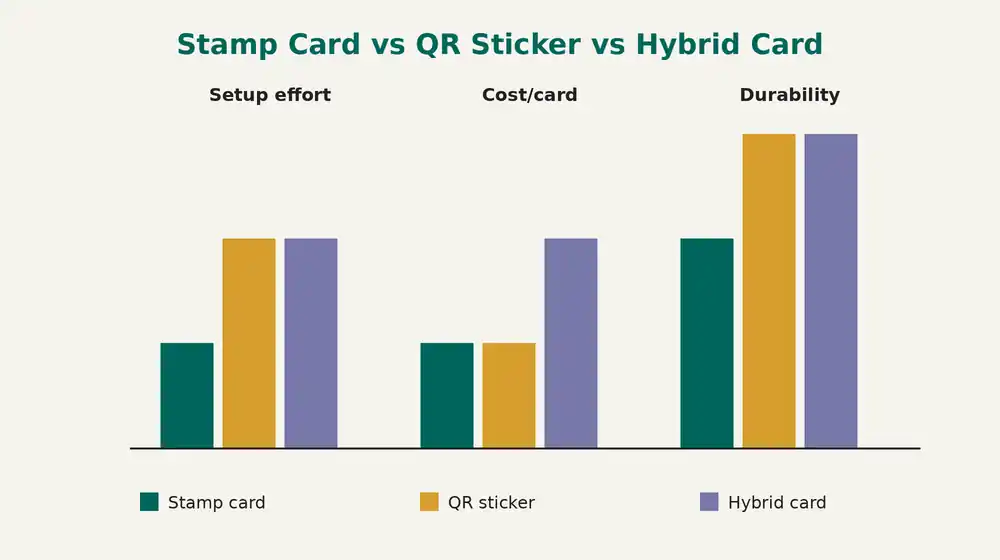
A thin, uncoated card softens and tears at the corners within a few weeks of being carried in a wallet. A 350–400 gsm coated cardstock survives months of daily handling, which matters more for a loyalty card than any design detail — customers only keep using a card that still looks presentable after ten visits.
What Information Must Be on the Card?
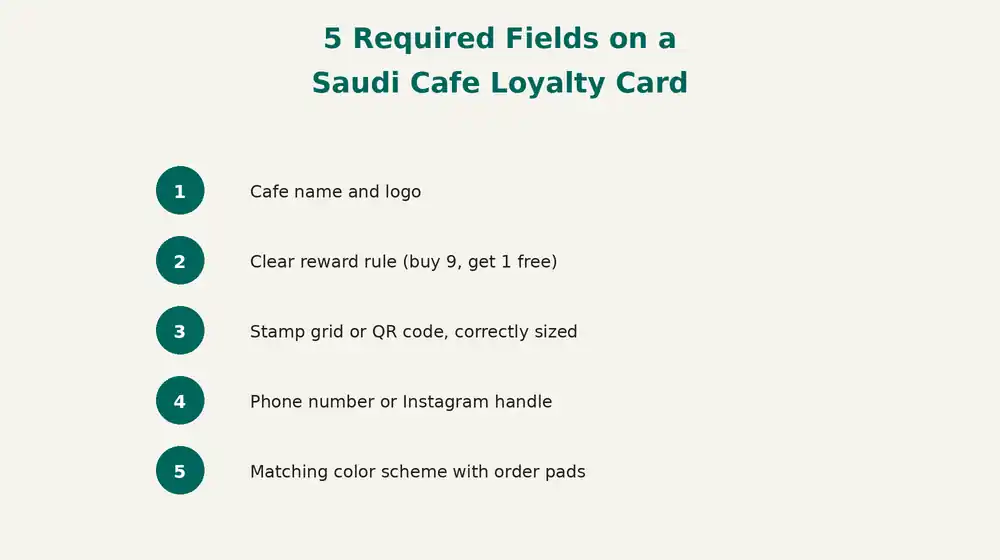
- Your café or restaurant name and logo, large enough to recognize at a glance in a wallet.
- A clear reward rule: “Buy 9, get the 10th free” works better than a vague “collect stamps for rewards.”
- The stamp grid or QR code, sized so a handheld stamp doesn’t smear into the next box.
- A phone number or Instagram handle, so the card still markets your café even sitting unused in a wallet.
Stamp Card or QR Code — Which Should You Start With?
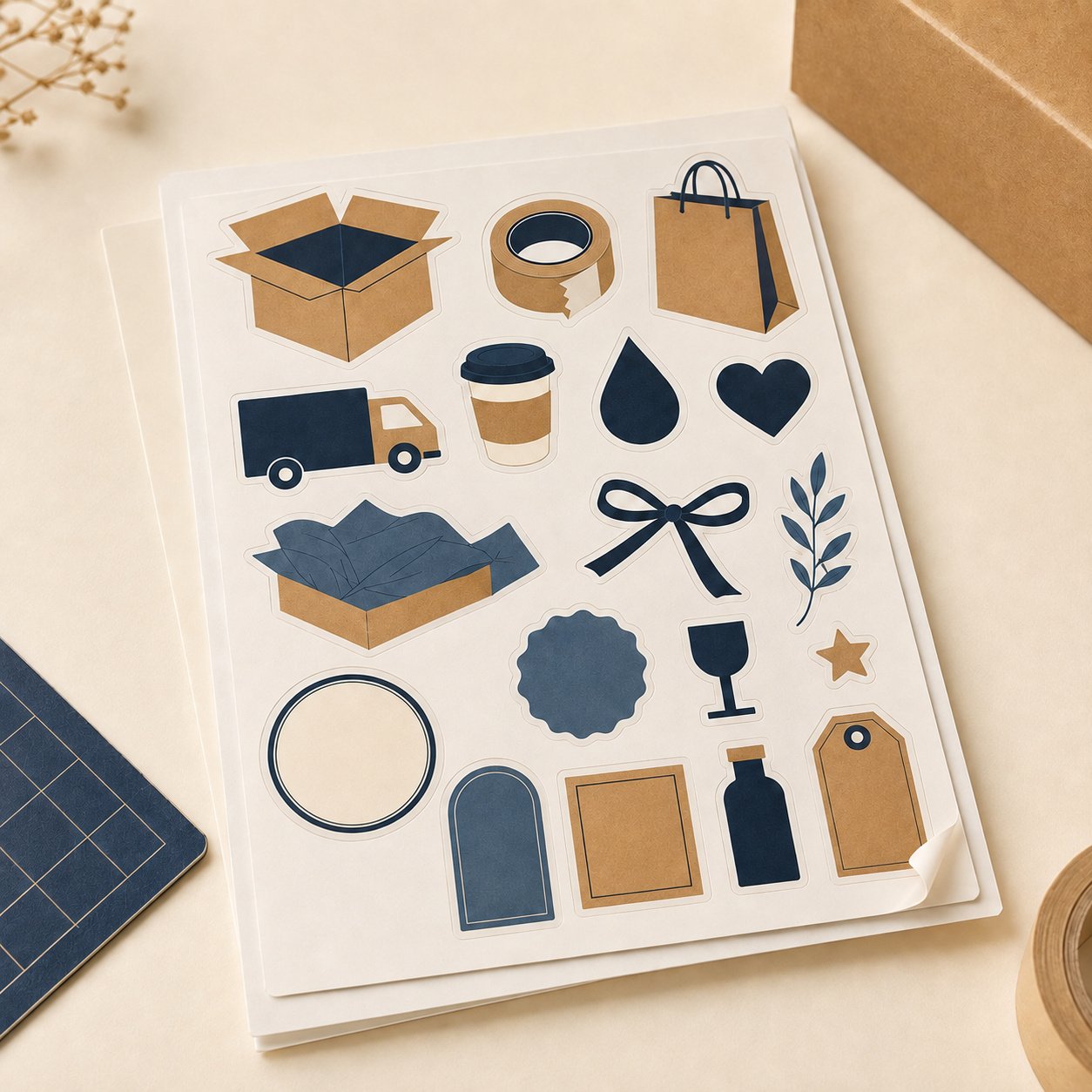
A stamp card needs zero technical setup and works the moment it’s printed, which is why most independent Saudi cafés still default to it. A QR loyalty sticker is worth adding once you have delivery or takeaway orders where no physical card changes hands at the counter. Our guide to printable sticker ideas for cafés, shops, and artists covers sticker material choices that apply directly to a QR loyalty sticker placed on a cup sleeve or counter.
Should a Loyalty Card Match Your Other Printed Materials?
A loyalty card handed over next to a mismatched receipt or order pad looks improvised rather than intentional. If you’re already ordering carbonless order pads for your restaurant or food truck, matching the card stock’s color scheme to your pads and menu boards makes the whole counter feel like one coherent brand instead of three separate print orders.
How Many Cards Should a Small Café Order?
Most independent Saudi cafés start with 250–500 cards, enough for roughly two to three months of regular customers before a reorder. Ordering too few means reprinting mid-season at a worse per-unit price; ordering thousands upfront ties up cash in cards that may need a design update before they’re used. Start small, track how fast your stamp cards actually move, and reorder once you see the real pace.
Common Mistakes When Ordering Loyalty Cards
- Printing on thin, uncoated paper: it looks cheap within a week and discourages customers from carrying it.
- Making the reward rule too complicated: “10% off every third visit if you spend over 50 SAR” confuses staff as much as customers.
- Leaving off your contact details: a card with no phone number or handle wastes a second marketing touchpoint.
- Choosing a stamp grid too small for your actual stamp: ink smears into neighboring boxes and the card looks messy by visit three.
Checklist Before You Order
- ☐ Decided between stamp card, QR sticker, or a hybrid of both.
- ☐ Chosen 350–400 gsm coated cardstock instead of thin uncoated paper.
- ☐ Written a reward rule in one simple sentence staff can repeat from memory.
- ☐ Sized the stamp grid to match your actual stamp or sticker dot.
- ☐ Included your café name, phone number, or Instagram handle.
- ☐ Matched the card’s color scheme to your existing order pads or menu boards.
FAQ
What size should a café loyalty card be?
Standard business card size, 85 × 55 mm, fits most wallets and card holders without needing to be folded.
Is a stamp card or a QR code better for a small Saudi café?
A stamp card needs no technical setup and suits walk-in counter traffic; a QR sticker suits delivery or takeaway orders where no card changes hands in person.
How many loyalty cards should a new café order first?
250–500 cards is a practical starting batch for most independent cafés, enough for a few months before reassessing the design or reward rule.
What paper weight holds up best for a card carried in a wallet?
350–400 gsm coated cardstock resists the softening and tearing that thinner, uncoated cards show within weeks of daily handling.
Bringing It Together
A loyalty card only works if it survives in a wallet and the reward rule is simple enough for staff to repeat without checking. Pick your format — stamp, QR, or hybrid — size the card to match your actual stamp, and order enough coated cardstock to last a few months of daily use. If you’re setting up your counter from scratch, our menu and price board printing guide covers the rest of the front-of-house print list. Message us on WhatsApp or request a quote to get your loyalty cards sized and printed correctly, or browse our thank-you and gift card category for matching customer-facing cards.
Sources: Loyalty program — Wikipedia · Small and Medium Enterprises General Authority (Monsha’at)