
Paper Ink Blog
Restaurant Menu Printing in Saudi Arabia: Physical, QR and SFDA Requirements for 2026

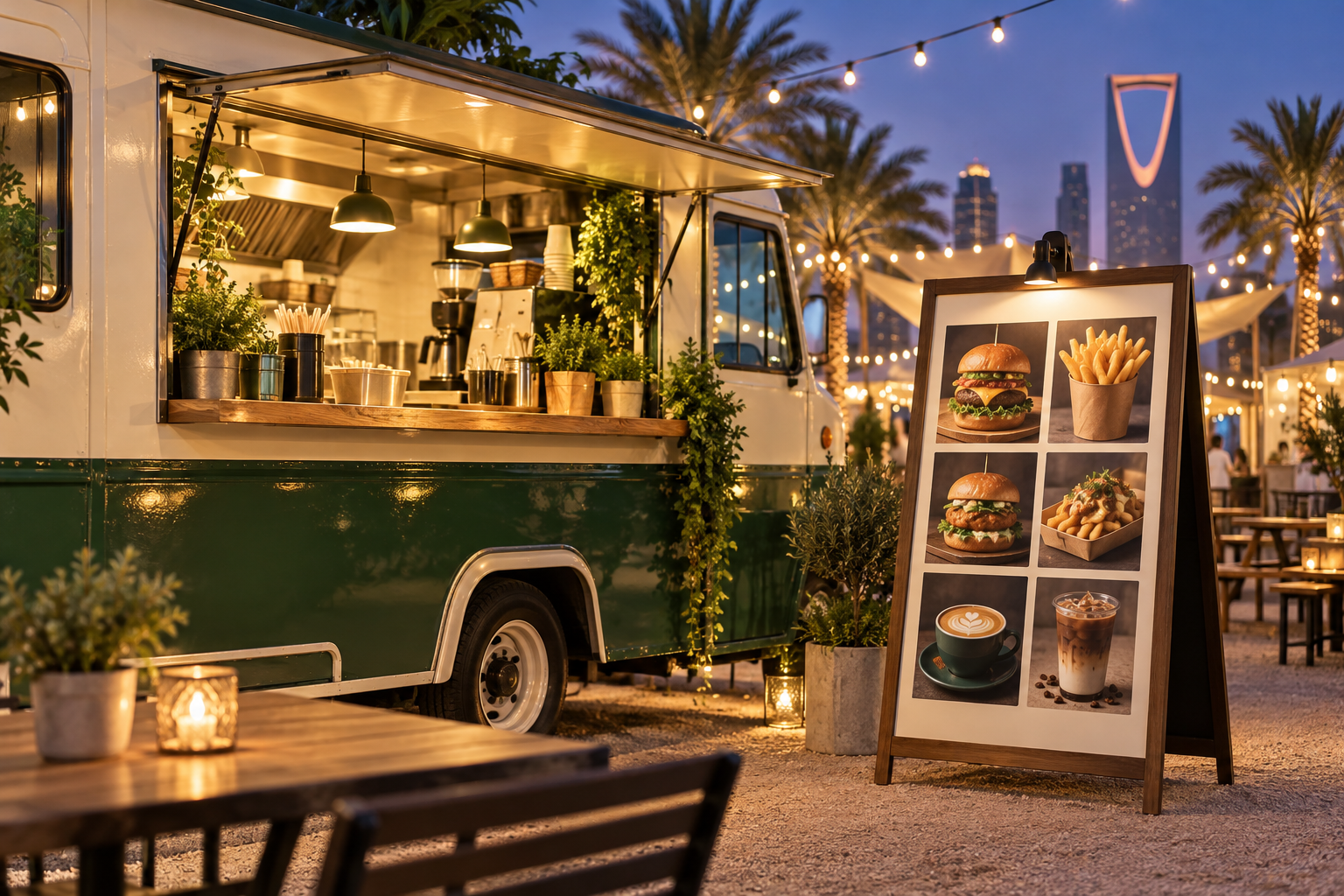
Restaurant menu printing in Saudi Arabia in 2026 is no longer only a paper-choice decision. A practical menu has to survive daily handling, stay readable, accommodate frequent price or item changes, and reflect current Saudi Food and Drug Authority requirements. Since July 1, 2025, SFDA requirements on menu information apply to physical and online menus, including caffeine disclosure, high-salt identification and physical-activity information. That makes menu architecture a content-and-production workflow, not just a design file.
Start with what must stay stable and what changes often
Separate menu content into two groups before designing.
Stable content: brand identity, core categories, service information and persistent disclaimers.
Changeable content: prices, seasonal dishes, availability, limited-time offers and some product details.
If most of the menu changes weekly, a fully printed menu creates recurring reprint cost. If the menu is stable for months, printed menus can deliver a stronger tactile brand experience. Many Saudi restaurants now use a hybrid: a durable printed menu or table card plus a QR destination for content that changes more often.
SFDA requirements for restaurant menu printing in Saudi Arabia
SFDA announced that, from July 1, 2025, food establishments must display additional nutritional information on menus. The authority specifically states that these requirements apply to physical menus, online menus and food-ordering platforms.
The current rules highlighted by SFDA include:
- identifying meals that are high in salt with the designated saltshaker indicator,
- disclosing caffeine content for relevant beverages,
- showing the estimated physical-activity time associated with burning meal calories.
SFDA has also continued to reference calorie display and allergen information in its consumer-awareness activity on nutrition regulations. For production teams, the key lesson is simple: reserve enough layout space for required information before styling the menu.
Printed menu, QR menu or hybrid?
Printed menu
Best when the menu is relatively stable and the brand values a tactile experience. It works without a phone and can feel premium, but updates require reprinting.
QR menu
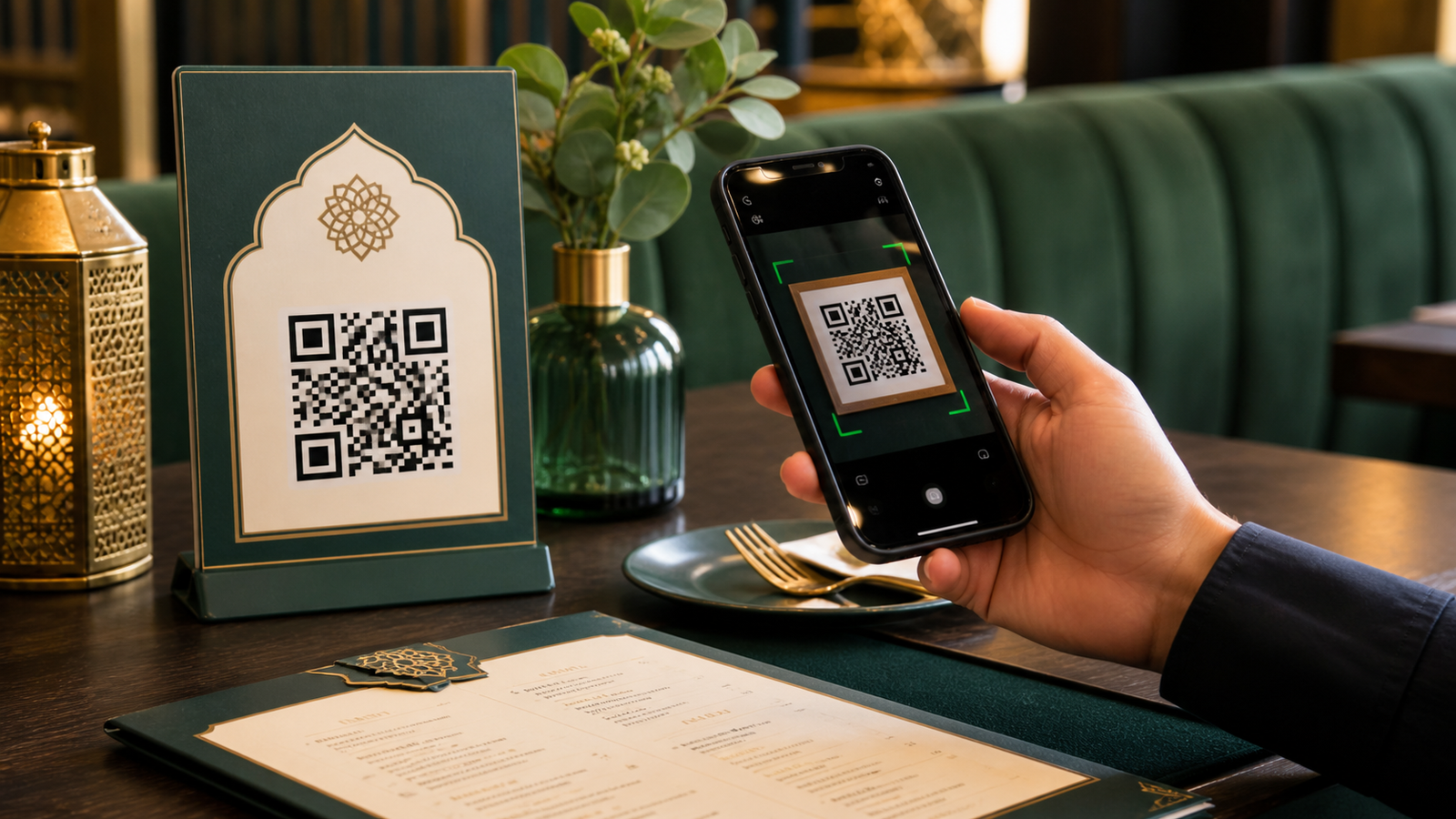
Best when prices, availability or seasonal items change frequently. Saudi QR-menu platforms increasingly support bilingual Arabic/English interfaces and instant updates. The weak point is that the guest has to use a phone, and the QR entry point still needs reliable physical placement.
Hybrid menu
Often the strongest operational compromise: print the core menu, brand story or high-value categories, then use QR for changing details, full imagery, seasonal items or ordering. The printed object and the digital menu should have clearly different jobs.
Which printed material survives restaurant use?
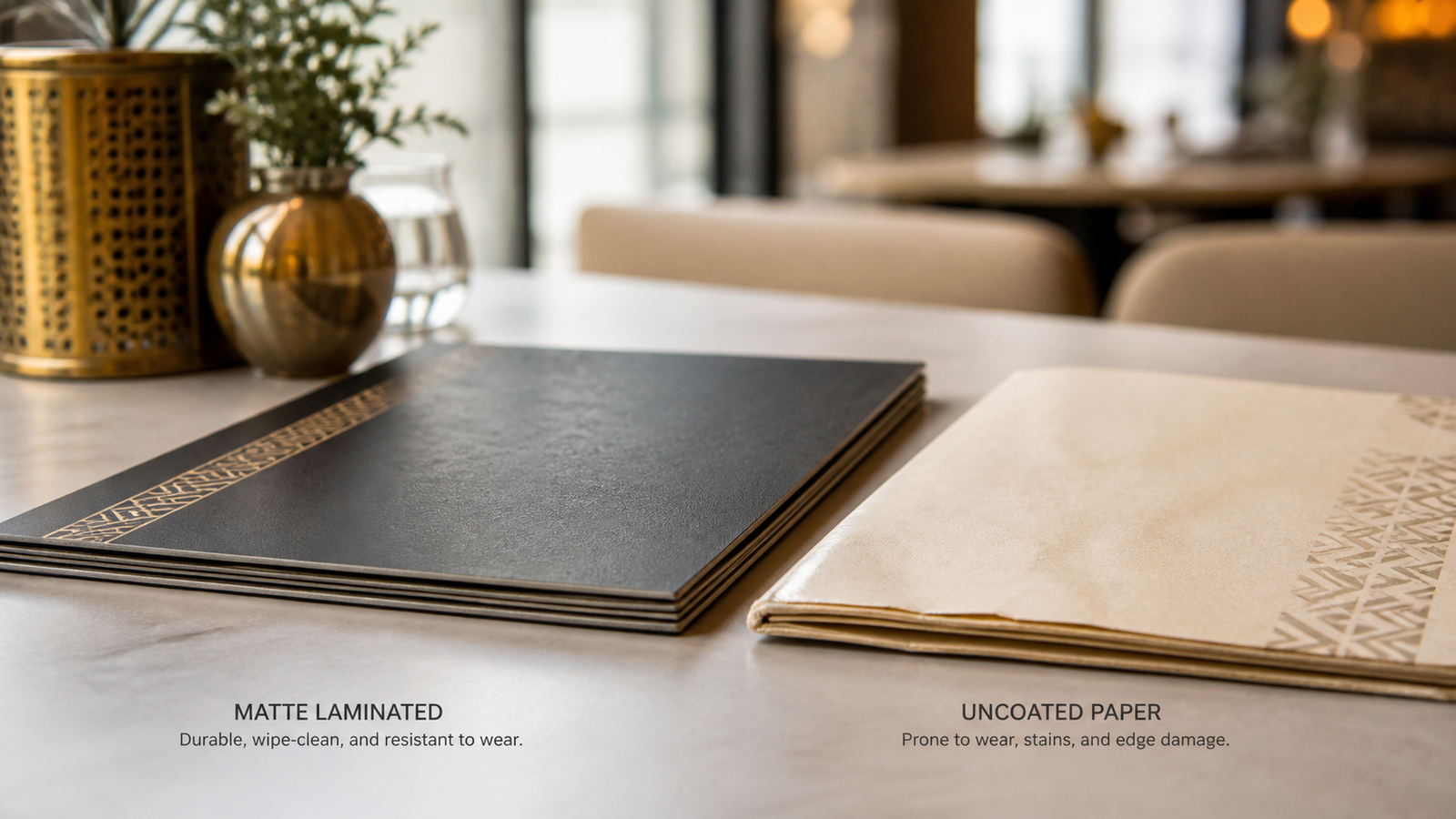
Restaurant menus face oil, water, repeated wiping, bent corners and constant handling. Saudi printing suppliers currently market laminated and washable menus specifically for restaurants and cafés, while some recommend synthetic or thicker laminated constructions for humid environments.
Coated paper + lamination
A common choice for table menus. Lamination improves wipe-clean durability and protects the printed sheet. Matte lamination reduces glare; gloss can increase color saturation but may reflect overhead lights.
Synthetic media
Useful for high-moisture or heavy-cleaning environments. It can avoid the paper core altogether, but it still needs real-world testing for stiffness, scratch resistance and finish.
Replaceable-page menu
Useful for premium restaurants that want a durable cover while swapping internal sheets when prices or dishes change.
Build the compliance fields into the grid
Do not finish the layout and then squeeze nutrition or warning information into leftover space. Create fields for:
- dish name,
- description,
- price,
- calories,
- relevant caffeine information,
- high-salt indicator when applicable,
- any required activity or warning information,
- allergen or dietary information where applicable to your operation.
A consistent grid prevents every section from becoming a new design problem. For background on how Saudi labeling and marking expectations are generally structured, the U.S. Trade Administration’s Saudi labeling guide is a useful general reference alongside SFDA’s own guidance.
Arabic and English need real layout planning
For bilingual menus, Arabic is not a translated afterthought. Right-to-left and left-to-right reading affect alignment, price placement, numerals and line breaks. Use a bilingual grid and proof both languages at final size.
If a digital QR menu handles language switching well, the printed menu can sometimes carry a more concise bilingual layer while the full detailed version lives online, provided required information remains available in the form and placement required by the applicable rules.
How to print a QR entry point correctly
If the QR is part of the menu strategy, treat it as production artwork.
- Use the final live URL or managed destination.
- Generate the real QR from source data, not an AI-generated graphic.
- Keep strong contrast.
- Preserve clear space around the code.
- Put it on a flat, visible surface.
- Avoid folds, high-glare zones and table edges.
- Print a physical proof.
- Scan it with multiple phones after final lamination or coating.
A table tent, small rigid card or sticker can sometimes be a better QR carrier than a crowded menu page.
Matte or glossy lamination?
Matte is usually easier to read under strong restaurant lighting and feels understated. Gloss makes photos and colors appear more vivid but can reflect light. The decision should be tested under the actual lighting of the venue, not only under office lights.
When should you reprint instead of relying on QR?
Reprint when the physical menu contains outdated prices, required information or dishes that materially change the guest decision. QR should not become an excuse to leave incorrect printed information on tables. If only seasonal photography or promotional content changes, a stable core print plus updated QR destination may be more efficient.
A practical prepress workflow
Follow this workflow to keep restaurant menu printing in Saudi Arabia compliant, bilingual-ready and on schedule:
- Freeze the approved menu content for the print version.
- Confirm SFDA-related fields with the responsible food/compliance team.
- Finalize Arabic and English copy.
- Decide which content remains digital-only.
- Select menu size and construction.
- Design at final 1:1 size.
- Keep key content inside safe margins and add printer-specified bleed.
- Check image resolution and CMYK conversion.
- Generate and test the final QR asset.
- Review a proof at final size before production.
Paper Ink‘s current print policy asks for PDF as the preferred file format, at least 300 DPI for images, CMYK color and 3 mm bleed. Those are production requirements; they do not replace the restaurant’s responsibility to verify current menu-content requirements.
Decision table
| Situation | Recommended direction |
|---|---|
| Stable menu, premium dining | Durable printed menu |
| Prices change often | QR or hybrid |
| Heavy wiping / high moisture | Laminated or synthetic menu |
| Multiple languages | Bilingual print grid + digital support |
| Seasonal offers | Stable print + QR/insert for updates |
| Small tables | Compact menu + separate QR table card |
Do Saudi restaurant menu rules apply to printed menus?
Yes. SFDA states that the current menu-information requirements apply to physical and online menus, as well as food-ordering platforms. Restaurants and cafés should therefore plan required nutritional and warning information before finalizing both printed and digital menu layouts.
Frequently Asked Questions
Is a QR menu enough for a Saudi restaurant?
It can be part of the solution, but operational and regulatory requirements still need to be satisfied. A hybrid model is often more resilient because it keeps a physical brand touchpoint while making changing content easier to update.
What is the best material for a café menu?
For heavy daily use, laminated paper or synthetic media are common starting points. The best choice depends on cleaning, humidity, stiffness, budget and how often the menu changes.
Should I use matte or gloss lamination?
Use matte when glare and readability are priorities. Use gloss when vivid imagery is more important and reflections are manageable. Test in the venue lighting.
Where should the QR code go?
Use a flat, visible area with strong contrast and enough surrounding clear space. A dedicated table card or sticker may scan better than a crowded menu page.
How often should menus be reprinted?
Reprint whenever the printed information becomes inaccurate or non-compliant. For frequent price or seasonal changes, use modular pages or a hybrid QR strategy to reduce unnecessary full-menu reprints.
The bottom line
The strongest approach to restaurant menu printing in Saudi Arabia in 2026 is designed as an information architecture first and a print object second. Decide what must be accurate on paper, what changes often, how SFDA-required information fits the layout, and which parts belong behind a QR. Then choose the material and finishing that can survive the restaurant’s real cleaning and handling routine. If you need help planning materials, lamination or a print run, you can request a quote from Paper Ink.