
Paper Ink Blog
Home Bakery Labels in Saudi Arabia: What Your Stickers Must Include Before You Sell

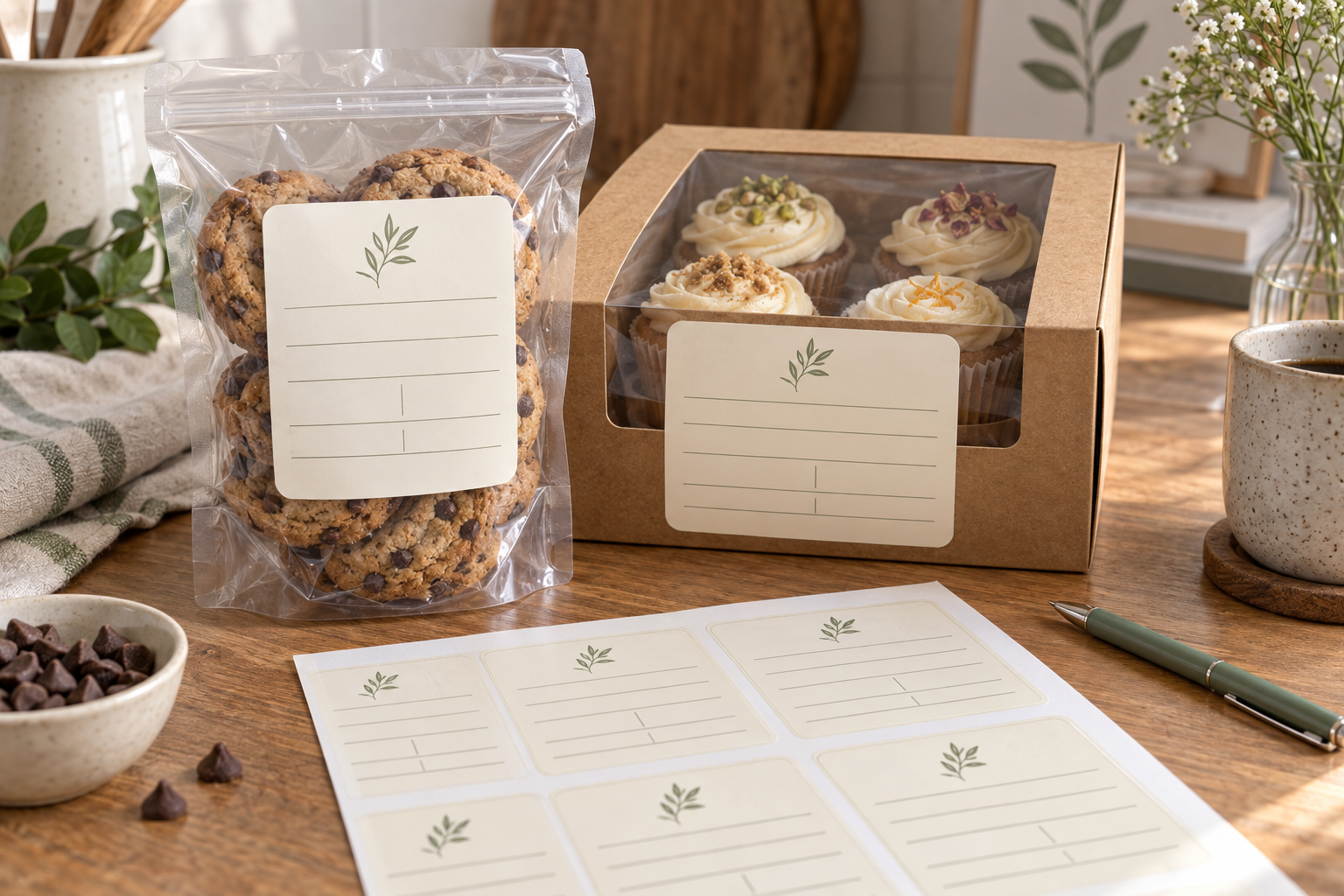
Home bakery labels in Saudi Arabia need more than a pretty sticker — your packaging should show your Maroof-verified store details and the basic ingredient/allergen information buyers expect, in Arabic and English. Getting this right before your first sale avoids reprinting an entire batch later.
Home-based food and bakery sellers in Saudi Arabia are growing fast, especially through Instagram and Salla or Zid storefronts. Most guides online cover two separate things: how to register your store on Maroof, or generic bakery sticker design inspiration from international print shops. Almost none combine the two into a practical labeling checklist built for a Saudi home baker packing an order tonight.
What Actually Needs to Be on a Home Bakery Label?
A home bakery label exists to answer three questions instantly: what is this, who made it, and is it safe for the buyer to eat. At minimum, that means the product name, the main ingredients in order of quantity, any common allergens (nuts, dairy, eggs, gluten), the production or best-before indication, and a way to reach your store — your Instagram handle, phone number, or Maroof-verified store name.
A label that only shows a logo and a flavor name looks nice but leaves the buyer guessing on the part that actually matters for repeat trust: ingredients and contact information. Food safety oversight in Saudi Arabia sits with the Saudi Food and Drug Authority, which is the reference point for anyone asking whether a home food business needs to disclose ingredients — the honest answer is that disclosing them is a trust-and-safety practice worth following even where enforcement for small home sellers is still evolving.
Why Does Maroof Matter for Your Packaging?
Maroof is a free government service from Saudi Arabia’s Ministry of Commerce that lets online store owners link their business to their commercial registration and earn a verification badge buyers can check before ordering. It was built to make small online stores — including home-based food sellers — look credible without needing a physical storefront.
Printing your Maroof-verified store name or badge reference on your packaging is a small detail that does real work: it tells a first-time buyer your store is a registered, checkable business, not an anonymous account, which matters more for food than almost any other home-business category.
Sticker vs. Printed Wrapper: Which Fits Your Products?
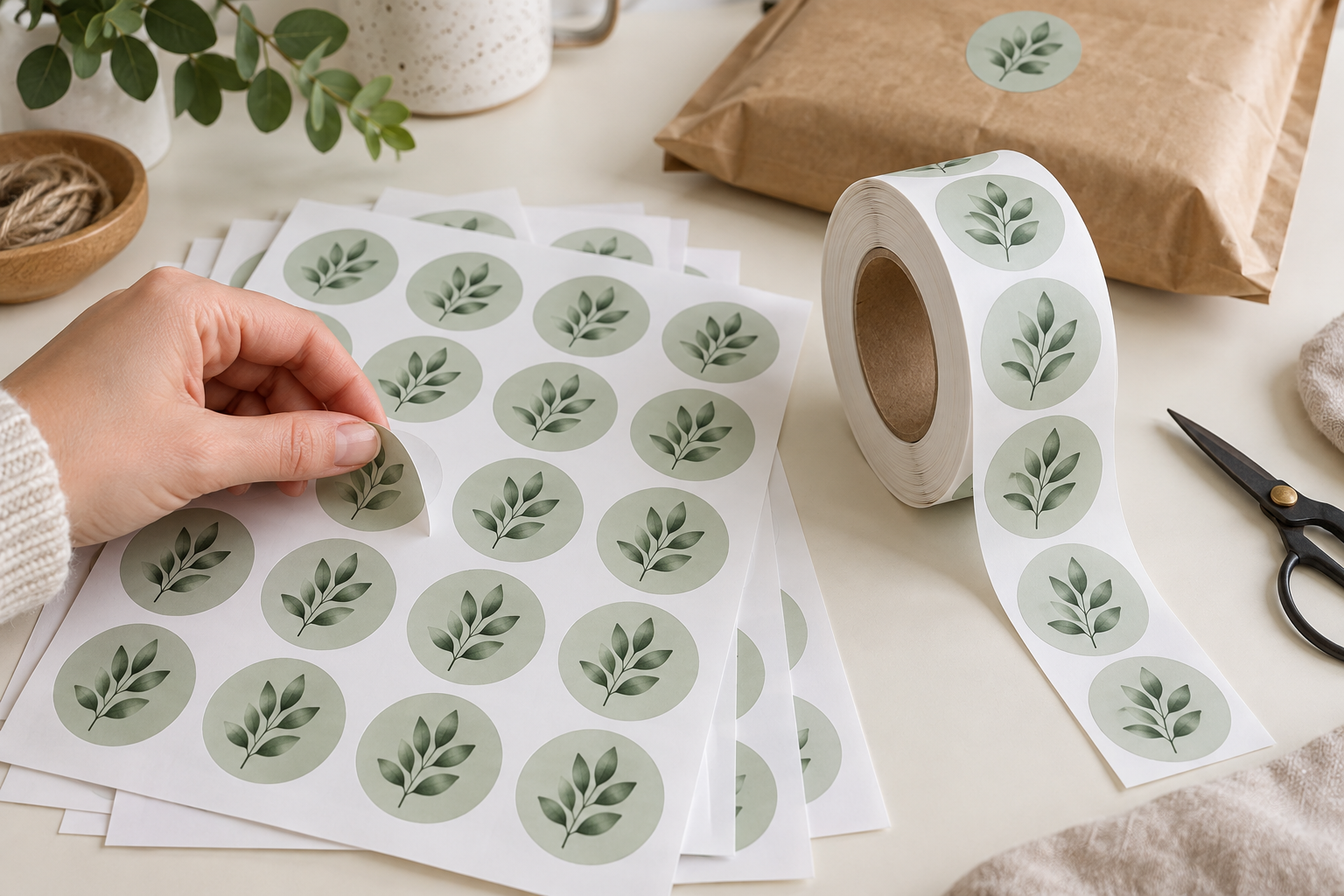
The right format depends on what you are packaging and how often your design changes.
| Format | Best for | Why |
|---|---|---|
| Die-cut stickers | Cookies, individually wrapped items, jars | Sticks to curved or small surfaces, works well on plastic and glass |
| Sticker sheets | Multiple flavors or batch labeling | One print run covers several product variants at once |
| Custom printed cupcake boxes | Cupcakes, delicate baked goods | Branding is built into the box itself, no separate sticker needed |
| Food cradles | Fragile items needing extra protection during delivery | Keeps items from shifting inside the box during transport |
How Do You Handle Ingredient Changes Between Batches?
This is where most home bakers overcomplicate things. You do not need a full custom sticker reprint every time you tweak a recipe. A practical approach is printing a base sticker with your brand, contact details, and a blank or small writable area for ingredients and date, then filling in the variable part by hand or with a simple label printer for each batch.
For sellers with a stable, unchanging menu, a fully custom pre-printed sticker sheet with fixed ingredient lists is faster per order once volume grows.
Common Mistakes Home Bakers Make With Labels
Skipping allergen information entirely. Even a short “contains nuts” or “dairy-free” line prevents the single most common customer complaint in home food businesses.
Printing contact info that changes often. A personal WhatsApp number tied to a phone you might switch is less durable than an Instagram handle or Maroof store name.
Choosing a sticker that cannot survive refrigeration. Baked goods with cream or dairy fillings often go into the fridge — a standard paper sticker can wrinkle or peel there.
Ordering one design for every product. A single generic “homemade” sticker for cookies, cakes, and jars looks unfinished next to sellers using product-specific labels.
Waiting until the first big order to think about packaging. Reprinting mid-week because your first design missed ingredient space costs more time than planning it once, correctly.
Checklist Before You Print Your First Batch
- Product name and main ingredients are listed in order of quantity.
- Common allergens (nuts, dairy, eggs, gluten) are clearly marked.
- Your Maroof-verified store name or a stable contact method is printed on the label.
- You have chosen a sticker or box format that matches how the product is stored (fridge, room temperature, transport).
- You have a plan for batch-to-batch ingredient changes without reprinting every time.
- Your design has been proofed for spelling in both Arabic and English if you sell to both audiences.
Frequently Asked Questions
Do home bakeries in Saudi Arabia need Maroof registration?
Maroof is not legally mandatory for every home seller, but it is a free way to verify your store, and printing your verified name on packaging builds buyer trust — especially for food, where anonymity is a bigger concern than for other product categories.
What allergens should I list on a home bakery sticker?
At minimum, flag the most common ones present in your recipe — nuts, dairy, eggs, and gluten — since these cover the majority of customer concerns and questions sellers report receiving.
Can I use the same sticker design for different flavors?
You can keep the same base design (logo, contact info, allergen icons) and vary only the flavor name and date, which is faster than designing a completely new sticker per flavor.
What sticker material holds up best for refrigerated baked goods?
A water-resistant, glossy or spot-UV finished sticker holds its adhesion and print quality in the fridge far better than a plain uncoated paper label.
Bringing It Together
A home bakery label is not decoration — it is the fastest way to earn a stranger’s trust in something they are about to eat. Get the ingredients, allergens, and a verifiable store name on the sticker before your first sale, and pick a format that survives how your product is actually stored and shipped. Paper-Ink can help you design and print labels and boxes that hold up from your kitchen to your customer’s door — request a quote or reach us directly on WhatsApp.
Related reading: Custom Labels for Saudi Candle, Soap & Home-Fragrance Brands: A Material and Sizing Guide
