
Paper Ink Blog
Custom Labels for Saudi Candle, Soap & Home-Fragrance Brands: A Material and Sizing Guide

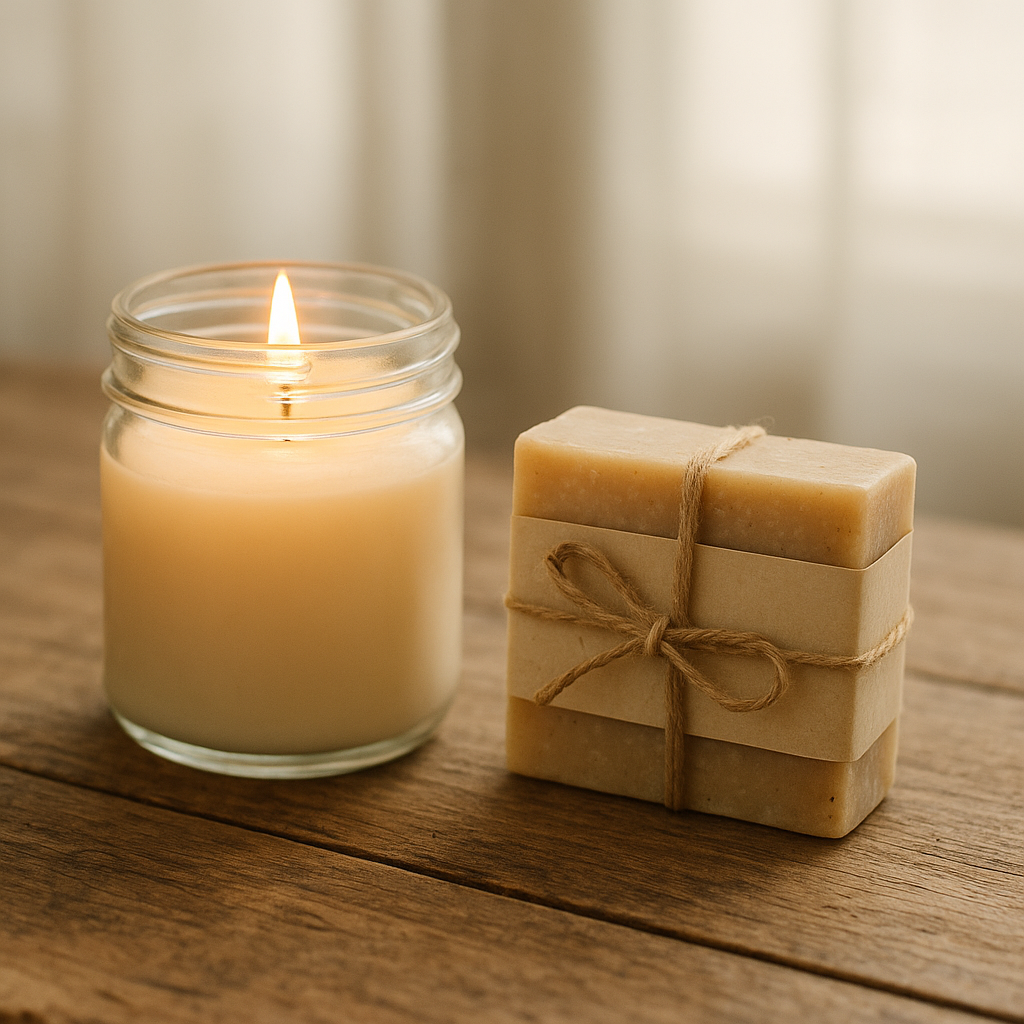
Short answer: the right label for candles, soap, and home-fragrance products depends on what the product does to the label — heat from a burning candle, moisture from curing soap, or oil residue from fragrance products all need a different material, and getting this wrong is why so many handmade-brand labels peel or fade within weeks. The sections below cover material choice by product type, sizing, and the mistakes that make labels fail before a customer even opens the product.
Saudi home-fragrance and handmade-soap sellers have grown fast on Instagram and through weekend markets, but most only think about label design — the graphic, the logo, the color — and not about whether the material survives what the product actually does to it. A beautiful label that wrinkles after one candle burn or peels during a month-long soap cure costs more in reprints than choosing the right material the first time.
Why do candle, soap, and fragrance labels need different materials from each other?
Each product stresses a label in a different way. A candle heats up near the label as it burns, especially in smaller jars where the flame sits close to the glass wall. Cold-process soap keeps releasing moisture and natural oils for weeks after it is cut, a stage called curing. Perfume and fragrance oil bottles are handled often and can leak small amounts of oil around the cap.
Treating all three like a single generic “sticker” is the most common reason handmade brands reprint labels within their first few months — the material that works perfectly for a dry product fails quickly on any of these three.
Section summary: a candle, a bar of soap, and a perfume bottle each put a different kind of physical stress on a label, so the material decision should start with the product, not the design.
What label material actually holds up on a burning candle?
Candle labels sit closest to a real heat source of the three product types. A candle jar can get warm enough near the top, especially with a long burn, to soften a standard paper label’s adhesive. A vinyl label with a heat-tolerant adhesive holds its position and print quality far longer under that repeated warm-and-cool cycle.
A clear vinyl sticker works well for candles where you want the wax color itself to show through the design, while a matte or kraft-style vinyl finish suits candles going for a more natural, handcrafted look.
Section summary: for anything that generates its own heat, a heat-tolerant vinyl consistently outperforms a plain paper label over the life of the product.
Why does soap need a different label than a dry product?
Cold-process and handmade soap bars continue to lose moisture and release natural oils for weeks after cutting, a process most small soap makers know as curing. A label applied too early, or on the wrong material, can trap moisture underneath and lift at the edges within days.
A water- and oil-resistant vinyl label, applied only once the bar has fully cured, is the safer default. If your brand also ships candles or soap in printed boxes rather than loose bars, our custom labels for perfume, candle and sweets businesses page covers the material and finish options available for ordering.
| Product | Main label stress | Best material |
|---|---|---|
| Candle | Heat from burning | Heat-tolerant vinyl, clear or matte |
| Soap (cold-process) | Moisture and oil during curing | Water- and oil-resistant vinyl |
| Perfume / fragrance oil | Handling and oil residue around the cap | Glossy or metallic vinyl, oil-resistant |

What size and shape fit small-batch home-fragrance products?
In short: size your label to the flattest part of the container, leave a small margin so it does not wrap into a curved edge or seam, and choose a round or oval shape for jars and a rectangular wrap label for bottles with a flat front panel. Measure the actual container before ordering rather than guessing from an online template, since jar and bottle shapes vary more than they look in photos.
For reference, check the common sticker size guide before finalizing your print file, then confirm it against your specific jar or bottle rather than a generic mockup.
Section summary: the container’s actual shape decides the label shape, not the design software’s default template.

Common mistakes small home-fragrance brands make with labels
- Applying a soap label before curing finishes: trapped moisture lifts the edges within days, no matter how good the adhesive is.
- Using plain paper on candle jars: it looks fine in the first week, then softens or discolors from repeated heat exposure.
- Skipping a test label on the actual container: a label sized from a flat mockup often wrinkles once applied to a curved jar or bottle.
- Ignoring the per-unit label cost when pricing the product: a premium finish adds a small but real cost per item that is easy to forget when setting your retail price — the small business sticker branding guide is a useful starting reference for that budget line.
- Ordering a large first batch before testing the design: a small trial run lets you catch sizing or color issues before committing to hundreds of labels.
Quick checklist before you send a candle, soap, or fragrance label file to print
- ☐ Identified which stress your product puts on the label (heat, moisture, or oil)
- ☐ Chose a vinyl material matched to that stress, not a plain paper default
- ☐ Measured the actual container, not a flat template
- ☐ Waited for soap to finish curing before applying any label
- ☐ Ordered a small first batch to test sizing and finish
- ☐ Budgeted the per-unit label cost into your retail price
Frequently asked questions about candle, soap, and fragrance labels
Can I use the same label material for candles and soap?
It is not ideal — a candle needs heat tolerance while soap needs moisture and oil resistance, so a material chosen for one will underperform on the other.
How soon can I label a bar of cold-process soap after cutting?
Most small soap makers wait until the bar has fully cured, typically several weeks, since labeling too early traps moisture under the sticker and causes it to lift.
Does a clear label work on a colored candle?
Yes, a clear vinyl label lets the wax color show through the design, which many home-fragrance brands prefer over a fully opaque label.
How many labels should a small home-fragrance brand order to start?
Start with a batch sized to a few weeks of expected sales rather than a full year of stock, so you can adjust the design once you see how the label performs on the real product.
Bringing it together
A candle, a bar of soap, and a bottle of fragrance oil each stress a label differently, and matching the material to that stress is what keeps a handmade brand’s packaging looking intentional weeks after the sale, not just on day one. Paper-Ink is a Saudi print shop that helps small and growing home-fragrance businesses choose materials built for real handling conditions, not just a flat mockup. Request a quote from Paper-Ink or message us directly on WhatsApp with your product type and order quantity.
