
Paper Ink Blog
Thank-You Card Wording Ideas That Actually Get Noticed


Short answer: the best thank-you card wording is short, specific, and names what the customer actually did — not a generic “thank you for your purchase.” For Saudi small businesses, pairing that specific wording with the right card format, ready-made or custom-printed, is what makes it feel genuine. Below is how to write it and how to match it to a card you can actually order.
A thank-you card is one of the cheapest ways a small business leaves a lasting impression, but most owners get stuck at the same point: what do I actually write inside it? Generic templates from global blogs rarely translate into something that matches a card format you can order locally.
What should you actually write in a thank-you card for a customer?
Name the specific action, not the general relationship. “Thank you for trusting us with your first order” reads as genuine; “thank you for your purchase” reads as a template. Specificity is what separates a card customers keep from one they toss.
Keep it to two or three short sentences: one line naming what happened, one line of genuine appreciation, and one optional line inviting them back — without turning it into a sales pitch.
Section summary: good thank-you card wording names the specific action the customer took, stays under three sentences, and avoids sounding like a discount offer in disguise.
What wording works for different customer moments?
For a first-time order: “Thank you for giving [business name] a try — we hope it’s the first of many.” For a repeat customer: “Your continued support means a lot to a small, local business like ours.” For a large or corporate order: “Thank you for trusting us with an order this size — we don’t take it lightly.”
For a referral: “Thank you for sending [name] our way — recommendations from customers like you are how we grow.” Each version names the moment, not just the transaction.
Section summary: the right thank-you wording changes with the moment — a first order, a repeat customer, a referral, or a large order each deserve a different line.

Short thank-you message ready to copy
If you need something ready right now: “Thank you for choosing [business name]. Your support means more to us than you know, and we hope to see you again soon.” It is short enough to fit most card formats and specific enough to not feel automated.
Should the wording change based on a ready-made or custom-printed card?
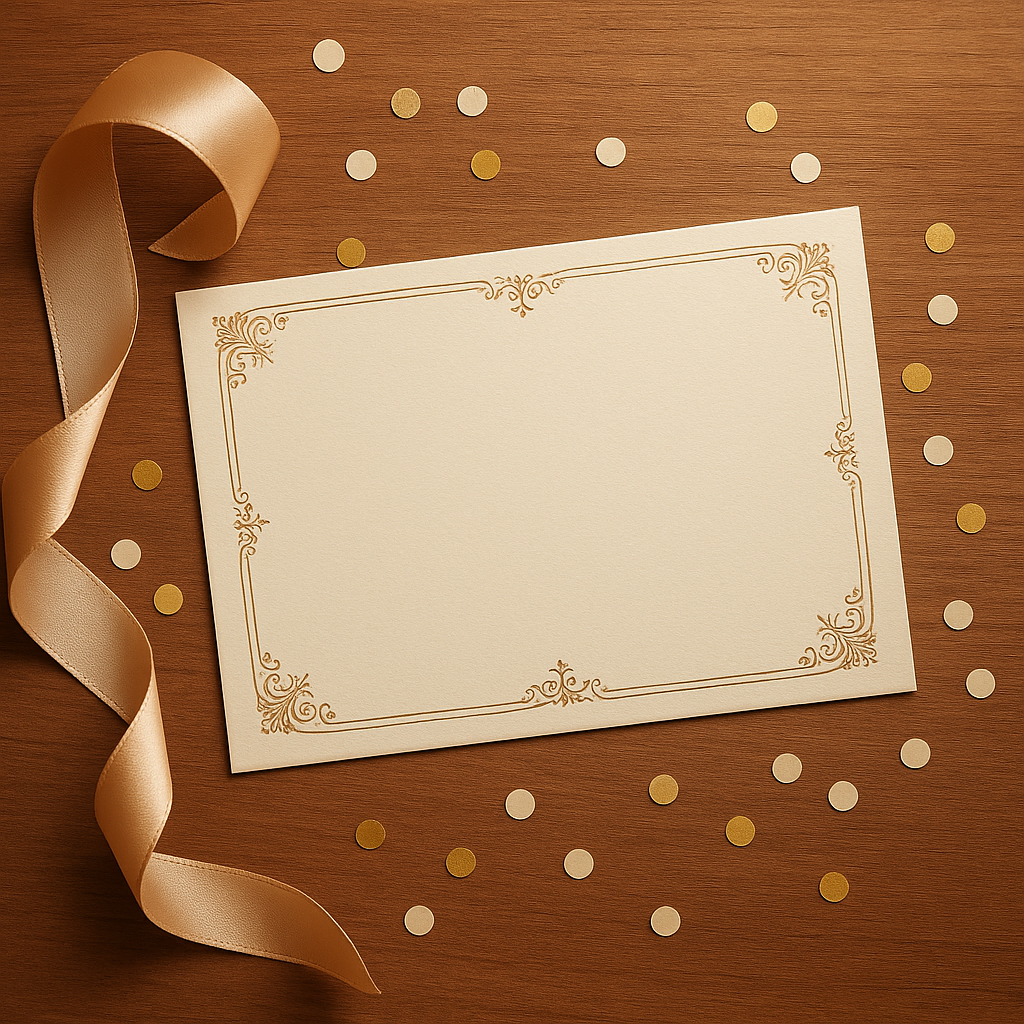
A ready-made thank-you card already has a printed design, so your wording usually needs to fit a smaller blank space — keep it to one or two lines you can handwrite. A real example is the National Day Thank You Card, a pre-designed format you write directly into.
A custom-printed card gives you more room, because the wording itself can be printed as part of the design — letting you use a slightly longer message without relying on handwriting for every single card.
| Card type | Wording length | Best for |
|---|---|---|
| Ready-made | 1–2 handwritten lines | Quick, personal thank-yous in small batches |
| Custom-printed | 2–3 printed lines | Consistent branded wording across larger batches |
Section summary: a ready-made card needs short, handwritten wording, while a custom-printed card can carry a slightly longer, pre-printed message across every card in the batch.

How long should a thank-you note actually be?
Long enough to be specific, short enough to be read in under ten seconds. Three sentences is the practical ceiling for a printed card — anything longer starts to read like a letter instead of a quick, genuine thank-you.
If you have more to say, that is a sign you need a different format entirely — a follow-up email or a personal note — not a longer card.
For more general etiquette on tone and structure, Emily Post’s guide to writing thank-you notes is a useful reference, and the history of the greeting card explains why a short, personal note still works better than a long one.
Common mistakes when wording a thank-you card
- Writing a generic line that fits any customer: it reads as a template, even when handwritten.
- Turning the card into a discount pitch: “thank you — here’s 10% off” undercuts the sincerity of the thank-you itself.
- Using the same wording for every occasion: a first order and a repeat customer deserve different lines.
- Writing too much on a ready-made card’s limited space: cramped handwriting looks rushed, not thoughtful.
- Skipping the business name entirely: a card that could have come from anyone does not reinforce your brand.
Checklist before you print or write your thank-you cards
- Named the specific action the customer took, not a generic “purchase”
- Kept the message to two or three sentences
- Matched the wording length to a ready-made or custom-printed format
- Removed any line that reads like a discount offer
- Added the business name somewhere in the message
- Tested the wording by reading it out loud once before finalizing
Frequently asked questions about thank-you card wording
What should I write in a thank-you card to a customer?
Name the specific thing they did — their first order, a referral, a large order — in one line, add a genuine appreciation line, and keep it under three sentences total.
How long should a thank-you note be?
Short enough to read in under ten seconds. Three sentences is a practical ceiling for a printed card.
Should I handwrite or print the wording?
Handwrite short wording on a ready-made card for a personal touch; print the wording as part of the design on a custom card when you are sending the same message across a larger batch.
Is it okay to include a discount in a thank-you card?
It works better as a separate line clearly marked as a gesture, not blended into the thank-you message itself — mixing the two makes the gratitude feel transactional.
Bringing it together
The wording that actually gets noticed is specific, short, and matched to the card format you are sending it on. Paper-Ink can help you turn that wording into a card your customers actually keep, whether that is a ready-made format or a fully custom print run. Request a quote from Paper-Ink or reach out directly on WhatsApp with your card format and quantity.