

Paper Ink Blog
Wall Art Buying Guide: Canvas, Metal, Wood, Wall Hangings and Illuminated Art

Short answer: choose wall art in this order: the wall (size and light), the room’s mood, the material, then the piece. Size art to about two-thirds of the furniture below it, hang its centre around 145–150 cm from the floor, and pick a material that suits the room’s light: canvas for soft rooms, metal for bright modern spaces, wood and textiles for warmth, and illuminated art for rooms used mostly at night.
Most people shop for wall art by scrolling until something looks nice. Then it arrives too small, too shiny or wrong for the room. This guide gives you a simple way to decide first and shop second.
Step 1: Read the wall
Before choosing any wall art, answer three questions:
- How big is the space? Measure width and the space above furniture.
- How much light does it get? Direct sun fades prints; dim rooms swallow dark art.
- When is the room used? A majlis used in the evening needs a different wall art design from a sunny breakfast area.
Step 2: Size and hanging height
Two rules from interior designers cover most walls:
- Centre height: hang art “at 57″ on center” (about 145 cm), a standard used in many galleries (Apartment Therapy).
- Width over furniture: art above a sofa or bed should be about two-thirds of its width, hung 6–8 inches (15–20 cm) above it (Apartment Therapy).
| Furniture below | Furniture width | Target art width | Example |
|---|---|---|---|
| 3-seater sofa | 210 cm | about 140 cm | One large wall art piece or a group of three |
| Majlis seating run | 300 cm | about 200 cm | A series of three to five pieces |
| Queen bed headboard | 160 cm | about 105 cm | Two portraits side by side |
| Desk | 120 cm | about 80 cm | One or two medium pieces |
| No furniture (hallway) | — | Scale to the wall | Centre at 145 cm |
Large wall art is not always better. In small rooms, a group of smaller pieces reads as larger and is easier to hang.
Step 3: Choose the material
| Material | Look | Best rooms | Watch for |
|---|---|---|---|
| Canvas wall art | Soft texture, no glass | Living rooms, bedrooms | Warping in cheap frames |
| Framed wall art | Crisp, finished | Offices, hallways | Glare from glass |
| Metal wall art | Bright, modern | Kitchens, modern majlis | Reflections under spotlights |
| Wood wall art, wood wall decor and wood wall hangings | Warm, natural | Majlis, bedrooms | Heavy on plasterboard |
| Fabric wall hangings, cloth wall hangings, macrame wall hangings | Soft, textured wall hanging decor | Bohemian bedrooms | Dust in open windows |
| 3D wall art | Sculptural, shadow play | Entrances, feature walls | Needs side light to show depth |
| Mural painting | Whole-wall artwork | Kids’ rooms, cafés | Permanent; plan carefully |
| Illuminated art | Printed look by day, glowing by night | Bedrooms, gaming rooms, majlis at night | Needs a socket nearby |
For a closer comparison of print formats, including canvas photos and framing, see our custom poster, canvas and photo print guide.
Framing options: framed canvas, floating frames and more
Framing changes how the same image reads. A framed canvas (stretched canvas set inside a thin “floater” frame) looks more finished than bare canvas and protects the edges. Canvas frames in black or natural wood suit modern rooms; gold suits classic majlis interiors. For paper prints, wall art framing with a mount (mat) gives small pieces more presence. Wood wall art decor pieces usually need no frame at all; their edges are part of the design.
| Frame choice | Effect | Best with |
|---|---|---|
| No frame (gallery wrap) | Casual, contemporary | Canvas prints, abstract art |
| Floating frame | Crisp shadow gap around canvas | Framed canvas in living rooms |
| Mount + thin frame | Adds scale to small art | Photos, botanical prints |
| Ornate or gold frame | Classic, formal | Majlis, entrance halls |
Canvas painting vs canvas print
“Canvas painting” searches split between people who want to buy a hand-painted canvas and people who want to paint one. An original acrylic canvas painting (a canvas painting with acrylic paint, done by an artist) has texture and uniqueness; a canvas print reproduces an image on canvas at lower cost. Wall canvas prints of photos and paintings for home décor are the most common choice for living rooms. If you’re commissioning an original, ask about the artist’s stretching and varnish; if you’re buying prints, ask about print resolution and edge wrap.
Styles: modern, abstract, Islamic and Arabic
- Modern wall art: clean shapes, limited colours; suits contemporary villas and apartments.
- Abstract wall art: colour fields and textures; flexible for mixed interiors.
- Islamic wall art: calligraphy, geometric patterns and architecture. For Quranic text, place it respectfully: at or above eye level, never in bathrooms or at floor level.
- Arabic wall art: poetry, names or phrases in Arabic scripts; works beautifully in majlis settings.
- Childrens wall art: animals, alphabets and soft colours, hung at a child’s eye level.
- Unique wall art: commissioned pieces, your own photos, or illuminated art that few guests will have seen.
For how these styles fit whole-room décor, read our home decor styles guide.
Picture hanging: getting it straight
- Mark the centre at about 145 cm with painter’s tape.
- For groups, lay pieces on the floor first and photograph the layout.
- Use the right fixings: hooks for heavy framed art, anchors for plasterboard, removable strips only for light pieces.
- Keep 5–8 cm between pieces in a group.
- Check the level after hanging, then again a day later.
Picture hanging mistakes are usually about height: most people hang art too high.
Wall art decor in rented homes
If you can’t drill, use removable strips for light pieces, a leaning display on a console, or decals. Our wall decal guide covers removable options.
Common mistakes
- Too small for the wall. Use the two-thirds rule.
- Too high. Centre around 145–150 cm.
- Glass opposite windows. Reflections hide the art.
- Ignoring night-time. Dark rooms hide most wall art.
- Mixing too many styles. Choose one direction per room.
How LumiPoster fits wall art
Most wall art depends on room light, which is why a beautiful piece can disappear after sunset. A LumiPoster doesn’t. Switched off, it looks like a clean full-bleed print with no visible frame; switched on, the whole image glows evenly from inside, turning the artwork into the room’s evening light. It isn’t an LED border, a neon outline or a screen. At 32 × 48 cm portrait, it fits beside a bed, above a desk or as the centre of a gallery group, and the art-and-nature range includes landscapes and abstracts that suit Saudi interiors.
Verified on 2026-09-28: 270 SAR · free delivery across Saudi Arabia · 1-year warranty. For the full comparison of lit formats, see our illuminated wall art guide.
Recommended LumiPoster designs
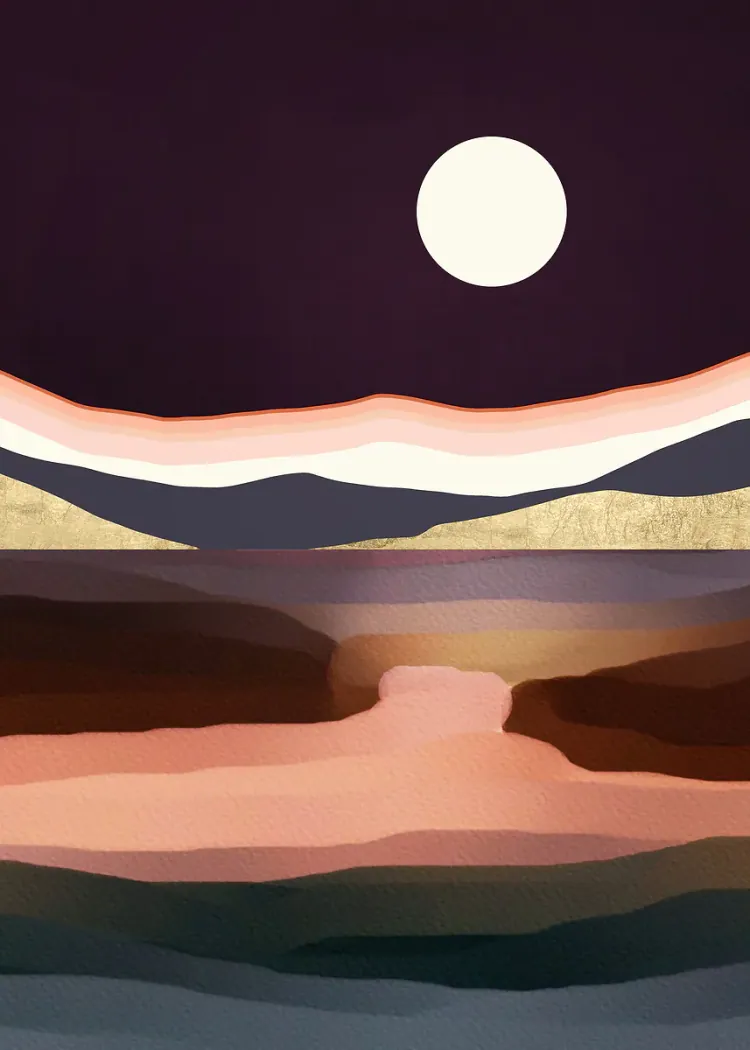
- Moon Above the Layers of the Desert. Desert tones for majlis and living rooms. See it lit.
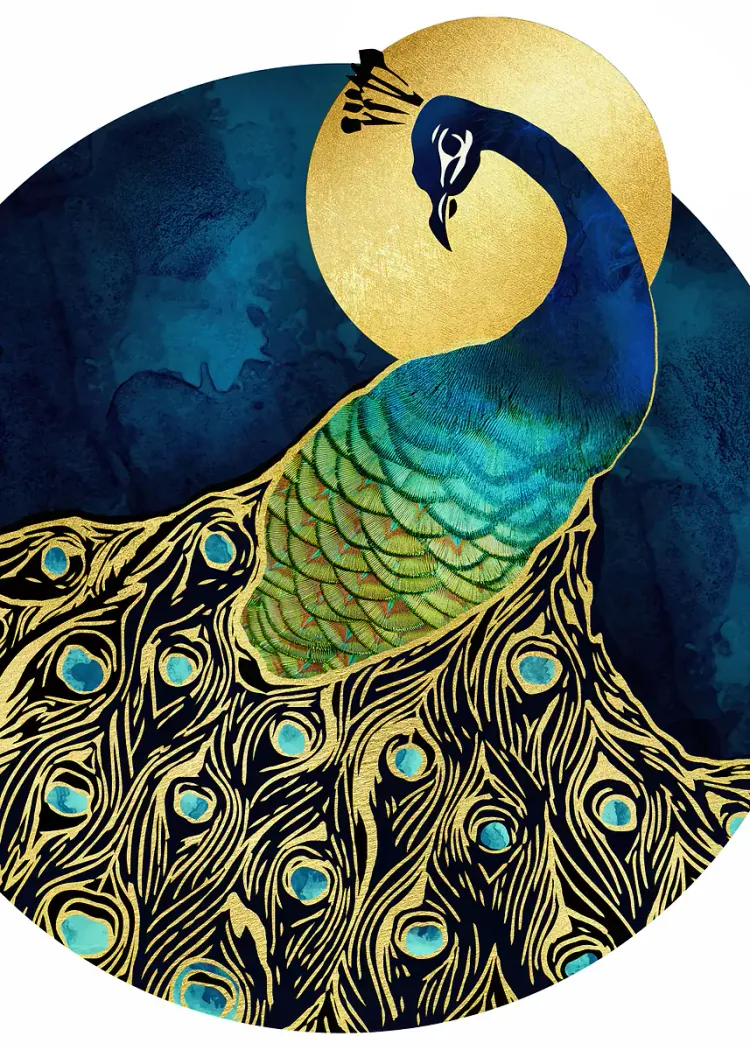
- Peacock Under the Golden Moon. Rich colour for a statement corner. View the design.
- Blue and Gold Abstraction. Abstract wall art for modern rooms. Check it out.
Browse the art and nature collection for more.
FAQ
How high should wall art be hung?
With its centre about 145–150 cm (57–60 inches) from the floor, or 15–20 cm above furniture.
What size wall art should go above a sofa?
About two-thirds of the sofa’s width.
Is canvas or metal wall art better?
Canvas suits soft, warm rooms and avoids glare; metal suits bright, modern rooms and cleans easily.
How should Islamic wall art be displayed?
Respectfully: at or above eye level, in clean living spaces, not in bathrooms or near the floor.
What wall art works in a dark room?
Light-coloured art near a lamp, or illuminated art that produces its own light.
What’s the difference between a wall hanging and wall art?
Wall hangings are usually textiles or wood pieces hung loosely; wall art covers framed, canvas, metal and printed pieces.
Find a piece that fits your wall
Read the wall, size it, then choose the material. When you’re ready, find a piece that fits your wall or turn your own photo into art with our custom photo guide.
Sources: Apartment Therapy — the 57-inch rule · Apartment Therapy — art sizing over a sofa · Paper Ink product data (read 2026-09-28)
Related reading: How to Turn Travel Photos Into Wall Art That Doesn’t Look Generic
