
Paper Ink Blog
Teen Bedroom Decor: Balancing Study and Gaming

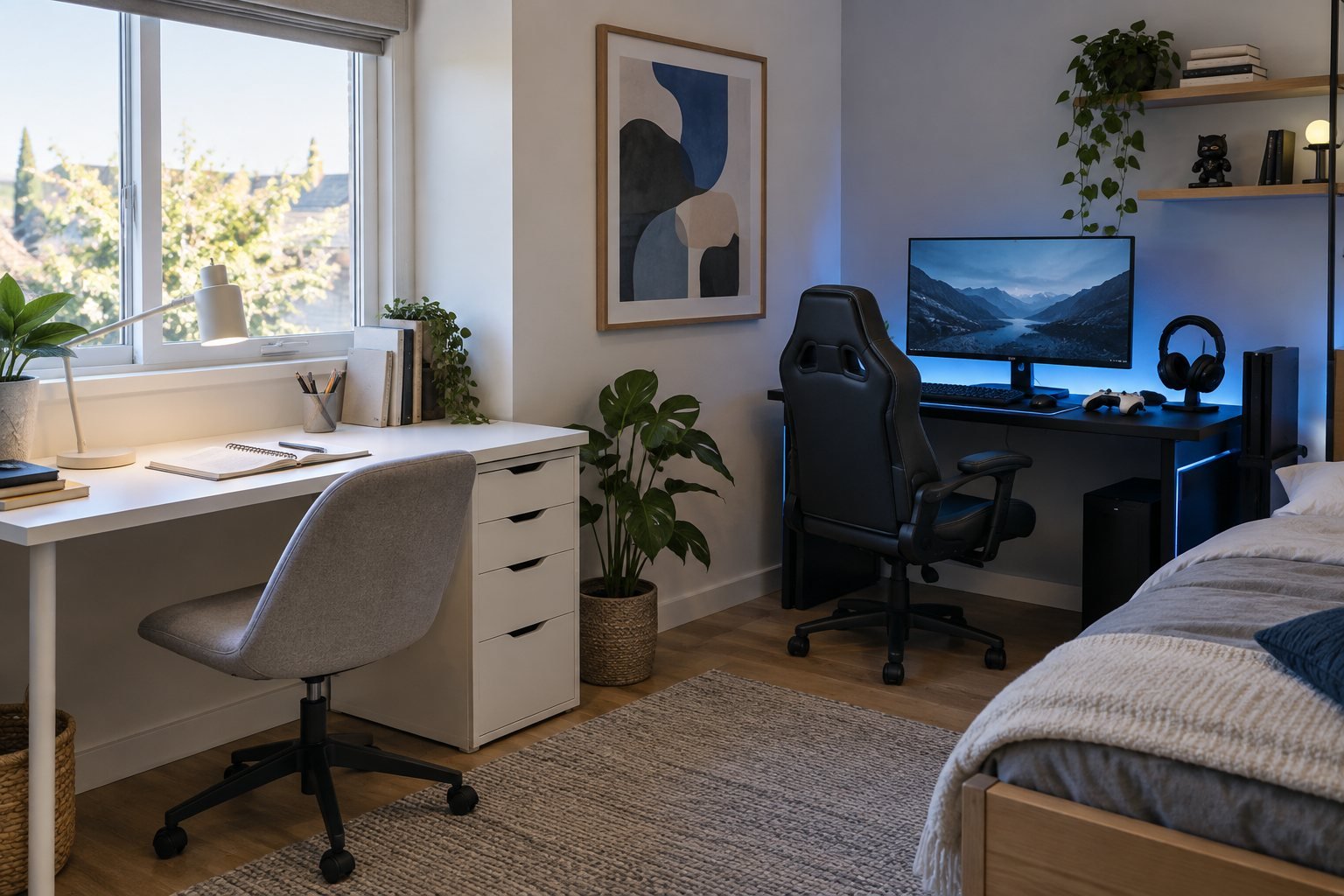
Teen bedroom decor starts with a simple idea: balancing study and gaming in a teen’s bedroom isn’t just about organization — it’s about designing an environment that supports both productivity and relaxation. The good news: you don’t need a big room or a large budget to make it work.
Why separating study and gaming zones matters
When the two zones blur together, the brain struggles to switch between “focus mode” and “relaxation mode.” A clear visual boundary — even a symbolic one — improves concentration during study time and enables more genuine relaxation during gaming.
How to divide the space — even in a small room
The principle is orientation, not square footage: the study desk faces the wall and stays away from screens, while the gaming corner takes the opposite side. Lighting is a powerful tool — focused white light for studying, colored or LED ambient light for gaming is often enough to define each zone.
Study desk essentials
- Task lighting that doesn’t strain the eyes during long reading sessions
- Organizers to keep books and papers out of your visual field
- A supportive chair that holds the back through extended study sessions
- Phone out of reach — even on silent
Gaming corner essentials
A well-designed gaming corner reduces strain and improves the overall experience. For a complete gaming setup guide from lighting to the wall, check out our complete gaming room setup guide.
- Screen or TV at the right height for your eye level
- Gaming chair with back and neck support
- LED backlighting to reduce the contrast between screen and surroundings
- Headset and controller organizer to keep things tidy
The wall — the shared opportunity between study and gaming
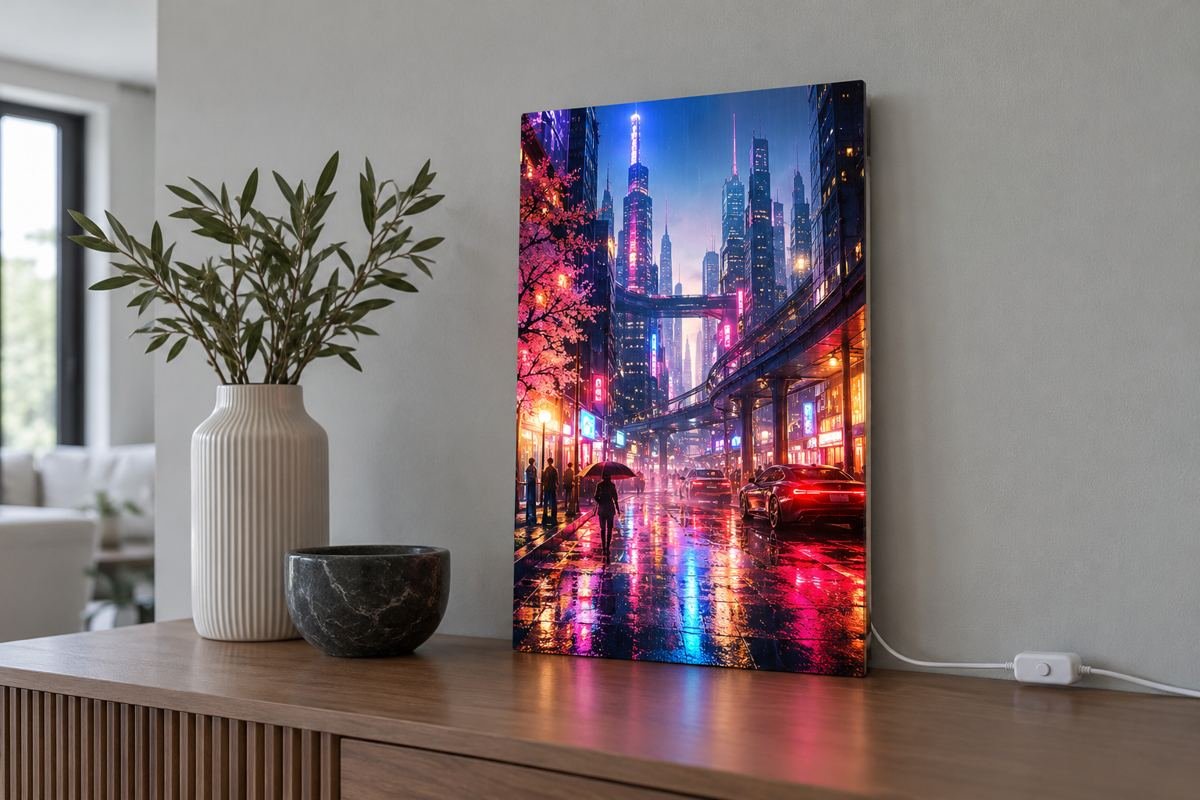
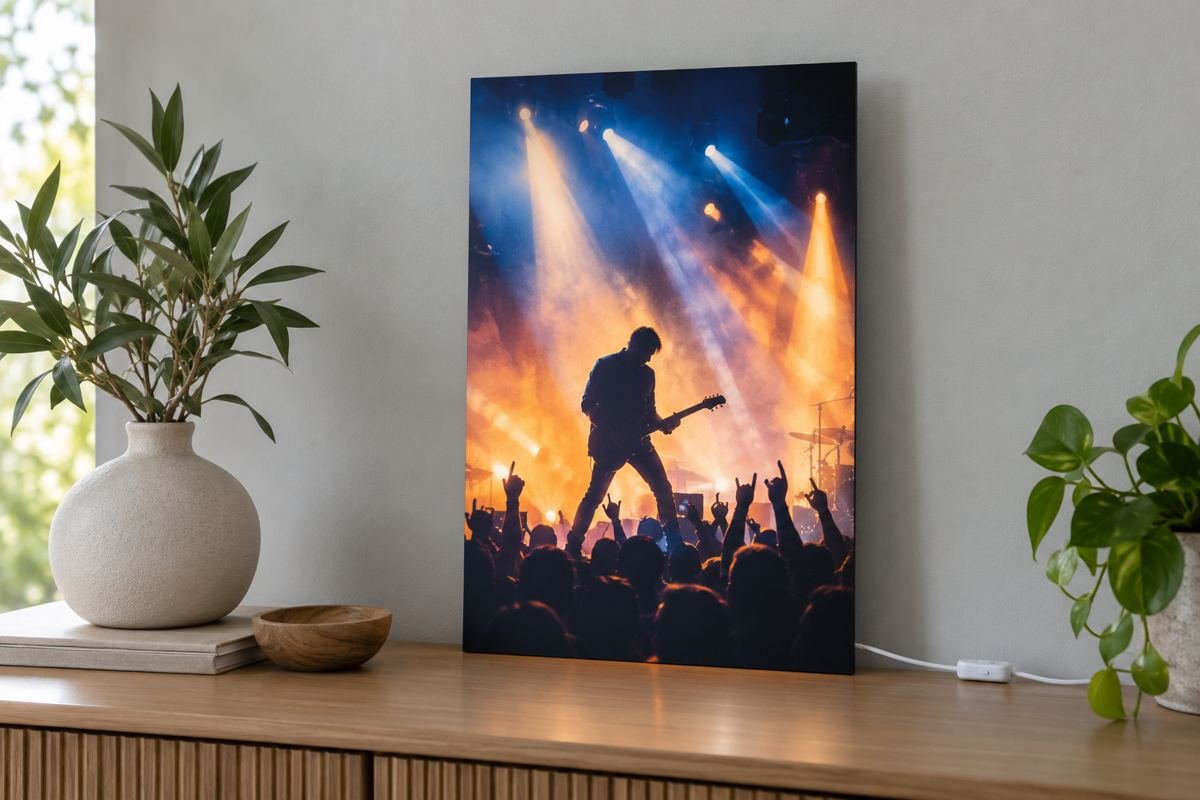
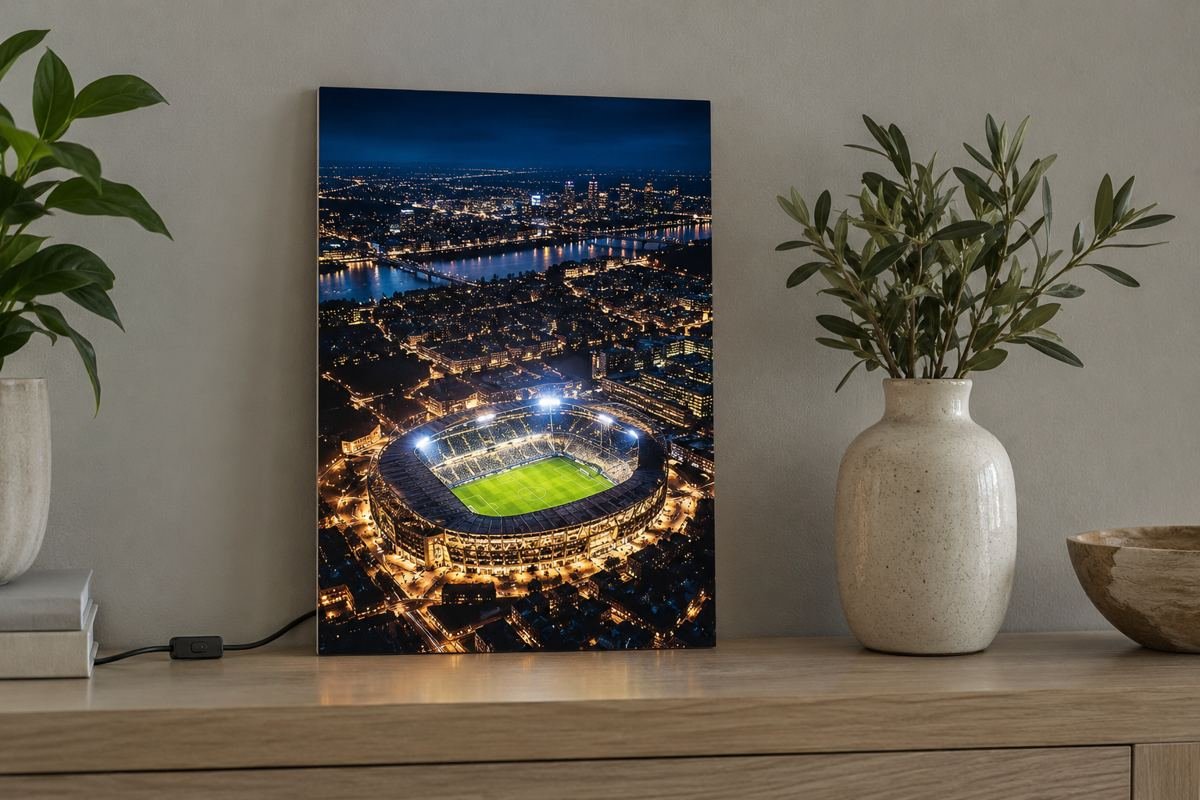
The wall shared between both zones can work for both if you pick the right piece. A motivational phrase poster, for example, fits the study mood and adds character to the whole room. LumiPoster’s “Phrases” category at paper-ink.com/en/lumiposter covers this type of piece at 270 SAR. For ideas on arranging multiple pieces together, see our wall art ideas guide.
A note for parents — involve the teen in the decision
A teen who participated in designing their room respects the setup and maintains it better. Even if choices are partly shared — the lighting color, the wall piece, the layout of both zones — their sense of ownership turns the room from “the room my parents set up for me” into “my room.”
Top 10 Practical Recommendations for Teen Bedroom Decor
These steps turn the layout ideas above into a plan. Apply them in order, starting with the free ones.
- Start with a simple sketch. Draw the room on paper and mark the desk and the gaming corner before buying anything.
- Face the desk toward the wall. A wall means fewer visual distractions during homework.
- Put the gaming corner opposite the desk. The distance tells the brain it is time to switch modes.
- Use two kinds of light. Focused white light for studying, soft ambient backlight for gaming.
- Set the screen at eye level. This eases neck strain, and our gaming room setup guide has more detail.
- Keep the phone off the desk. Park it in a drawer or on a far charger during study hours.
- Share one neutral wall. A calm piece such as an illuminated LumiPoster works for both zones.
- Match colors across both corners. Two or three colors are enough, and our bedroom decor ideas show examples.
- Write the screen schedule together. Teens stick to rules they helped create.
- Build the room in stages. Begin with basics, then add details using the budget gaming room guide.
What’s New as of October 2026
We found no confirmed new development about bedroom decor itself. Screen-use guidance did update, though, and it affects how you arrange the room.
The American Academy of Pediatrics updated its Family Media Use Plan page on January 20, 2026, as shown on HealthyChildren.org. It suggests screen-free times, especially before bed, and turning off autoplay and notifications.
In Saudi Arabia, a May 2025 study of 324 children in the Eastern Province appeared in the International Journal of Environmental Research and Public Health. Children with more than 5 hours of daily screen time showed higher attention-related symptom scores. Screen use that needed parental permission was linked to lower scores.
The study shows association, not cause. Treat it as a reason to set a clear schedule, not as a verdict on any teen.
Frequently Asked Questions About Teen Bedroom Decor
Can you divide a small room between study and gaming?
Yes. The principle is visual orientation, not square footage. Face the desk toward the wall and put the gaming corner opposite it.
What distinguishes a study zone from a gaming corner?
Lighting and orientation. Use focused white light for studying and ambient backlighting for gaming, with each zone facing a different direction.
Can a shared wall serve both zones?
Yes, if you choose a neutral piece such as a motivational illuminated quote. Browse LumiPoster illuminated posters for options.
Why involve the teen in decorating?
Because ownership builds care. The room becomes “my room” instead of “the room my parents arranged.”
Should screens stay out of a teen’s bedroom?
Aim for screen-free time before bed, as the Family Media Use Plan above suggests. Even charging devices away from the bed helps.
Can I order custom stickers for a teen’s desk or locker?
Yes, request a quote with your design. We send a free digital proof before printing.
How do I start teen bedroom decor on a small budget?
Start with lighting, cable tidying and the desk, since they change the most. Then add one wall piece, and see our budget setup guide.
How do I get my teen to follow a screen schedule?
Start with a calm conversation. Then agree on a written schedule that you both review every few weeks.