
Paper Ink Blog
Paperback vs Hardcover: Durability, Look and Cost Compared

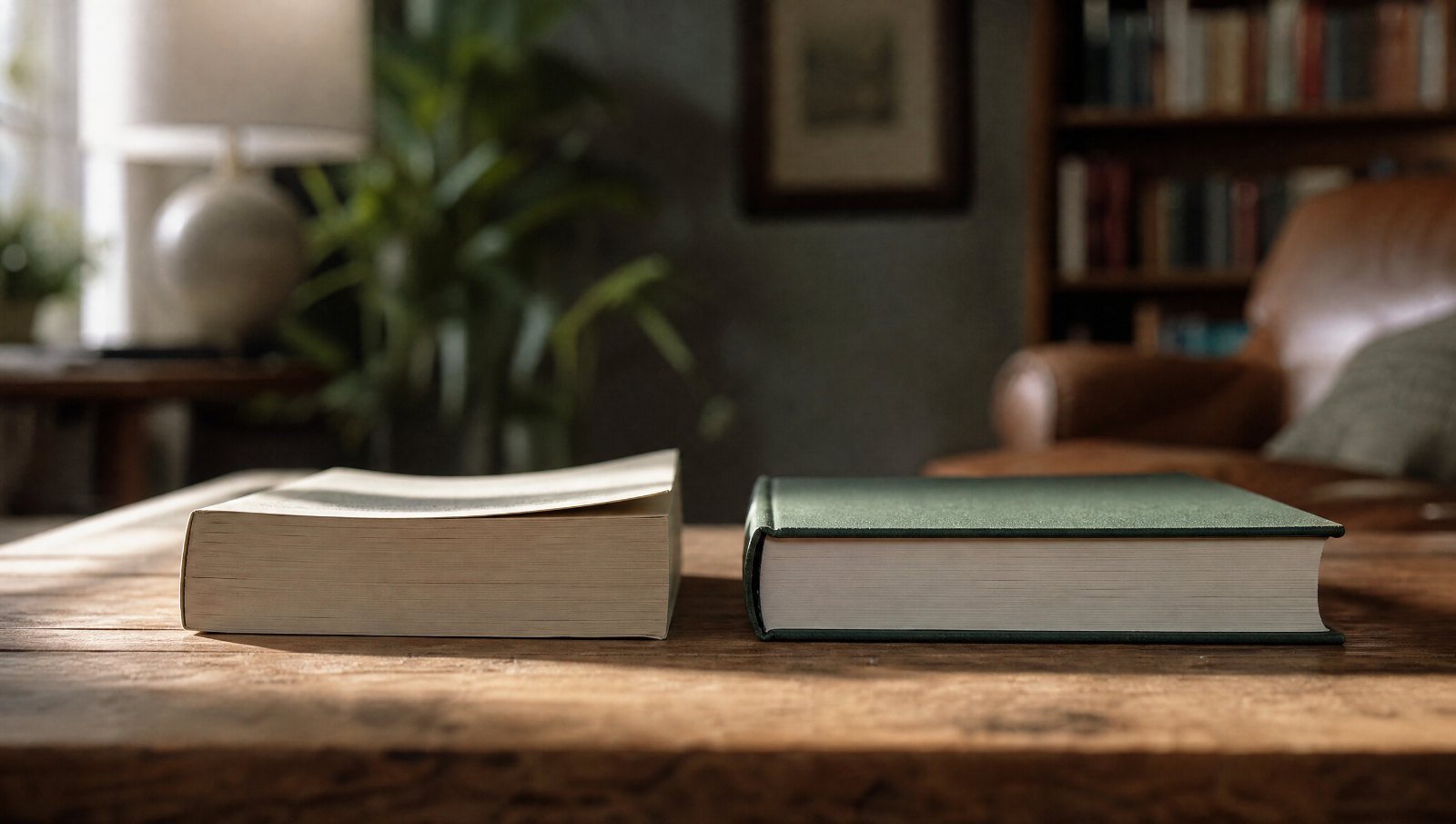
Paperback vs hardcover comes down to use. A paperback is lighter, cheaper and easier to update, so it fits anything that is distributed widely or revised often. A hardcover is tougher and more premium, so it fits gifts and keepsakes meant to last. Start by asking how your piece will be handled and who will receive it.

At a glance
- Paperback: lighter, lower cost and quicker to produce. It suits most books, booklets and notebooks.
- Hardcover: better protection and a premium presence, but higher cost and heavier shipping.
- Choose hardcover for gifts, special editions and anything kept for years; choose paperback for pieces that are handed out or updated regularly.
- This comparison is relative, not a quote. Real cost depends on quantity, size and page count.
Paperback vs hardcover: what is the real difference?
A paperback (softcover) wraps a flexible cover of heavy paper or light card around the pages, usually glued at the spine. A hardcover uses two rigid boards covered in printed paper or cloth and attached to the pages with a sturdier binding. That difference in construction drives everything else: weight, durability, look and price.
| Factor | Paperback | Hardcover |
|---|---|---|
| Weight | Light | Noticeably heavier |
| Durability | Good for normal use | Highest; protects corners and spine |
| Look | Clean and practical | Premium, with shelf presence |
| Relative cost | Low to medium | High |
| Ease of updates and reprints | High | Lower |
| Shipping | Lighter and easier | Heavier and bulkier |
Durability: which one survives daily use?
Hardcover wins when a piece is opened and closed constantly or carried in a bag. The rigid boards keep corners from bending and the cover from curling. But a well-made paperback with a suitable lamination holds up fine for a book read once or twice, or a guide used at work.
One thing people overlook: durability is not only the cover. Binding quality and interior paper weight matter just as much. A hardcover on weak binding will not save a thick book.
Look and first impression
A hardcover feels like something to keep, which is why it is the usual pick for gift books and commemorative editions. A paperback can still look refined when the paper and finish are chosen well. For stock weight and matte versus gloss, see our guide to choosing a paper cover that reflects your brand.
If you want a middle path, a softcover with flaps adds a premium feel without hardcover cost. We cover it alongside the other formats in types of paper covers, ranked by look and cost.
Cost: when is hardcover worth the difference?
Hardcover adds materials and binding steps, so it costs more than paperback, and its weight raises shipping too. Ask yourself whether the reader will actually notice the difference. If the piece is a gift or a book sold at a higher price, the upgrade is justified. If it is an internal guide updated every year, paperback is the smarter spend.
Also think about revisions. Paperbacks are easier to edit and reprint in small runs, while hardcover suits an edition you are confident will not change soon.
Decision table: paperback vs hardcover by project type
| Project | Audience | Budget | Best fit |
|---|---|---|---|
| Gift book or commemorative edition | Someone important | Flexible | Hardcover |
| Novel or self-published book | General readers | Limited to moderate | Paperback |
| Training booklet or employee handbook | Internal team | Limited | Paperback |
| Notebook or planner written in daily | Daily users | Moderate | Paperback with a thick cover, or hardcover for heavy use |
| Company profile for key clients | Clients and partners | Moderate to high | Paperback with a good finish, or hardcover for special cases |
Three practical scenarios
1) A gift book
Here the impression is the product. A hardcover makes the book feel like a present before it is opened and protects it inside a gift box. Put part of the budget into design and the proof rather than squeezing the cover.
2) A training booklet
It is handed to a group and often revised. A paperback saves money and makes changes easy for the next session. If it will be used daily through the whole course, choose a thicker cover stock with suitable lamination.
3) A planner
Planners are carried and opened every day, so durability matters. If it needs to lie flat, the binding matters more than going hardcover. For details, read our custom notebooks and planners guide, and for internal manuals see employee handbook and training manual printing.
Common mistakes when choosing
- Choosing hardcover for a short-lived piece and paying for a difference nobody sees.
- Choosing paperback for a gift book and losing the impression you wanted.
- Ignoring shipping weight on a large run of hardcovers.
- Approving a cover from a screen image without a proof or sample.
- Forgetting spine width in the design, so the title gets cut off.
How to check before you print
Ask for a digital proof before any decision. It shows logo placement, edges and color. At Paper-Ink we offer a free digital proof before printing and a design and file-preparation service if you do not have a ready file, with delivery across Saudi Arabia and the Gulf. Browse the paper and cardboard cover category and the book and publication printing section, or message us on WhatsApp and we will tell you what is available for your piece.
Top 10 Practical Recommendations for Choosing Paperback vs Hardcover
Before you settle the paperback vs hardcover question, walk through these points in order. They prevent late changes.
- Start with the use case. Ask who will hold the piece, how often it will open, and whether it must last years or months.
- Choose paperback for wide distribution. It is lighter to ship and suits pieces whose editions change.
- Reserve hardcover for keepsakes and gifts. Gift books and special editions deserve the sturdier cover.
- Do not pay for hardcover you will not use. If the piece has a short life, the durability gap never shows.
- Mind the paperback cover thickness. It changes the first impression a lot, as our paper cover and brand guide explains.
- Compare the paperback options. Paperback comes in several styles, ranked in our types of paper covers guide.
- Count quantity before cost. Small and large runs change the maths, so ask for a custom quote.
- Check your page count. More pages mean a thicker spine, which affects both the choice and the title centring.
- Request the free digital proof. You see the cover and margins before printing starts, so changes cost nothing.
- Let us help prepare the file. Message us on WhatsApp and see our book printing range.
What’s New as of October 2026
We re-checked general bookbinding references in October 2026. We found no confirmed new update that changes the paperback vs hardcover comparison. The differences are structural and do not shift with the seasons.
The Wikipedia hardcover page describes a sturdy board case covered in cloth or heavy paper. It says hardcovers outlast paperbacks and cost slightly more to produce, and it explains the dust jacket’s protective role.
The bookbinding page adds that glue alone can loosen with wear, while sewing is stronger. So ask which binding method is available when you order, and request a proof first.
Frequently Asked Questions About Paperback vs Hardcover
What is the difference between paperback and hardcover?
A paperback has a flexible cover of heavy paper or light card, glued at the spine, so it is light and economical. A hardcover has rigid boards wrapped in printed paper, which gives more durability and a premium look at a higher cost and weight. Choose by use and audience.
Which lasts longer, paperback or hardcover?
Hardcover lasts longer under repeated handling because it protects the corners and spine. Still, the life of a book also depends on binding quality and paper weight. A good paperback with proper lamination is enough for many books and guides read in the normal way.
Paperback vs hardcover: is hardcover always more expensive?
Usually, yes, because it needs extra materials and binding steps and adds shipping weight. The actual gap changes with quantity, size and page count, so do not rely on the general rule alone. Ask for a proof and the printer’s advice before deciding.
Paperback vs hardcover: which is best for a gift book?
Most often hardcover, since it feels like a keepsake and protects the book in a gift box. If the budget is tight, a softcover with flaps and a good finish gives a refined impression at lower cost.
Can I see the cover before it is printed?
Yes. Paper-Ink provides a free digital proof before printing so you can check size, colors and logo placement. A design and file-preparation service is available if you do not have a ready file.
Which is best for a notebook or planner?
Usually spiral, because it opens flat. It is a binding style for everyday pieces, not a substitute for a hardcover gift book.
Is paperback suitable for books you sell?
Yes. Perfect-bound softcover is common for books because it combines a tidy look with a reasonable cost.
How does cost change between paperback and hardcover?
It changes with quantity, size, page count and materials. So we send a custom quote for your piece instead of a generic figure.
Do you help prepare the cover file?
Yes. We help you prepare the file and send a free digital proof before printing.
How long do production and delivery take?
Most orders take 3 to 5 working days, then 24 to 72 hours of shipping within Saudi Arabia and the GCC. Shipping is free for orders of 250 SAR and above.
The bottom line
Pick paperback for pieces that are distributed, updated and budget-sensitive, and hardcover for pieces that are gifted, kept and meant to impress. Before you decide, request your free digital proof from Paper-Ink and see the result first.