
Paper Ink Blog
Private-Label Stickers: How Saudi Resellers Brand Imported Products

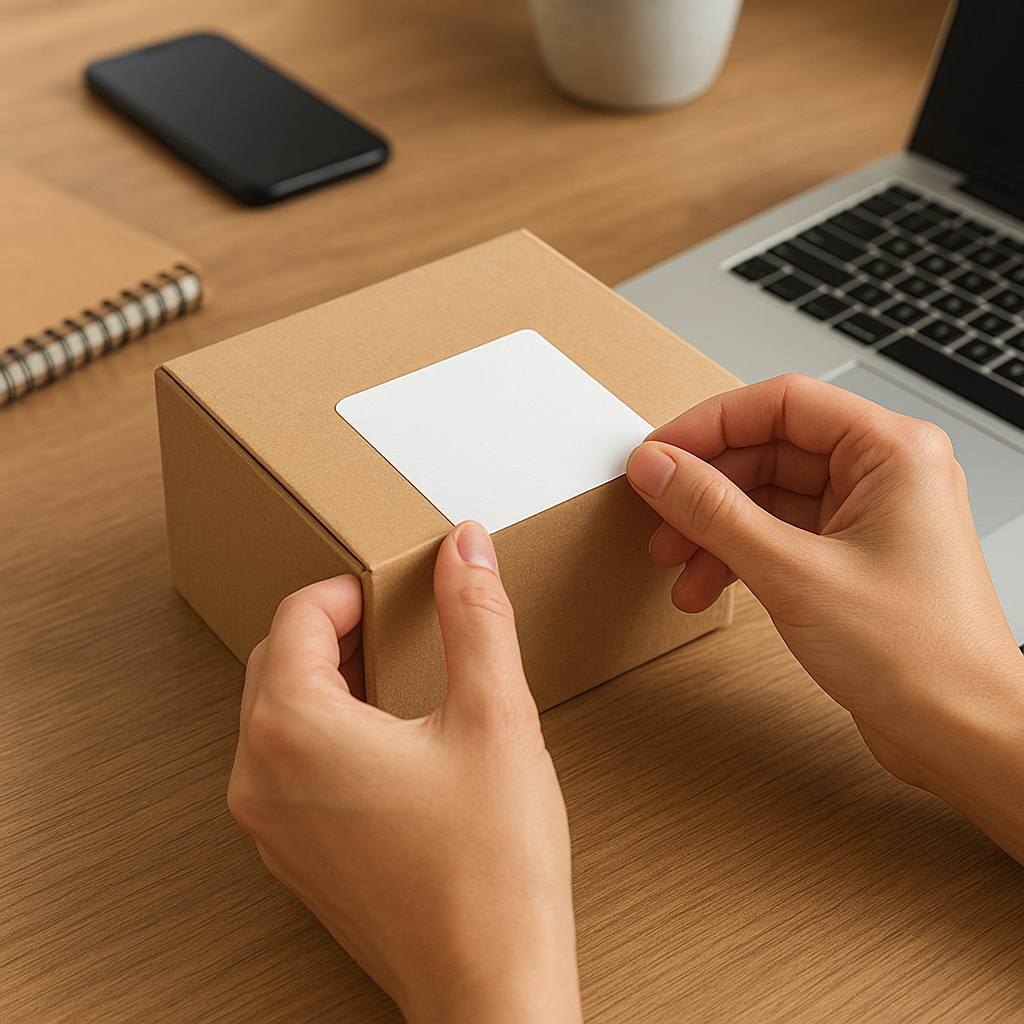
Short answer: A private-label sticker is a custom label you apply to an already-manufactured, unbranded product so it reaches your customer under your own brand name. It is legal in Saudi Arabia as long as the label does not misrepresent the product’s true origin, ingredients, or safety information, and for most small resellers a sticker is the fastest, lowest-cost way to look like an established brand without commissioning custom packaging.
Many Saudi resellers import a generic, unbranded product from a supplier abroad and then wonder how much rebranding they can legally and practically do before shipping it to a customer. This guide covers what a private-label sticker should say, where global compliance guides fall short for a small reseller, and how to order one without over-committing to a large print run — on top of the basics already covered in our packaging checklist for small online sellers.
Why Do Saudi Resellers Need Their Own Label at All?
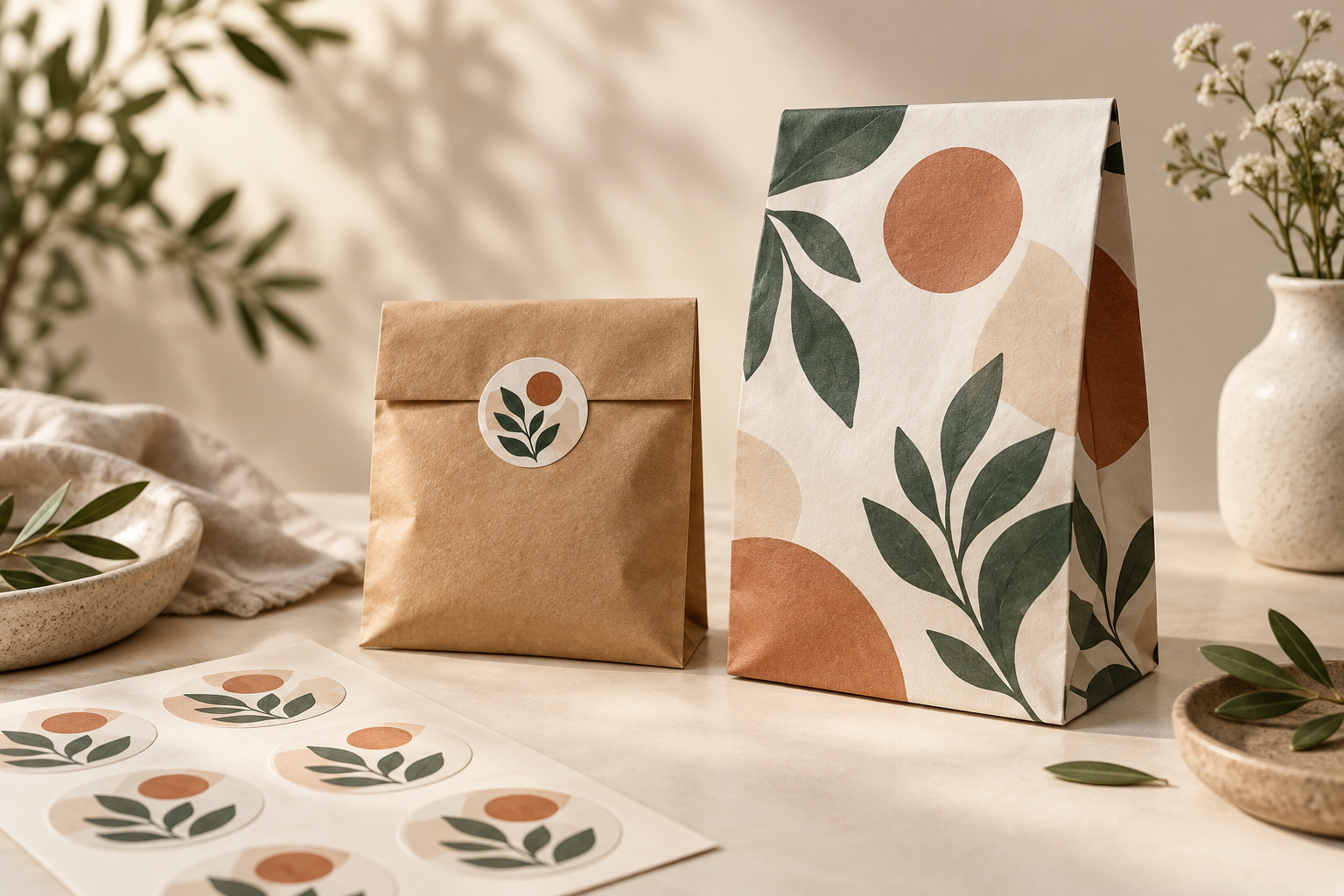
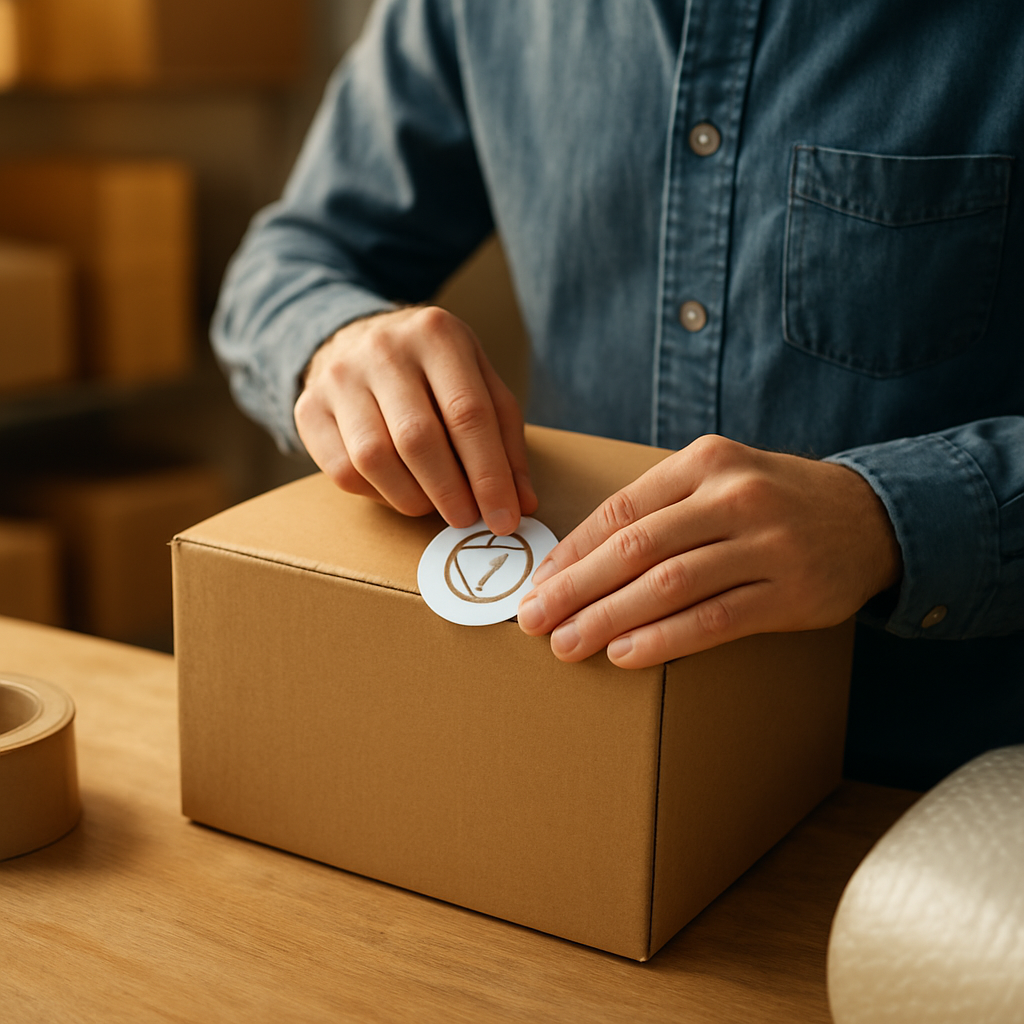
A plain, unbranded box tells the customer nothing about who they bought from — and gives them nothing to search for when they want to reorder. A private-label sticker fixes both problems with a single, low-cost print: it puts your store name, a way to reorder, and a professional first impression on a product you did not manufacture yourself.
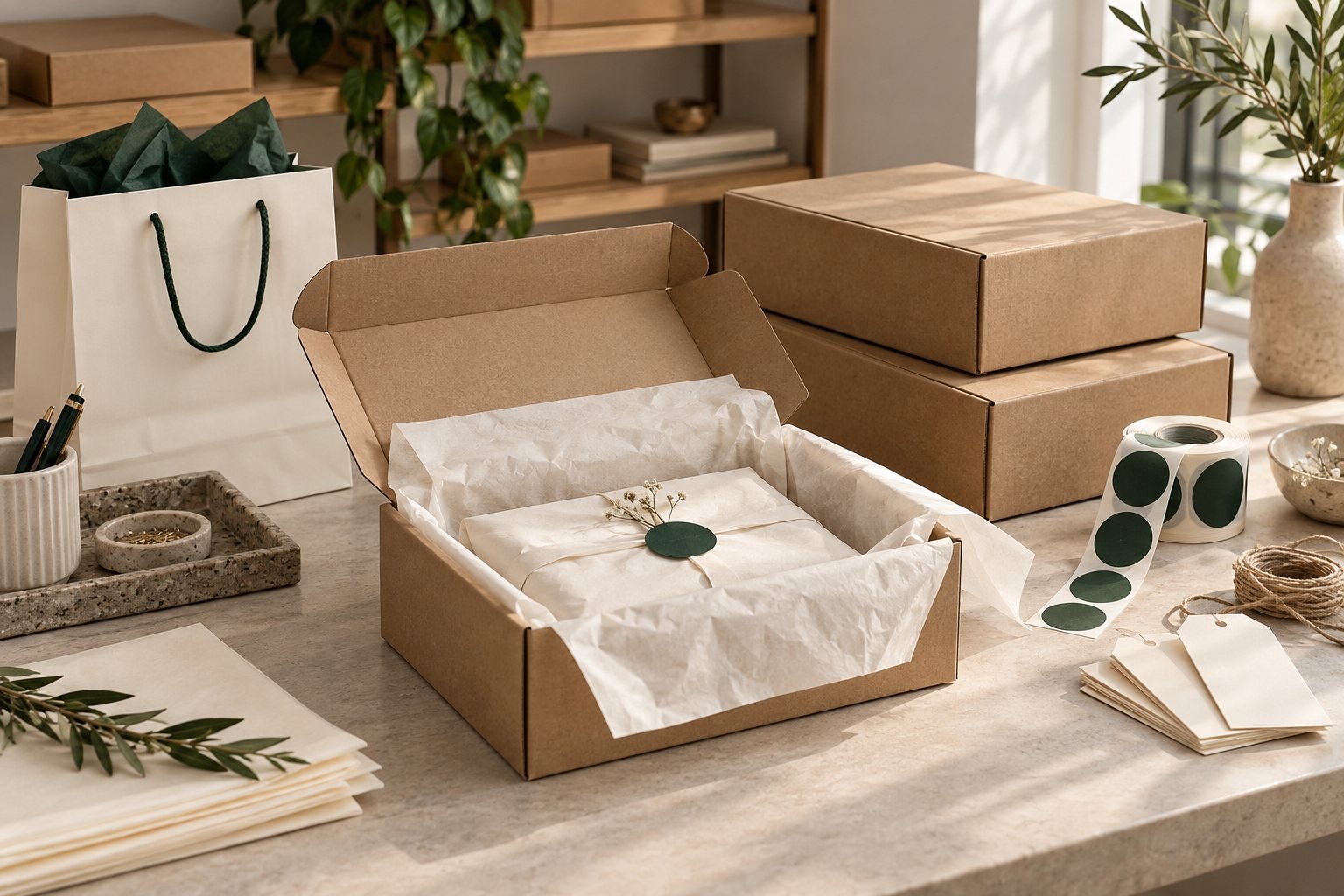
This matters most in the first few months of a new product line, before you know whether it is worth investing in fully custom packaging — a question we break down separately in our guide to custom packaging cost in Saudi Arabia.
Is It Actually Legal to Relabel an Imported Product in Saudi Arabia?
Most of what shows up when you search this question is written for large manufacturers exporting into Saudi Arabia, not for a small reseller relabeling a product they already imported. Saudi Arabia’s product standards and labeling requirements, overseen by SASO, focus on accuracy: a label must not misstate where a product came from, what it contains, or safety information the buyer needs.
Adding your own store name and contact details on top of an accurate product description is standard private labeling practice, not something SASO’s rules exist to prevent. What you cannot do is remove or contradict mandatory information the original manufacturer was required to disclose.
What Should a Private-Label Sticker Actually Say?
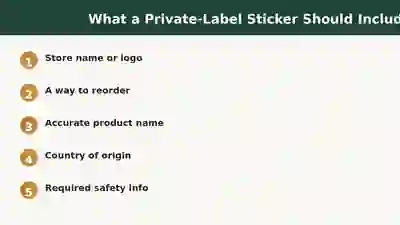
A private-label sticker only needs five things: your store name or logo, a way to reorder (a phone number, handle, or QR code), the product name in plain language, country of origin if the packaging doesn’t already state it clearly, and any safety information the manufacturer originally required. Anything beyond that turns a quick trust signal into cluttered text nobody reads.
Sticker vs. Full Custom Packaging: Which Do You Need Right Now?
The right choice depends on how proven the product already is, not on which one looks more professional in isolation.
| Option | Best for | What changes |
|---|---|---|
| Private-label sticker | Testing a new imported product line | Original packaging stays, only a label is added |
| Custom printed packaging | A proven SKU with steady, repeat volume | The box or bag itself carries your brand |
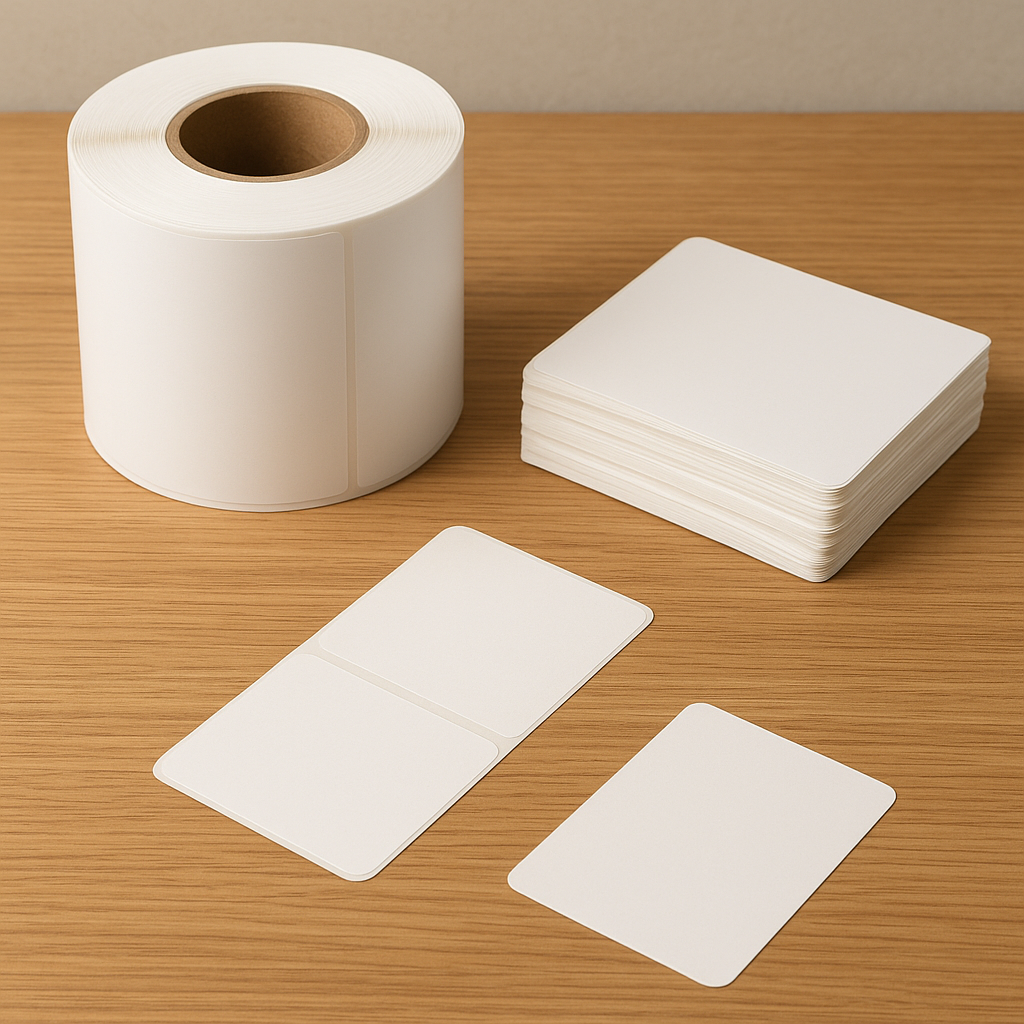
A professional vinyl sticker ships in 2 to 3 business days after you approve the design, which makes it realistic to test a new product line without a long production wait — even right before a high-volume window like the one covered in our 2026 discount season packaging guide.
Where to Place the Sticker on the Product
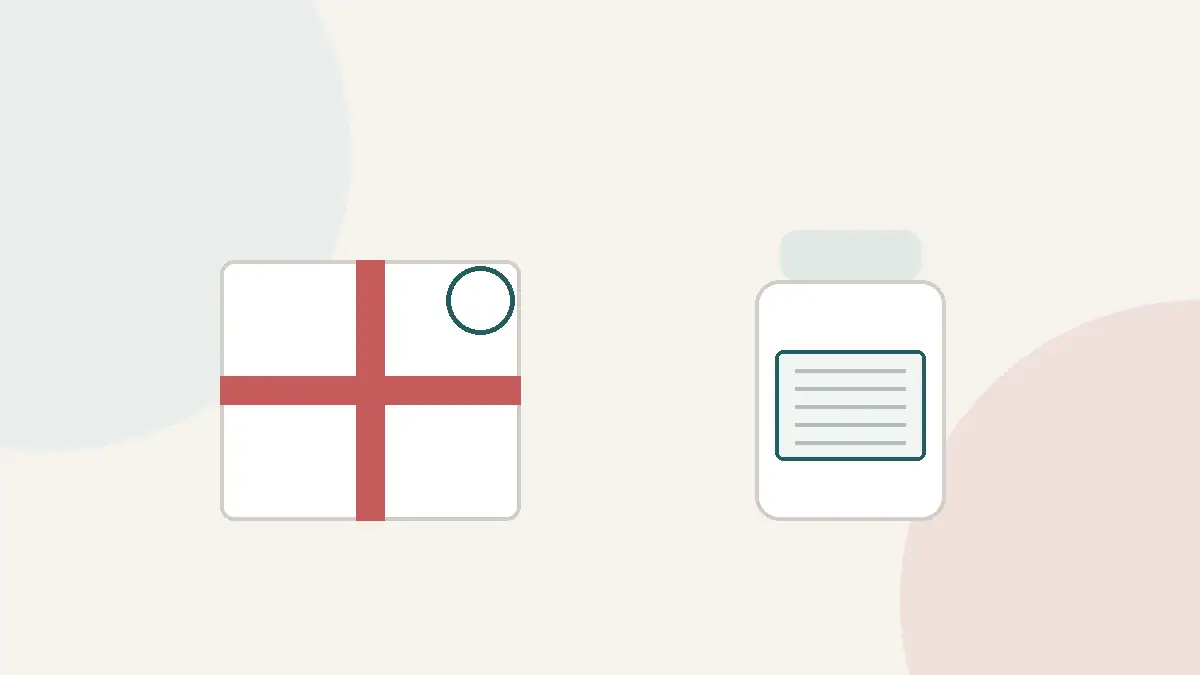
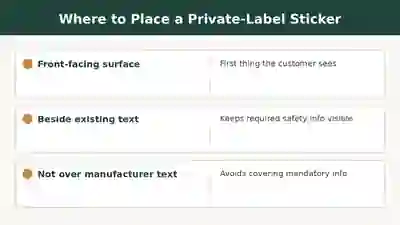
Place it where the customer looks first when deciding whether the product feels trustworthy: the front-facing surface of the box or pouch, not tucked underneath where it competes with the manufacturer’s original printing. If the original packaging already carries dense text, a clean sticker placed beside it — not over required safety information — keeps both your branding and the compliance information legible. If your product ships with any Arabic-English bilingual text, our bilingual product label layout guide covers how to keep both languages readable on a small sticker.
Common Mistakes When Private-Labeling Imported Goods
- Covering the manufacturer’s required safety information: a sticker placed over ingredient or safety text can make the product non-compliant even if your own label is accurate.
- Claiming a country of origin the product doesn’t have: this is the one line SASO’s accuracy rule genuinely restricts — the sticker adds your brand, it does not rewrite the product’s true origin.
- Ordering a full print run before testing one sticker on the real packaging: adhesive that works on cardboard often behaves differently on plastic pouches or glass.
- Using a generic sticker with no reorder path: a label that only shows a logo, with no phone number, handle, or QR code, wastes the one moment the customer is looking for how to buy again.
Quick Checklist Before You Order Private-Label Stickers
- ☐ Store name or logo is clearly legible at arm’s length
- ☐ A reorder path is included (phone number, social handle, or QR code)
- ☐ Country of origin is accurate, not omitted or altered
- ☐ No mandatory safety or ingredient text from the manufacturer is covered
- ☐ Adhesive has been tested on the actual packaging material, not just cardboard
- ☐ A small test batch was ordered before committing to a full print run
Frequently Asked Questions
Is it legal to put your own label on an imported product before reselling it in Saudi Arabia?
Yes, as long as the label adds accurate branding and does not remove or contradict the manufacturer’s required safety, ingredient, or origin information.
Do I need to disclose the original manufacturer when I private-label a product?
You generally don’t need to name the manufacturer on your own sticker, but you cannot misstate the product’s true country of origin if that information is already required on the packaging.
Can a sticker replace full custom packaging for a growing store?
For a new or unproven product line, yes — it’s the practical first step. Once a product has steady repeat volume, custom packaging usually becomes worth the investment.
Will a private-label sticker stay on during shipping within Saudi Arabia?
A vinyl sticker with strong adhesive is built to withstand handling and shipping, but it should still be tested on your exact packaging surface before a full print run.
Bringing It Together
A private-label sticker won’t turn an imported product into a manufactured-in-house brand, but it gives every customer a clear, accurate first impression and a way to come back to you directly. Ready to test your own design on a small batch first? Request a quote or reach out directly on WhatsApp.
Related reading: SFDA-Compliant Product Label Basics for Small Saudi Brands