
Paper Ink Blog
How to Print and Self-Publish Your Manga or Comic Book in Saudi Arabia

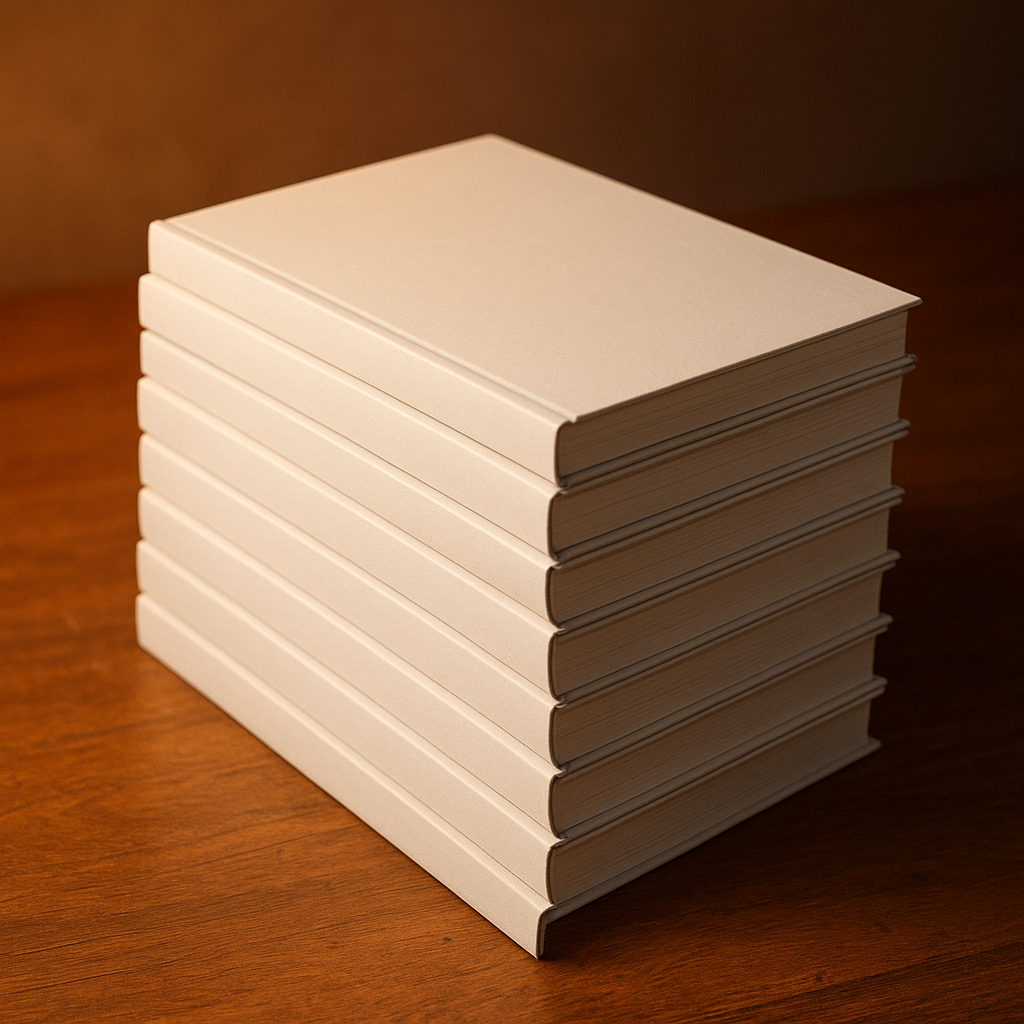
Short answer: to print and self-publish a manga or comic book in Saudi Arabia, pick a trim size that matches your art (A5 or B6 for manga, US comic trim for Western comics), then choose matte interior paper and saddle-stitch or perfect binding based on page count. Printing locally also skips the customs delay and large minimum order that overseas print-on-demand services usually require.
This guide comes from Paper-Ink’s manga and comic printing line, built for independent Saudi and Gulf creators who want a real printed book in their hands without the cost and wait of an overseas print-on-demand service.
Why print your manga locally instead of using an overseas print-on-demand service?
Most self-publishing guides online point creators toward large international print-on-demand platforms. Those work, but they come with trade-offs that matter more for a Saudi-based creator: shipping proofs back and forth can take weeks, customs and import handling add cost and delay, and most require you to accept their fixed trim sizes and paper options.
Local printing means your proof, your corrections, and your finished run all happen inside the Kingdom, so you can hold a physical proof copy in days rather than waiting for an international shipment twice.
What paper and binding does manga or comic printing actually need?
Comic and manga interiors are almost always printed in black and white or grayscale line art, so the paper needs enough opacity to stop the next page’s lines from showing through — a lighter text-weight paper made for line art works better here than standard office paper.
- Interior paper: a matte, slightly heavier text stock for crisp black line art without glare.
- Cover: a heavier cardboard-backed cover stock, often with a matte or spot-gloss finish on the title art.
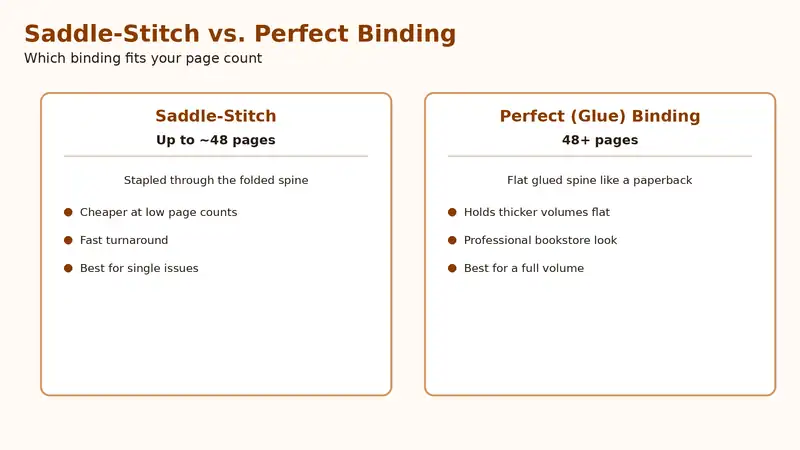
- Saddle-stitch binding: stapled through the spine — good for thin single issues under roughly 48 pages.
- Perfect (glue) binding: a flat spine like a paperback — needed once a volume is thick enough that staples won’t hold it flat.
Check the paper weight and cover stock before you finalize your art, and see the binding trade-offs in our binding and sizes guide before you lock in a page count.
| Trim size | Typical use | Best binding at low page counts |
|---|---|---|
| B6 (≈12.8 × 18.2 cm) | Classic Japanese manga volume size | Perfect binding once pages add up |
| A5 (14.8 × 21 cm) | Easier to source locally, close to manga feel | Perfect binding for a full volume |
| US comic trim (≈17 × 26 cm) | Western-style single-issue comics | Saddle-stitch for a single issue |

How many pages should your first printed volume be?
Page count decides your binding more than anything else. A short single issue of around 20 to 40 pages sits comfortably on staples. Once a volume grows past that, the spine needs glue binding to lie flat and survive repeated reading. A realistic first print run is a single issue or a short volume, not a full multi-hundred-page tankōbon — it is cheaper to test demand with a smaller book and reprint than to over-commit to one huge volume before you know how it will sell.
What does a small, no-minimum print run actually cost to plan for?
The three things that move your cost are page count, paper choice, and quantity — not the design software you used. A thin saddle-stitched issue in black and white interiors is the cheapest starting point; a full-color cover with a glued spine costs more per copy but reads as a far more professional product at a convention table or online store. Request a real quote with your exact page count and trim size rather than relying on a generic online price chart, since manga-style printing has its own paper and binding needs that a general book-printing estimate usually ignores.
Common Mistakes self-publishing creators make with their first print run
Designing at the wrong trim size from day one: resizing finished art to fit a different trim later often cuts off panel edges or speech bubbles near the page border.
Choosing glossy interior paper for line art: glossy stock glares under normal lighting and makes black-and-white line work harder to read than matte paper.
Ignoring copyright on fan characters: printing and selling copies that use another studio’s characters or logos without permission risks real intellectual property problems; see the Saudi Authority for Intellectual Property for how copyright protection works in the Kingdom before you sell original work commercially.
Printing too many copies on the first run: a smaller first batch with a planned reprint beats hundreds of unsold copies sitting in boxes.
Checklist before you send your manga or comic file to print
- Lock your trim size (B6, A5, or US comic) before finishing final art, not after.
- Export interior pages at full resolution with bleed where panels run to the edge.
- Choose matte interior paper for line art and a heavier cover stock for the front and back.
- Decide saddle-stitch vs. perfect binding based on your real page count, not preference alone.
- Confirm your artwork is original or properly licensed before printing copies for sale.
- Order a small proof run before committing to your full print quantity.
FAQ: Printing and self-publishing manga and comics in Saudi Arabia
What size should a self-published manga be printed at?
B6 is the closest match to classic Japanese manga volumes, while A5 is easier to plan around locally and still reads as a proper book-sized volume.
Can I print a small quantity without a huge minimum order?
Yes — custom book printing for independent creators can be ordered in small batches sized to an actual launch or convention table rather than a large factory minimum.
Should I use staple or glue binding for my comic?
Staple (saddle-stitch) binding suits a thin single issue, while glue (perfect) binding is needed once the volume is thick enough that a stapled spine would not lie flat.
Do I need permission to print fan art of existing manga characters?
Selling printed copies featuring characters you do not own can raise real copyright issues, so original characters or properly licensed work are the safer path for anything you plan to sell.
Bringing It Together: from file to printed volume
Printing your own manga or comic in Saudi Arabia comes down to three decisions made in order: trim size first, paper and binding second, and quantity last, sized to what you can realistically sell at launch. Get those three right and the rest of the process is just execution.
Browse single-book and small-quantity printing options for your first run, or request a quote with your page count and trim size to get real pricing before you commit. For merch to sell alongside your book, our guide to sticker printing for artists and creators covers die-cut stickers and sticker sheets that pair well with a first issue launch, or message us directly on WhatsApp to talk through your print run.
