

Paper Ink Blog
Does Motivational Wall Art Actually Work? What the Research Says

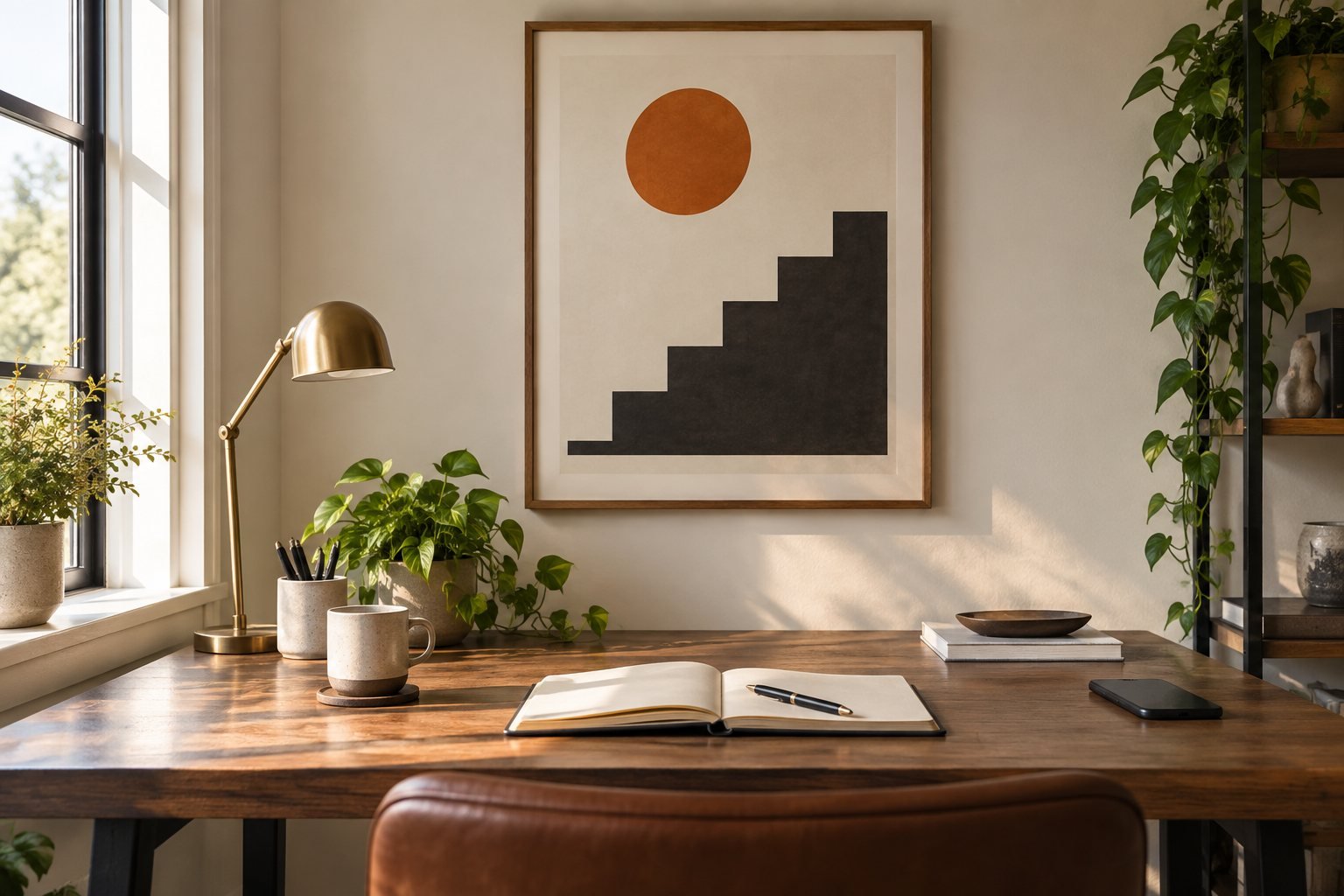
Motivational posters get mocked constantly — the “Hang in there” kitten, the eagle soaring over a mountain with one word underneath. But there’s a real, specific psychological mechanism behind why a visual reminder on your wall can genuinely change behavior, and it has nothing to do with how inspiring the phrase sounds.
The Real Study Behind “Visual Reminders”
In a 2016 study published in Psychological Science, researchers Todd Rogers and Katy Milkman tested what they called “reminders through association” — deliberately placing distinctive visual cues (a paper clip, a statue, a poster) in the exact place where someone needed to remember to act. The cues roughly doubled the number of people who actually followed through on their intentions. The mechanism wasn’t inspiration — it was association: a noticeable object, seen at the right place and the right time, ties back to the thing you meant to do.
That’s the actual case for motivational wall art. Not that a phrase alone changes your mindset, but that a fixed, distinctive visual object in your daily line of sight functions as a recurring cue — provided it’s specific enough to actually mean something to you, and placed somewhere you genuinely look.
Why Most Motivational Posters Feel Cheesy (and How to Avoid That)
The failure mode isn’t the concept — it’s genericness. A phrase so broad it could apply to anyone stops registering as a cue after the first week; your brain files it as wallpaper. The fix isn’t a better slogan, it’s specificity: a phrase, word, or image tied to something concrete you’re actually working toward, not a universal platitude.
Picking a Quote That Actually Means Something to You
Skip anything you wouldn’t say out loud to a friend. The quotes that keep working are the ones connected to a real decision, habit, or goal you’re mid-way through — not an aspirational identity you’re borrowing from a Pinterest board.
Placement Matters More Than the Quote Itself
Per Rogers and Milkman’s own framing, a cue works because it appears “at the exact place and time” follow-through is possible. A quote about focus belongs where you work, not in a hallway you pass through for two seconds. A quote about a habit belongs wherever that habit actually happens.
When a Quote Works Better as One Statement Piece
A wall of five small printed quotes usually reads as clutter and each one loses its distinctiveness — which, per the same research, is exactly what makes a cue stop working. One larger, deliberately chosen piece holds attention better than several competing for it. This is the gap LumiPoster by Paper Ink is built for: its gallery includes a “Every Place Has a Story” quote-style design, or you can turn your own specific phrase or photo into one illuminated 46×70cm piece instead of a cluttered gallery wall.
Common Mistakes
- Choosing a quote so generic it stops registering within days.
- Placing it somewhere you rarely actually look.
- Stacking too many quotes in one space, diluting each one’s distinctiveness.
- Picking words that sound good on Pinterest but mean nothing to your actual life.
FAQ
Does motivational wall art actually change behavior, or is that a myth?
The mechanism is real — distinctive visual cues placed where you’ll see them at the right moment have been shown to roughly double follow-through on intentions (Rogers & Milkman, 2016). The catch is that genericness kills the effect; a cue only works if it’s specific and noticeable.
Why do motivational posters stop working after a while?
Usually because they’ve become part of the visual background — your brain stops registering anything it sees every day without variation. A more specific, deliberately placed piece resists this longer than a generic slogan.
Is one large piece better than several small ones?
For this specific purpose, generally yes — several competing quotes dilute the distinctiveness that makes any one of them an effective cue.
Where should I put a motivational quote for it to actually work?
Wherever the behavior it’s meant to support actually happens — a desk for focus, a kitchen for a health habit, an entryway for something you do on your way out.
