

Paper Ink Blog
Packaging Inserts That Drive Repeat Orders: A Practical Guide for Saudi E-commerce Brands

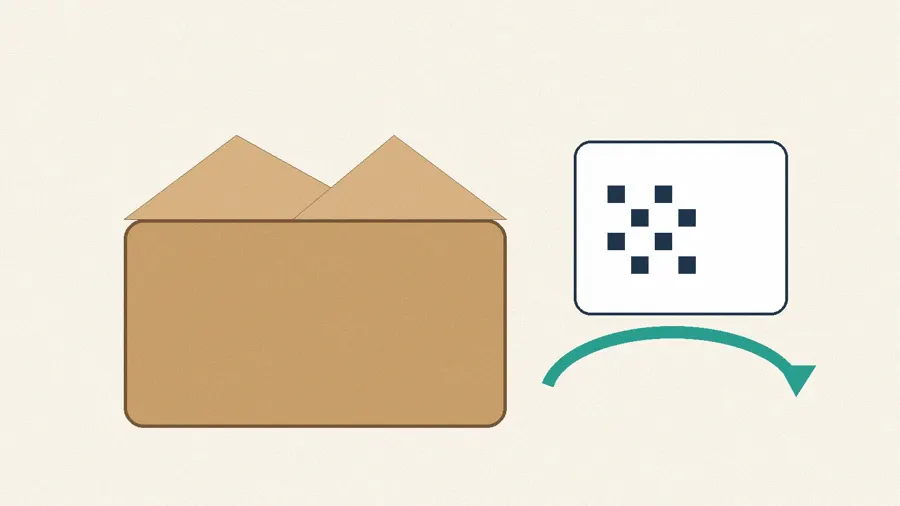
A packaging insert earns attention at a moment most marketing channels cannot control: the customer has already paid, opened the parcel, and is physically holding the product. That makes well-designed packaging inserts for repeat orders one of the most cost-effective tools in an ecommerce brand’s kit – useful for product care, reviews, referrals and repeat purchases, but only when the card has a clear job. The strongest 2026 guidance across ecommerce packaging sources keeps returning to the same principle: one insert should not try to do everything.
The fast answer: what should a packaging insert do?
A useful packaging insert should move the customer to one next action: use the product correctly, reorder, leave a review, join a loyalty flow, refer a friend, or contact support. If the card carries five competing calls to action, the customer is more likely to ignore all of them.
Why packaging inserts for repeat orders matter
The insert arrives inside the order, after acquisition cost has already been paid. For consumables, beauty products, coffee, bakery items, stationery, gifts and subscription products, that makes the card a natural place to remove friction from the second purchase. Designed well, packaging inserts for repeat orders turn a single purchase into an ongoing relationship rather than a one-off transaction.
Recent 2026 packaging content increasingly recommends reorder or referral cards, care cards and QR-enabled inserts rather than generic thank-you messages alone. The useful idea is not the card itself; it is the customer journey the card creates.
One card, one job
Before you design the insert, choose the primary outcome.
| Goal | Best insert direction | Avoid |
|---|---|---|
| Repeat purchase | Reorder URL or QR + short reason to return | Generic homepage link |
| Product success | Care / quick-start instructions | Long manual in tiny type |
| Reviews | Direct review path after product use | Asking for a positive rating only |
| Referral | Simple share/referral action | Complicated multi-step offer |
| Support | Product-specific help or WhatsApp | General contact page with no context |

Insert type 1: the reorder card
For products customers buy repeatedly, the reorder card should make the second purchase easier than the first. Use a short product name, a direct reorder URL or QR, and one clear line of value.
A strong reorder insert answers three questions instantly: What do I scan? Where does it take me? Why would I do it now?
Insert type 2: the care or quick-start card
Sometimes retention fails because the customer uses the product incorrectly. A small care card can prevent that. For candles, cosmetics, food products, reusable items, apparel, handmade products or equipment, a clear usage step can protect the customer experience better than a discount.
If instructions are longer than the card can comfortably hold, print the essential first steps and use a QR code for the full guide.
Insert type 3: the review card
A review request works best after the customer has had enough time to experience the product. The physical insert can still prepare that moment by giving the customer a direct path to the review page. Keep the copy neutral and do not pressure customers for a positive rating.
Insert type 4: the referral or loyalty card
Referral and loyalty inserts can work when the offer is easy to understand and the next step is mobile-friendly. Avoid turning the card into a wall of terms. If detailed conditions exist, keep the card short and send the QR to a landing page with the full rules.
Should the insert include a QR code?
Usually yes when the action is digital, but the QR code must have a single useful destination. Current QR packaging guidance emphasizes linking to specific product pages, reorder pages, support, manuals or loyalty flows rather than a generic homepage.
For long-lived packaging or inserts, consider using a destination you control so the linked page can be updated later without reprinting the physical material. If you use a dynamic QR provider, make sure the redirect remains under reliable account ownership.
Where should the insert sit in the unboxing sequence?
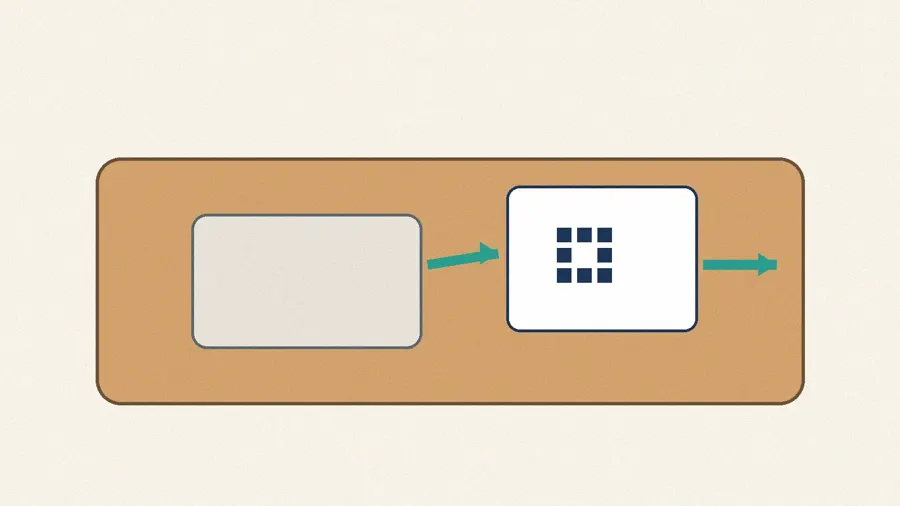
Do not bury the card under filler material if it carries an important action. Place it where the customer naturally sees it after the product is revealed, not before they understand what they bought. For premium gifting, it can sit above the product; for practical ecommerce, it often works well directly on top of the item or just under the lid.
How much copy should you print?
Use less than you think. A short headline, one supporting sentence, one action and one brand cue are often enough. Dense cards create small type, and small type creates friction.
Practical layout for a 10 x 15 cm insert
A simple structure can be:
- 15-20%: short headline.
- 40-50%: one sentence explaining the value.
- 20-25%: QR / code / CTA zone.
- Remaining space: brand handle, support contact or small legal note if needed.
This is a starting framework, not a universal template. The final design should be proofed at 1:1 scale.
Print considerations that affect performance
A conversion idea can fail if the printed card is hard to use. Check:
- Type size at final physical scale.
- Contrast under normal indoor light.
- QR quiet zone and scan testing when a QR is used.
- Card thickness appropriate to the pack.
- Rounded corners or coating only when they add value.
- CMYK, 300 DPI and bleed based on the printer’s file requirements.
Paper Ink’s current printing policy asks for PDF as the preferred file format, 300 DPI, CMYK and 3 mm bleed, while its quote request flow asks for product type, quantity, final size, material/finish and delivery timing. For a broader pre-launch check, see our packaging checklist for small online sellers in Saudi Arabia.
What not to put on one insert
Avoid combining all of these on one small card: thank-you message, product instructions, five social handles, two offers, loyalty details, return policy, review request, referral program and multiple QR codes. When everything is important, nothing is visually important.
A better two-card system
For products with more complex post-purchase needs, split the jobs:
- Card A: care / quick start.
- Card B: reorder / loyalty / review.
This costs more than one card, so use it only when the customer journey justifies it. Many small brands will do better with one disciplined card.
Measurement: how to know whether the insert works
Do not judge the insert by whether it looks premium. Track the action it is meant to create. Use a dedicated reorder URL, unique QR destination, campaign code or landing page. Measure scans, visits, code redemptions or repeat-order behavior when your ecommerce system allows it.
FAQ
What is the best packaging insert for repeat orders?
For replenishable products, a reorder card with a direct mobile path back to the specific product is usually the clearest starting point.
Should every insert include a discount?
No. Product care, support, loyalty or a simple reorder path can be more useful than discounting. Choose the action that matches the product and margin.
Is a thank-you card enough?
A thank-you message can strengthen brand experience, but if the business goal is repeat purchase, give the customer a next step rather than stopping at gratitude.
Can I use one QR code for multiple goals?
You can link to a hub page, but that adds another decision layer. For high-priority actions, a direct destination is usually clearer.
Bottom line
The best packaging insert is not the most decorative card. It is the one that understands the customer’s next question and answers it with one obvious action. For Saudi ecommerce brands investing in packaging inserts for repeat orders, that can mean a reorder path, quick-start guide, review flow or support card – printed clearly, placed intentionally and tested at final size.
