

Paper Ink Blog
What Affects Wholesale Custom Sticker Pricing in Saudi Arabia

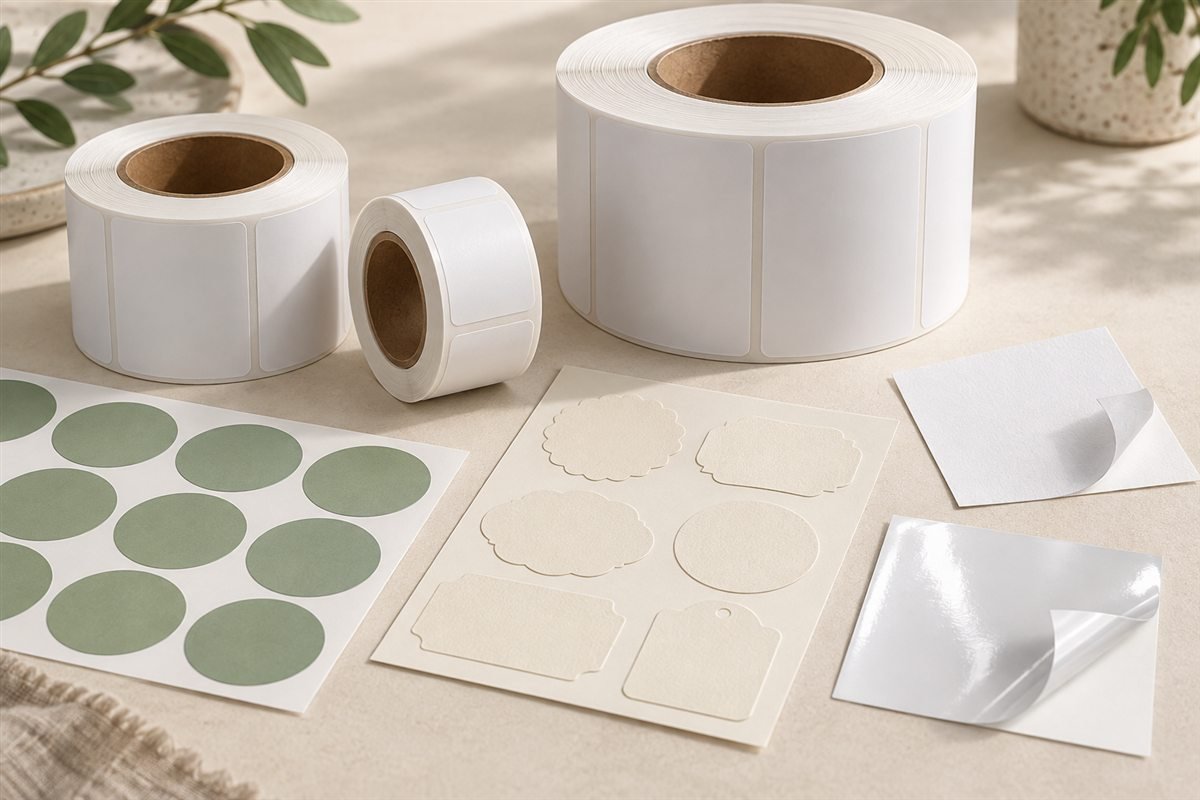
Short answer: Wholesale custom sticker pricing in Saudi Arabia moves on four factors — material, finish, shape complexity, and order quantity — not a single flat rate per piece. Two orders of the same size can cost very differently once you change the finish or the cut shape, and knowing which factor drives the price the most helps you order the right spec the first time.
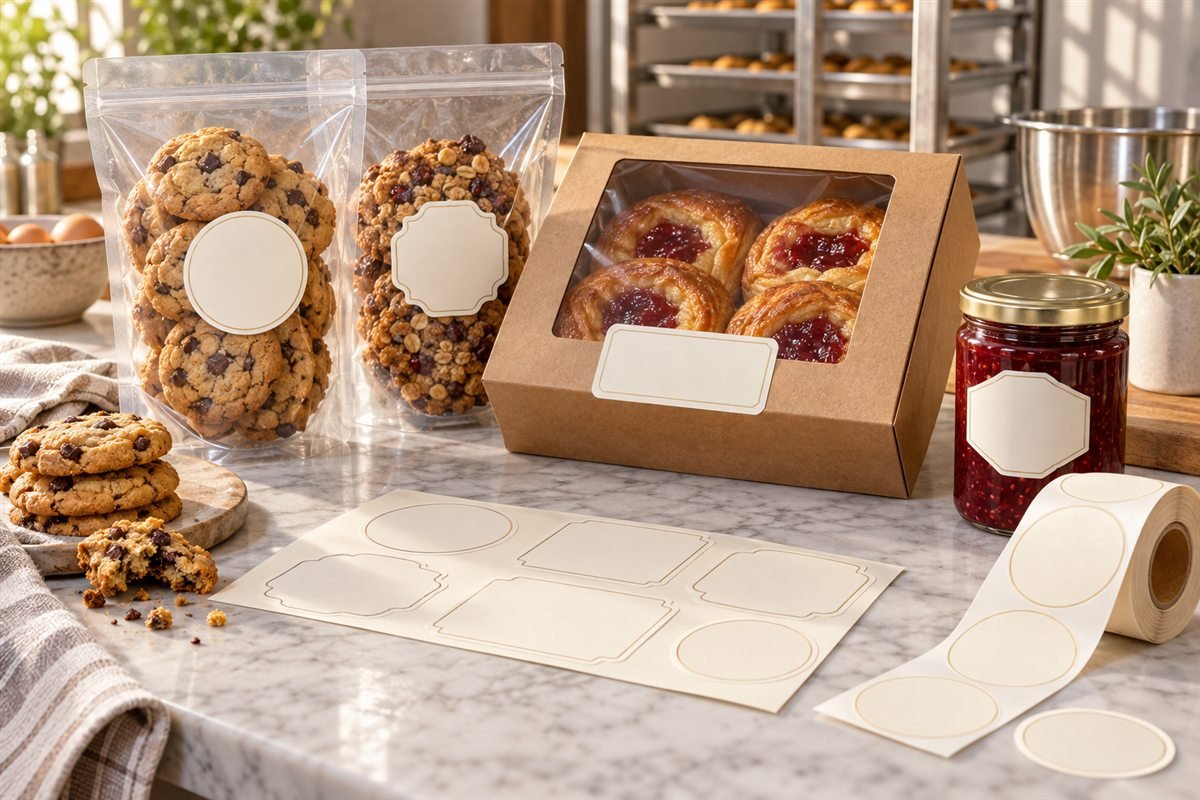
Most price lists show a number per sticker without explaining why it changes so much between quotes. This guide breaks down exactly what moves the price, so you can adjust the right variable instead of guessing — and avoid paying for a spec your product doesn’t actually need.
What Material Choice Does to the Price
Vinyl, paper, and specialty stock (like oil-resistant or waterproof vinyl) all cost differently per square centimeter before any printing happens. A standard vinyl sticker sits at a baseline cost, while specialty materials built for water, oil, or outdoor exposure carry a higher per-unit cost because the base stock itself is more expensive to produce.
Choosing a durable material you don’t actually need is one of the fastest ways to overpay on a wholesale order.
How Much Does Finish Change the Cost?
Finish is one of the biggest swing factors in sticker pricing: a plain matte or gloss laminate costs noticeably less than a spot UV or foil finish, because those effects need an extra production pass rather than a single print run. A glossy spot UV finish that highlights only the logo costs less than coating the entire sticker in the same finish, since less surface area goes through the extra step.
Does Shape Complexity Really Matter?
Yes — a simple square or circle sticker is cheaper to cut than a die-cut shape that follows a custom outline, because die cutting requires a dedicated cutting tool or path for that exact shape rather than a straight guillotine cut.
This is why two stickers of the same size and material can still land at different prices once one of them needs to be cut to match a product’s exact silhouette.
For sheets with several stickers on one page rather than a single die-cut shape, a sticker sheet layout can also work out cheaper per piece, since one cutting pass handles multiple designs at once instead of cutting each shape individually.
| Factor | Lower Cost Option | Higher Cost Option |
|---|---|---|
| Material | Standard vinyl or paper | Oil-resistant or waterproof specialty vinyl |
| Finish | Matte or plain gloss | Spot UV or foil accents |
| Shape | Square or circle | Custom die-cut outline |
| Quantity | Small batch, per-unit cost higher | Large batch, per-unit cost lower |
How Does Order Quantity Change the Per-Piece Price?
Larger orders spread the fixed setup cost (plate or die preparation, color calibration) across more pieces, which is why the per-sticker price drops as quantity increases even though the total order cost goes up.
This is also why combining several smaller upcoming needs into one larger order — rather than ordering in small batches every few weeks — is one of the simplest ways to lower your average cost per sticker without changing the design at all. For a broader look at what drives cost across packaging types beyond stickers specifically, see our guide on what actually drives custom packaging cost in Saudi Arabia — that guide covers boxes, cards, and bags alongside stickers, while this one goes deeper into sticker-specific pricing mechanics.
Common Mistakes When Requesting a Sticker Quote
- Asking for a price before fixing the shape: a quote for a “logo sticker” can vary widely depending on whether it ends up square or die-cut.
- Choosing a specialty material without checking if the product needs it: waterproof or oil-resistant stock only pays off when the product actually meets water or oil.
- Ordering the exact quantity needed today instead of the next few months: small repeat orders almost always cost more per piece than one combined batch.
- Applying a premium finish to the whole design instead of one accent element: spreads the extra production cost across the full sticker instead of just the part that needs it.
Pre-Order Checklist
- Shape is finalized (square/circle vs. custom die-cut) before requesting a quote.
- Material matches what the product actually needs (standard vs. water/oil-resistant).
- Finish is scoped to the element that needs it, not the entire design by default.
- Quantity reflects the next few months of need, not just the current batch.
- A sample or proof is reviewed before the full wholesale run is printed.
- Cost per piece is compared across at least two quantity tiers before ordering.
FAQ
What is the biggest factor in wholesale sticker pricing? Finish and shape complexity usually move the price more than material alone — a die-cut shape or a spot UV accent adds a production step that a simple square sticker doesn’t need.
Does ordering more stickers always lower the price per piece? Generally yes, because fixed setup costs get spread across more units, though the savings taper off past a certain quantity tier.
Is waterproof vinyl always worth the extra cost? Only if the product actually contacts water, oil, or outdoor conditions — otherwise standard vinyl or paper stock does the job for less.
Can I mix finishes on one sticker to save money? Yes — applying a premium finish like spot UV to just the logo instead of the whole design keeps the higher-cost step limited to a small area.
Bringing It Together
Sticker pricing comes down to four levers — material, finish, shape, and quantity — and adjusting even one of them can change your per-piece cost more than switching printers ever will. Request a custom quote for your next sticker run, or message us on WhatsApp to compare specs before you commit to a quantity.
Compare custom sticker pricing on a like-for-like brief
Give each supplier the same size, quantity, number of designs, material, adhesive and finish. Separate setup, printing, delivery and any tax treatment in the quote. A lower unit price at a larger quantity can still mean a higher total spend and unused stock. Compare sticker sheets with individual die-cut stickers only after confirming the same usable quantity.
For launch purchases, connect your label order to production and delivery milestones. If a label is part of a gift insert, compare the overall budget with ready-made and custom card options. Keep one approved reference sample so repeat orders can be compared with the same specification.
Confirm trim size, bleed and safe text areas with your printer before approving artwork. Adobe’s guide to printer marks explains how trim and bleed boundaries support production. For paper sourcing, consult FSC’s paper and packaging guidance and ask for evidence for the actual stock ordered; a kraft appearance alone is not certification.
Related reading: Sticker or Custom Printed Bag? Choosing the Right Packaging for Your Small Product
