
Paper Ink Blog
Eco-Friendly Packaging for Small Businesses in Saudi Arabia: A Practical Materials Guide


Short answer: eco-friendly packaging for a small Saudi business almost never means switching everything overnight — it means picking one or two materials you can actually source locally (kraft-based mailers, recyclable paper stickers, minimal plastic tape) and using them consistently, rather than chasing every “sustainable” material a global guide lists but few local printers actually stock.
Most sustainability guides available online are written for large brands in the US or Europe, with cost figures in dollars or pounds and material suppliers that don’t ship to Saudi Arabia. A small business owner in Riyadh or Jeddah searching for practical guidance is left comparing prices that don’t apply and materials that aren’t locally available, with no clear starting point.
What actually counts as eco-friendly packaging?
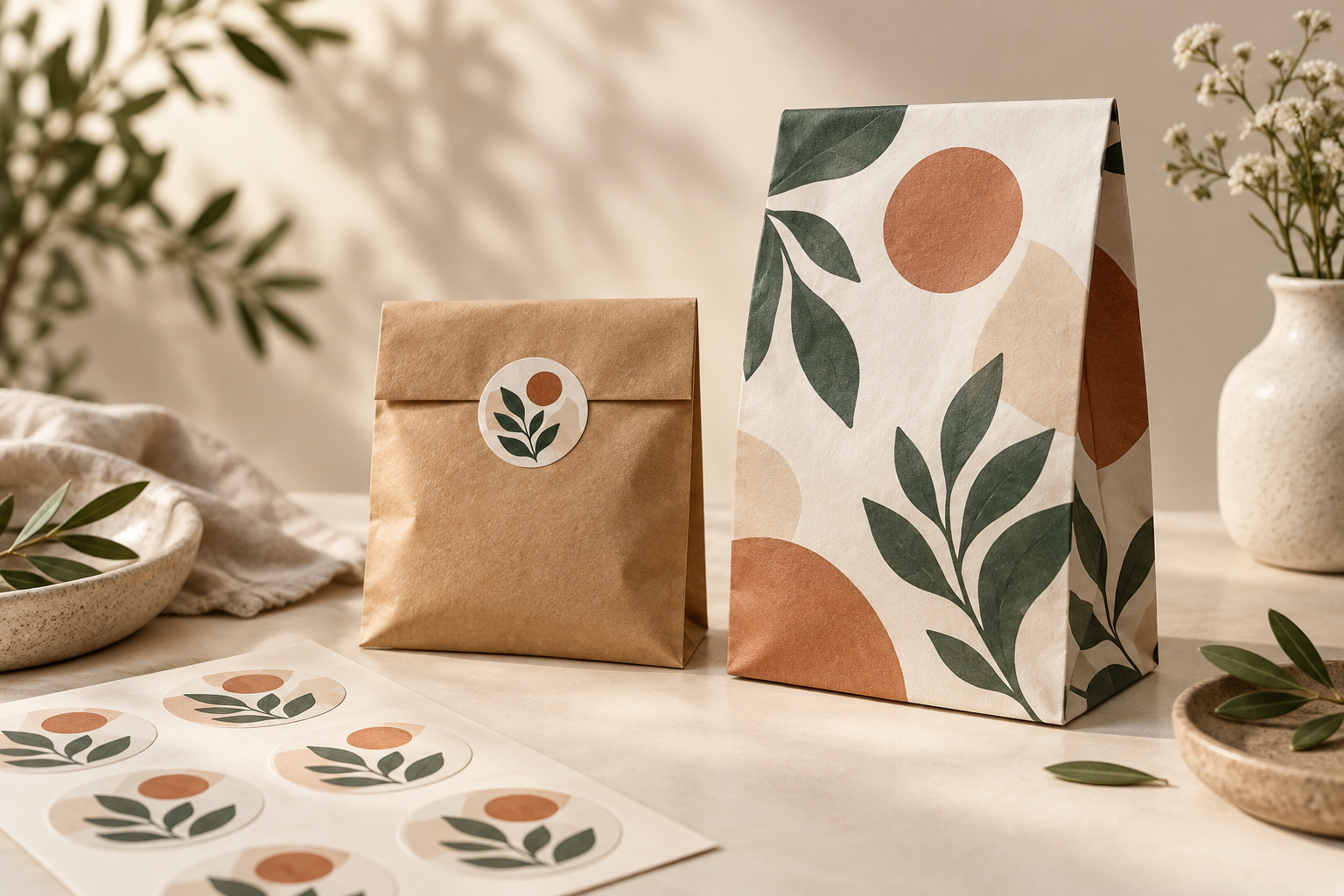
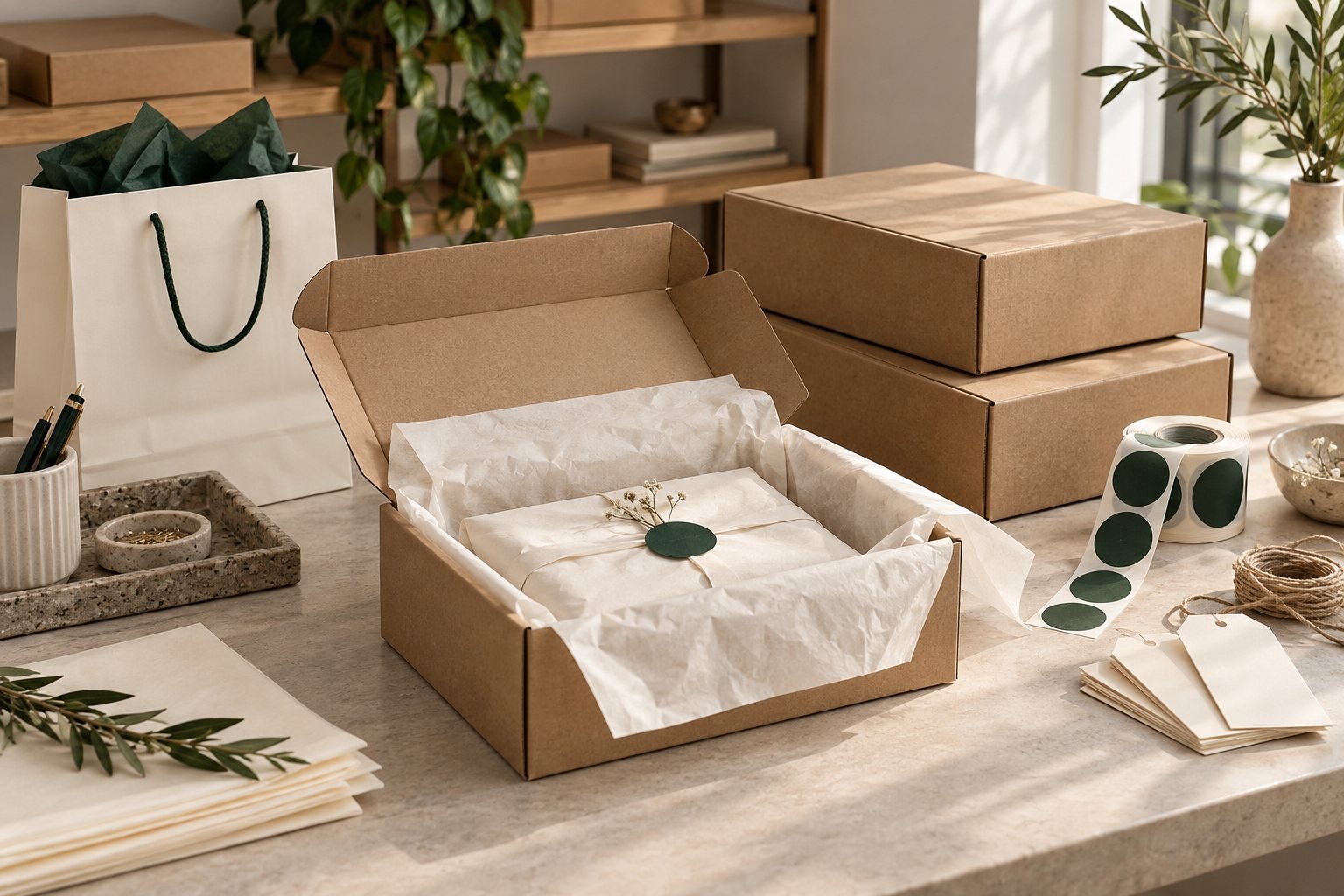
Sustainable packaging means materials that are recyclable, biodegradable, or made from renewable sources — not simply anything labeled “green” on a product page. In practice, for a small print order this usually comes down to three choices: uncoated kraft paper instead of laminated or glossy stock, paper-based stickers instead of heavy vinyl where durability isn’t critical, and reduced tape/wrap rather than layers of plastic packaging that add no protection.
Why don’t most sustainability guides help a Saudi small business owner?
Search results for eco-friendly packaging are dominated by two types of content: large market research reports quoting global industry growth figures, and blog guides written for sellers in markets where compostable mailers and recycled corrugate are one order away. Neither answers the question a small Saudi seller actually has: which of these materials can I realistically order in small quantities from a local printer, and does it cost meaningfully more? That gap is exactly what this guide addresses.

Which eco-friendly materials are realistically available through a local printer?
Uncoated kraft paper is the most widely available option and works well for outer wrapping, boxes, and simple labels — it’s recyclable, doesn’t require a special coating, and prints cleanly in single or two-color designs. Paper-based stickers are the next practical option for product labels or thank-you notes where the sticker won’t be exposed to moisture or heavy handling. Where a label needs to survive humidity or refrigeration, a fully paper-based option isn’t realistic — that’s a separate durability trade-off covered in our guide on why product labels peel in heat and humidity, and the honest answer there is that vinyl sticker printing remains the better choice for that specific use case, even though it isn’t the most eco-friendly material.
Does eco-friendly packaging actually cost more?
Usually a little, but not dramatically — the bigger cost driver is still order quantity, the same as any packaging decision. This is the same principle we cover in more depth in our custom packaging cost guide: uncoated kraft materials are often close in price to standard paper stock, while recyclable stickers can run somewhat higher than basic paper labels depending on finish. The practical approach is to apply the eco-friendly material to the one element every customer actually sees first (the outer label or wrap) rather than upgrading every packaging component at once, which keeps the added cost proportional to the visible benefit.
Quick Reference: Material Options
| Element | Standard Option | Eco-Friendly Alternative |
|---|---|---|
| Outer wrap/box | Glossy laminated cardboard | Uncoated kraft paper |
| Product label | Vinyl sticker (any condition) | Paper sticker (dry, low-handling use only) |
| Labels exposed to heat/humidity | Vinyl sticker | Vinyl remains the realistic choice — see durability guide |
| Sealing tape | Wide plastic tape, multiple layers | Paper tape, single layer where possible |

Common Mistakes When Switching to Eco-Friendly Packaging
- Switching every material at once: this multiplies cost and supplier complexity in one step; start with the single most visible element instead.
- Using paper stickers on products exposed to moisture: a paper label that smudges or peels looks worse to a customer than a standard vinyl label — durability matters more than the material claim.
- Assuming “eco-friendly” automatically means higher cost across the board: some substitutions, like uncoated kraft paper, are close in price to standard stock.
- Copying global material lists without checking local availability: a material listed in an international guide may not be something a Saudi printer can source in small quantities.
Checklist Before You Switch Materials
- Identified the one packaging element customers see first
- Confirmed the eco-friendly material is actually available in your order quantity from a local printer
- Checked whether the product needs moisture or heat resistance before choosing a paper-based sticker
- Compared the real price difference per unit, not just the material name
- Ordered one approved sample before committing to a full print run
Frequently Asked Questions
Is kraft paper actually recyclable? Yes — uncoated kraft paper is widely recyclable and is one of the more accessible eco-friendly materials for small print orders in Saudi Arabia.
Can I use a paper sticker instead of vinyl for all my products? Only for items that won’t face moisture, refrigeration, or heavy handling. For anything shipped in heat or stored cold, vinyl remains the more reliable choice.
Does switching to eco-friendly packaging require a minimum order quantity? It depends on the material and printer, similar to any custom print order — starting with a single sample run is the safest way to confirm both cost and quantity before committing.
What’s the easiest first step for a small business with a limited budget? Start with the outer label or wrap in kraft paper — it’s the most visible element, one of the most affordable substitutions, and doesn’t require changing your entire packaging setup at once.
Bringing It Together
Eco-friendly packaging for a small Saudi business doesn’t have to mean an expensive overhaul copied from a global sustainability report. Start with one visible, realistically-sourced material — usually kraft paper or a paper-based label — keep vinyl where durability genuinely matters, and scale up only once you’ve confirmed the real cost per unit. When you’re ready to try a sample, request a quote or reach us directly on WhatsApp.